🐟 Pollock
Pollock is a widely recognized fish in the seafood culinary world, famous for its mild flavor and versatility in various dishes. A popular choice in cuisines across the globe, pollock, sometimes known as Alaska pollock or walleye pollock, is a lean, white fish that serves as a primary ingredient in many commercially available seafood products, most notably fish sticks and imitation crab. Its delicate flavor makes it a favorite among those who prefer a less intense fish taste, appealing to both seafood aficionados and those new to eating fish.
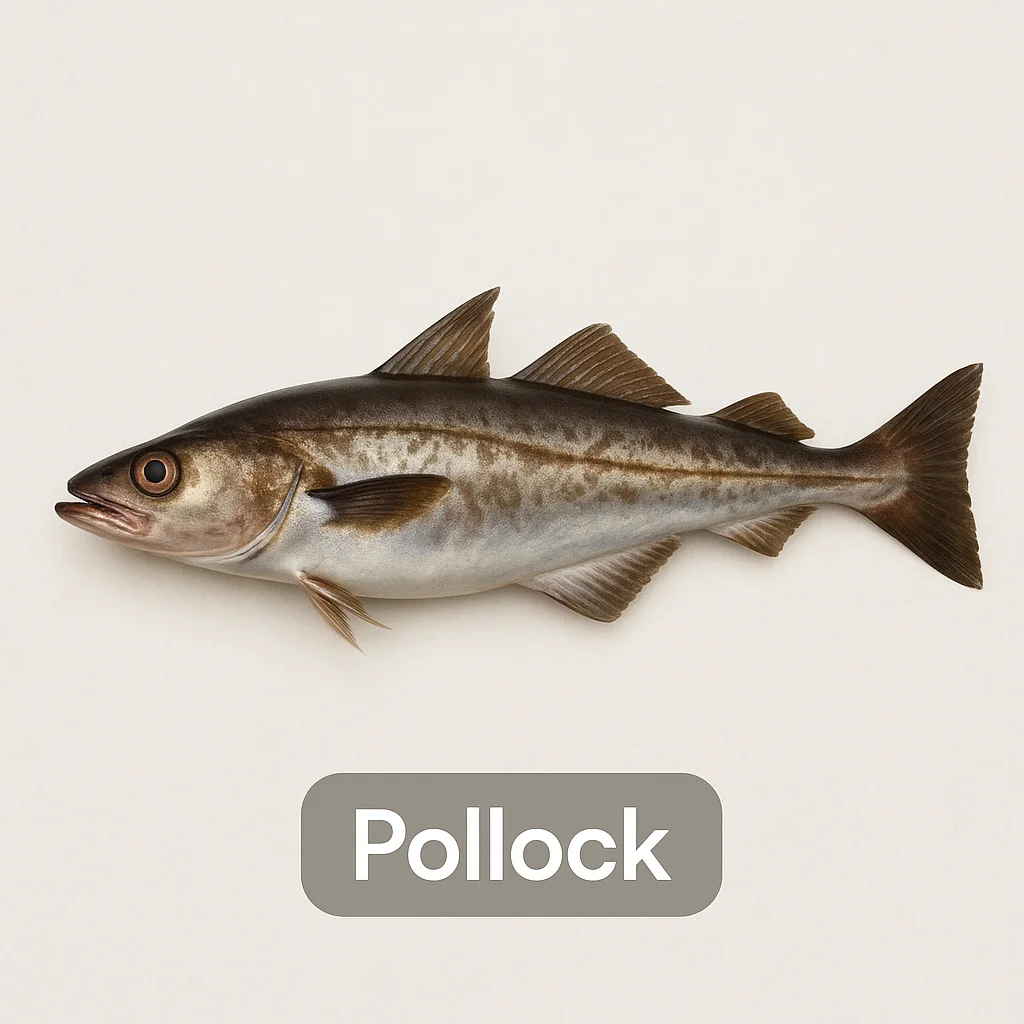
People often choose pollock for its neutral taste, which easily takes on added flavors from marinades and spices. Its flaky texture makes it suitable for a variety of preparations, from frying and baking to grilling. Pollock is also appreciated for its easy availability and affordability compared to other white fish options. As a lean fish, it offers a light meal option, often complemented by its nutritional benefits.
🐠 Taste & Texture
Pollock is praised for its extremely mild flavor, appealing to those who prefer a subtle taste. It is relatively lean, meaning it lacks the oiliness that characterizes fatty fish like salmon. When fresh, pollock emits a faint, oceanic smell that quickly dissipates once cooked. The texture of pollock is soft, with large, tender flakes that melt in the mouth, making it a versatile option for various culinary applications.
- Mild flavor, not overpowering
- Soft, flaky texture
- Low oil content
- Subtle, clean ocean scent
🌊 Origin & Habitat
Pollock is commonly found in the cold waters of the Northern Pacific Ocean. More specifically, it is prevalent in areas such as the Bering Sea and the Gulf of Alaska. While pollock is primarily harvested from the wild, there are some ventures into aquaculture, though it remains a predominantly wild-caught species. The environment of cold, deep waters contributes to the firmness of its flesh and its clean taste.
Regions where pollock harvesting is common include North America and parts of Russia. The thriving populations in these areas ensure that pollock remains accessible and sustainable, a key factor in maintaining steady supply chains and meeting consumer demand.
📅 Best Season
The seasonality of pollock can vary significantly by region due to its wide distribution range. However, pollock tends to be most abundant and in peak condition during the colder months, typically from late fall to early spring. This peak season is advantageous because the fish accumulate more fat, resulting in a slightly richer texture, which some consumers find more satisfying. Inconsistencies in seasonality underscore the importance of checking local fisheries for information on the best times to purchase fresh pollock.
🔪 Preparation
Preparing pollock begins with cleaning and scaling the fish, a relatively straightforward process given its smooth skin. To enhance flavor and texture, ensure all pin bones are removed. This fish is excellent for cooking as fillets, so trimming any excess fat or uneven edges is recommended. Basic knife safety steps include using a sharp, stable knife and cutting on a flat, secure surface to prevent accidents.
- Rinse the fish under cold water
- Scale with a fish scaler or the back of a knife
- Trim any uneven areas before filleting
- Remove any pin bones with tweezers
- Rinse fillets briefly to remove any leftover scales or debris
To manage any slight fishy odor, a quick soak in milk for 20 minutes or a light salt rinse followed by a good rinse in cold water can be effective. These methods can help neutralize odors without significantly altering the flavor or texture of the fish.
❄️ Storage Tips
Pollock should be kept cold and used promptly for the best quality. In the refrigerator, fresh pollock can be stored for one to two days, ideally on ice to maintain its firmness and moisture. For longer storage, freezing is recommended. Clean and pat the fish dry, then portion it before placing the pieces in an airtight bag, removing as much air as possible to prevent freezer burn. When ready to use, thaw in the refrigerator overnight to ensure even defrosting.
- Do: Store on ice in the refrigerator
- Do: Freeze in airtight bags
- Do: Thaw slowly in the fridge
- Don't: Leave fish at room temperature for extended periods
- Don't: Refreeze thawed fish
🍽️ Popular Dishes
Pollock's broad culinary appeal sees it featured in numerous dishes worldwide.
- Fish and Chips: Classic British fare; pollock's mild flavor works well with batter and frying.
- Pollock Tacos: Grilled or pan-fried chunks inside soft tortillas with toppings.
- Pollock Stew: A slow-cooked option that enhances the fish's delicate, flaky texture.
- Pollock BBQ Skewers: Marinated and grilled over high heat to maintain juiciness.
- Baked Pollock with Herbs: Herbs add richness when baked at moderate heat to keep from drying out.
- Ceviche-Style Pollock: Marinated in citrus but should be sourced from a reputable, sashimi-grade supplier to ensure safety.
For dishes that involve raw pollock, especially sashimi or ceviche, it is crucial to ensure the fish is of high quality, labeled as 'sushi-grade,' and prepared with adherence to food safety standards to mitigate any risk of parasites.
🥗 Nutritional Benefits
Pollock is highly nutritious, providing a valuable source of protein and various vitamins and minerals. While it doesn't boast the omega-3 fatty acid content found in oilier fish, it offers a healthy, low-fat alternative suitable for those monitoring their fat intake. It's high in vitamin B12, which supports energy levels and crucial bodily functions.
- High-quality protein
- Low in fat
- Good source of vitamin B12 and D
- Contains iodine and selenium
⚠️ Who Should Eat & Caution
Pollock is generally considered safe for most people, but as with any fish, those with fish or shellfish allergies should avoid it. Kitchens preparing pollock alongside shellfish should be cautious of cross-contact to prevent allergic reactions. While pollock's mercury content is relatively low compared to larger fish, pregnant individuals, children, and those with mercury sensitivities should monitor their intake. Avoid consuming raw or undercooked pollock unless it comes from a reputable source and observe all guidelines for safe seafood handling to prevent foodborne illnesses.
📌 Summary
Pollock is a versatile, mild-flavored fish suitable for a wide range of dishes, appealing to various dietary preferences. Recognized for its nutritional benefits and ease of preparation, it remains a go-to choice for many households. By following proper storage and cooking methods, individuals can enjoy pollock's freshness and flavor safely.
- Versatile and neutral-flavored seafood option
- Best when fresh and stored correctly
- Offers a range of nutritional benefits