🐟 Plaice
Plaice is a popular type of flatfish found in the waters of the North Atlantic and the North Sea. Known for its distinctive orange or red spots, plaice typically has a mild flavor and tender texture. People often eat plaice because it's a versatile fish that adapts to various cooking styles. Plaice is sometimes referred to as European plaice and is favored by many seafood enthusiasts for its subtle taste that pairs well with a wide range of ingredients.
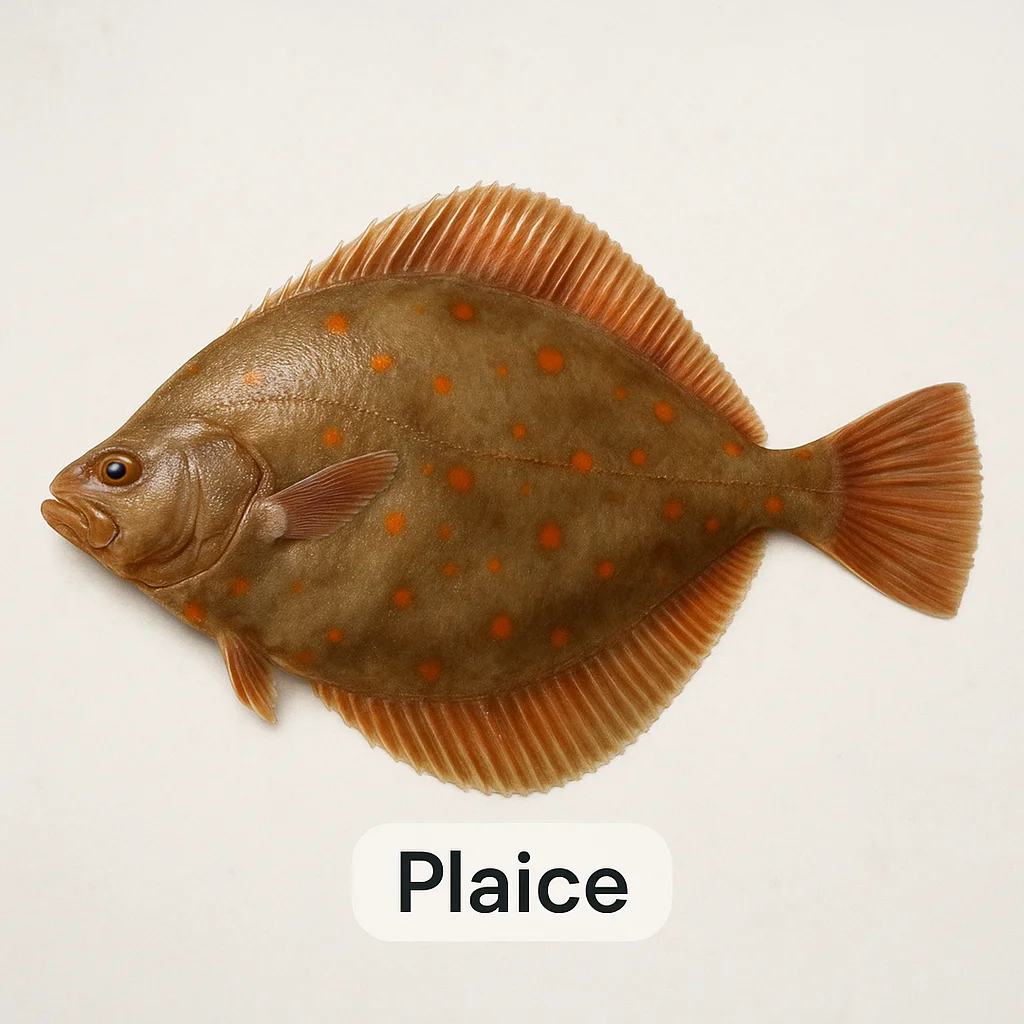
As a lean fish, plaice is low in fat, making it an appealing choice for those looking for a lighter seafood option. It's available fresh or frozen, often sold whole, or as fillets. When buying plaice, it's essential to look for signs of freshness, such as clear eyes, a moist appearance, and a slight sea smell, indicative of a quality catch.
🐠 Taste & Texture
Plaice offers a delicate and mild flavor with a slight sweetness that is not overpowering, making it suitable for those who prefer subtler seafood dishes. Its texture is fine and tender, characterized by small flakes that separate easily when cooked. The sensory experience of fresh plaice is complemented by a pleasant, non-fishy aroma, contributing to its appeal in various culinary applications.
- Flavor: Mild and slightly sweet
- Texture: Tender with fine flakes
- Smell: Fresh sea notes with no strong fishy odor
🌊 Origin & Habitat
Plaice is commonly found in coastal waters of the North Atlantic and the North Sea. Preferring sandy or muddy sea floors, this flatfish thrives in relatively shallow waters, often up to depths of around 100 meters. While plaice can be harvested both wild and farmed, wild-caught varieties are often praised for their superior flavor and texture. Key regions for plaice harvesting include the waters off Norway, the British Isles, and parts of Scandinavia.
📅 Best Season
The best time to enjoy plaice is during its peak season from late spring to early autumn when the fish is most abundant and prices are generally more favorable. During this time, the plaice is in prime condition with optimal flavor and texture. However, it's worth noting that seasonality can vary by region, so it's best to check local market availability.
🔪 Preparation
Preparing plaice at home involves several steps to ensure a delicious meal. It's essential to clean and scale the fish properly, remove the guts, and thoroughly wash under cold running water. For filleting, handle the knife with care to separate the flesh from the bones efficiently. Ensure that pin bones are removed to enhance the filleting process. Basic odor control can be achieved by soaking the fillets briefly in milk or giving them a quick rinse with salted water before cooking.
- Clean and scale the fish thoroughly
- Remove guts and wash under cold water
- Fillet with care to avoid bones
- Check for remaining pin bones
❄️ Storage Tips
Plaice should be stored properly to maintain its quality. Fresh plaice can be kept in the refrigerator for up to two days, preferably on a bed of ice to keep it cool and fresh. For longer storage, plaice can be frozen. When freezing, it's crucial to portion the fish appropriately, remove as much air as possible to prevent freezer burn, and thaw it safely in the refrigerator.
- Do keep plaice on ice in the fridge
- Do freeze in airtight packages
- Do thaw in the fridge, not at room temperature
- Don't refreeze once thawed
- Don't store plaice for too long in the freezer
🍽️ Popular Dishes
Plaice lends itself well to a variety of cooking styles and cuisines. Here are some popular dish ideas for inspiration:
- Grilled Plaice: Cooked over high heat, enhancing the natural flavors with a smoky finish.
- Pan-Seared Plaice: A quick and easy method that results in a crispy exterior while keeping the inside moist.
- Plaice Meunière: A classic French preparation involving butter and lemon, accentuating the fish's delicate flavor.
- Steamed Plaice with Ginger: A gentle cooking method that preserves the fish's tenderness and sweetness.
- Baked Plaice with Herbs: Infuses the fish with aromatic herbs and spices, offering a flavorful yet light meal.
- Plaice Curry: Incorporating spices and coconut milk provides a rich and aromatic dish with an Asian flair.
- Plaice Ceviche: For those who enjoy raw preparations, exercising caution in sourcing high-quality, fresh fish is vital.
🥗 Nutritional Benefits
Plaice offers several nutritional benefits, making it a healthy addition to a balanced diet. It's a good source of protein, which is essential for muscular health, and contains vital vitamins and minerals that support overall well-being. While not as rich in omega-3 fatty acids as oily fish, plaice still contributes beneficial nutrients.
- High in protein
- Contains vitamins B12 and D
- Source of selenium and iodine
⚠️ Who Should Eat & Caution
While plaice is generally safe and beneficial for most people, some considerations should be taken into account. Individuals with fish allergies should avoid plaice, as it can trigger allergic reactions. Due to potential mercury levels, pregnant people and young children are advised to limit consumption and seek guidance from healthcare providers.
Always ensure plaice is fully cooked to reduce risks of parasites and foodborne illness. Proper kitchen hygiene, such as using separate cutting boards for raw seafood and other foods, is crucial to preventing cross-contamination.
📌 Summary
Plaice is a mild-tasting, versatile flatfish appreciated for its tender flesh and culinary adaptability. Whether grilled, baked, or fried, it offers a delightful eating experience. With appropriate storage and handling, plaice can be a safe and nutritious choice for seafood lovers.
- Flavor profile: Mild and slightly sweet
- Best enjoyed during peak seasonal availability
- Numerous cooking options highlight plaice's versatility
- Proper storage and prep are key for safety and quality