🐟 Lingcod
Lingcod, scientifically known as Ophiodon elongatus, is a popular seafood choice cherished for its delicate taste and versatile culinary potential. This fish is not actually a true cod, but it is named for its cod-like appearance. Lingcod is renowned for its lean, firm flesh and mild flavor, making it a favorite among seafood enthusiasts worldwide. Often found in coastal regions of the Pacific, lingcod is a staple in many culinary traditions and can be enjoyed in a variety of preparations. Its adaptability in cooking styles and wide availability make it a delightful addition to any seafood menu.
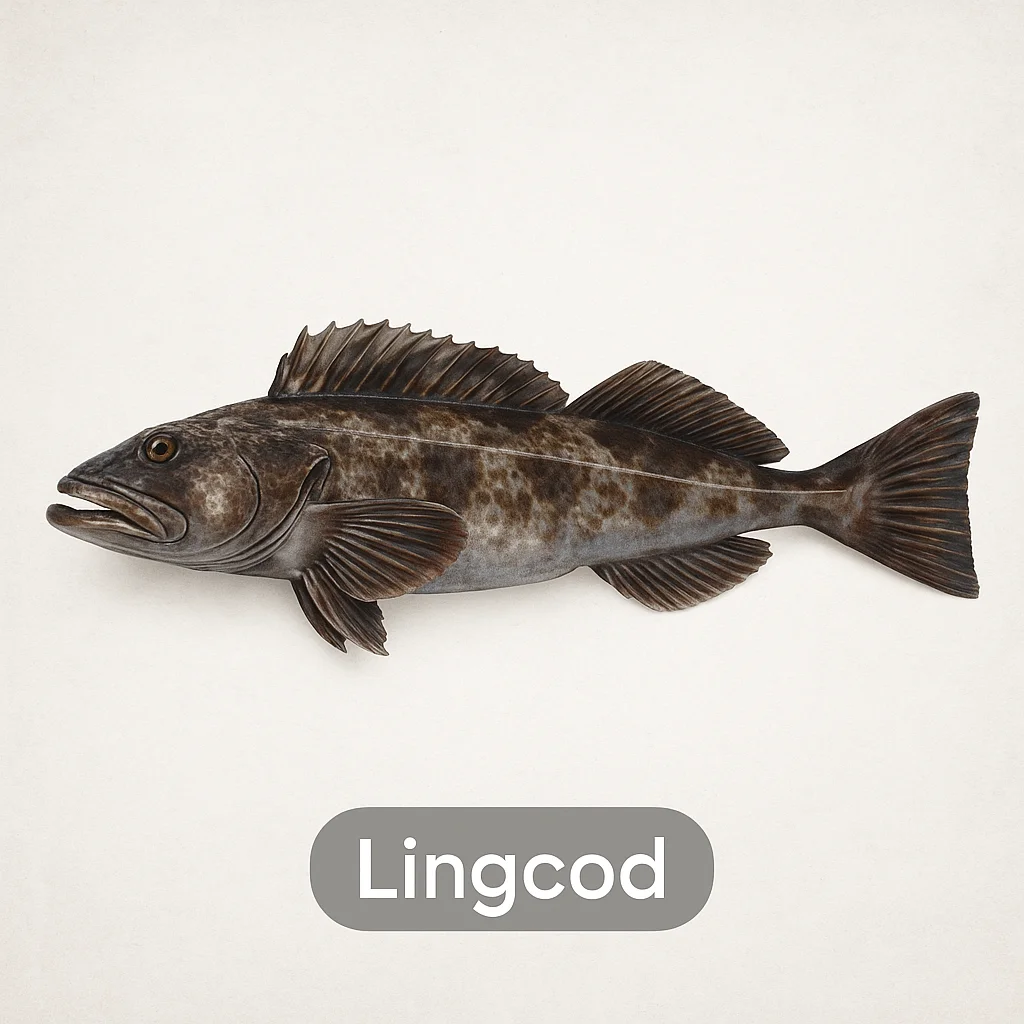
People consume lingcod for its pleasant taste and high nutritional value. It serves as a good source of lean protein, making it a healthy option for those looking for an alternative to fattier fish. The fish's mild flavor allows it to complement a range of seasoning profiles, from simple herbs to bolder spices. Additionally, lingcod may be referred to by regional names such as “cultus cod” or “buffalo cod,” which can help buyers identify it in different markets.
🐠 Taste & Texture
Lingcod offers a mild flavor with a hint of natural sweetness, making it appealing even to those who may not typically enjoy fish. The texture is firm yet flaky, and the fish cooks to a clean, slightly tender consistency. Lingcod's flesh is lean rather than oily, contributing to its lightness on the palate and making it suitable for a variety of cooking methods. The smell of fresh lingcod is pleasantly neutral with a subtle oceanic scent, indicating its freshness.
- Flavor intensity: Mild, slightly sweet
- Texture: Firm, lean, flaky
- Smell when fresh: Mild, oceanic
🌊 Origin & Habitat
Lingcod are native to the North American Pacific coast, commonly found in the northeastern Pacific Ocean from Baja California to Alaska. They prefer rocky reef environments and are often caught in relatively shallow waters, although they can inhabit depths up to 475 meters. Lingcod are wild-caught, and unlike some fish varieties, there is no significant farming industry for lingcod, thus their availability largely depends on sustainable fishing efforts and seasonal catches. These fish thrive in coastal waters where they can hunt for their prey, which includes smaller fish and invertebrates.
📅 Best Season
The best season for lingcod varies depending on the region, with the most desirable catches typically occurring during the cooler months. In general, the peak season is often in spring and fall when the fish is most abundant and its flesh is at its finest in terms of texture and flavor. Seasonal availability may influence the fish's fat content and price. Buying lingcod in peak season ensures optimal taste and texture while also often being more wallet-friendly. However, bear in mind that seasonality can fluctuate based on local environmental conditions and regional fishing regulations.
🔪 Preparation
Preparing lingcod involves several basic steps to ensure the fish is clean and ready to cook. Start by scaling the fish, which can be done using a scaling tool or the back of a knife. Once descaled, gut the fish by making a cut along the belly and removing the entrails. It's important to rinse the body cavity thoroughly under cold running water. Check for any remaining pin bones by gently running hands over the flesh and removing any that are found with tweezers. Finally, trim away any discolored areas to ensure all parts are fresh and appetizing.
- Scale the fish gently
- Remove the entrails carefully
- Rinse under cold running water
- Check and remove pin bones
- Trim any discolored parts
Odor control can be crucial in seafood preparation. To mitigate the fishy smell, consider soaking the cleaned fillets in a milk bath or lightly salting them before a quick rinse. This can help in neutralizing odors without compromising the fish's natural taste.
❄️ Storage Tips
Proper storage is essential to maintain the quality of lingcod. If consuming within a couple of days, store the fish in the coldest part of the refrigerator, ideally over a bed of ice to retain moisture. Wrap it in a clean, airtight container or wax paper to prevent exposure to air.
- Do refrigerate immediately
- Do keep on ice or in a chilled area
- Don’t expose to air unnecessarily
- Don’t store with strong-smelling foods
For longer-term storage, freezing is recommended. Portion the fish into meal-sized servings, wrap tightly in moisture-resistant paper or vacuum-sealed bags, and label with the date of freezing. Removing as much air as possible can avert freezer burn. Thawing should be done gently in the refrigerator overnight to maintain optimal texture and taste.
🍽️ Popular Dishes
Lingcod is versatile and lends itself beautifully to a range of dishes across various cuisines. It can be grilled quickly over high heat, enhancing its firm texture and bringing out its best flavors. Pan-searing can result in a delicate, crispy crust while keeping the inside moist. Baking lingcod with herbs and lemon results in a succulent dish that amplifies its natural flavors. In soups and stews, lingcod holds its shape well, making it perfect for hearty seafood chowders. It can be fried with a light batter for a delightful crispy texture or steamed for a healthier option that highlights its natural sweetness. For those who wish to enjoy it raw, preparing as ceviche with a citrus marinade is an option, but caution should always be observed concerning food safety standards and proper sourcing.
🥗 Nutritional Benefits
Lingcod provides numerous nutritional benefits, being an excellent source of lean protein necessary for muscle maintenance and overall health. It contains beneficial omega-3 fatty acids that support heart health, and it's enriched with essential vitamins and minerals such as vitamin D, vitamin B12, and selenium. As a non-oily fish, it is lower in fat, making it an advantageous option for calorie-conscious diets.
- Rich in lean protein
- Contains omega-3 fatty acids
- Source of vitamin D and B12
- Provides essential minerals like selenium
⚠️ Who Should Eat & Caution
While lingcod is generally safe and nutritious for most people, it is important to consider certain risks. Fish can trigger allergies in sensitive individuals, much like other seafood, so awareness and caution are advised for those with known allergies. Additionally, as with other fish, there may be concerns about mercury levels, especially for pregnant persons and children. Limiting consumption to within recommended guidelines can minimize potential risks. Lastly, consuming raw or undercooked seafood involves risks of foodborne illnesses; always ensure safe handling practices and consider opting for fully cooked dishes to avoid cross-contamination and health issues.
📌 Summary
Lingcod is a versatile, mild-flavored fish that offers culinary possibilities ranging from grilling to steaming. Its firm texture and nutrient-rich profile make it a popular and healthy choice for seafood lovers. When buying lingcod, look for freshness indicators such as clear eyes, bright red gills, and a clean oceanic scent. Proper storage and preparation techniques further enhance its appeal, ensuring that each dish showcases lingcod at its best.
- Lingcod is a mild, lean, and firm-textured fish
- Look for peak season for the best quality
- Enjoy in versatile preparations from grilled to fried
- Maintain freshness with proper storage methods
- Consider food safety and recommended consumption guidelines for optimal health benefits