🐟 John Dory
John Dory, recognized scientifically as Zeus faber, is a sought-after fish popular in cuisines around the world. Known for its distinct appearance and unique flavor, this fish stands out not only for its culinary qualities but also for its fascinating anatomy. John Dory is especially appreciated for its meaty texture and mild taste, making it a versatile option for various cooking methods. It often goes by names like St. Peter’s Fish in certain regions, highlighting its storied reputation. Whether pan-seared or delicately poached, the fish is a staple in gourmet kitchens and local seafood markets alike.
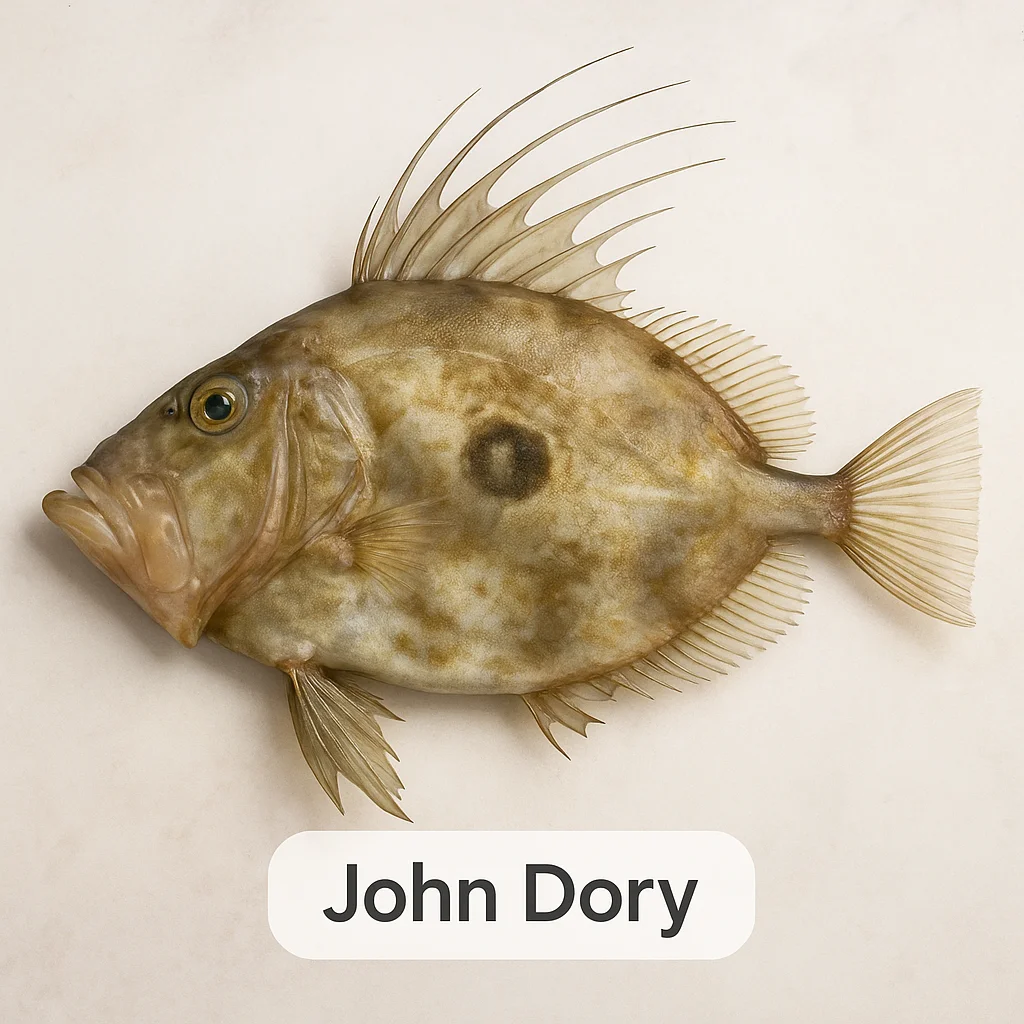
The allure of John Dory lies in its culinary flexibility and refined flavor profile. Its flesh is white, sweet, and flaky, which appeals to diners looking for something more intricate than your average fish dish. The demand for John Dory is also fueled by its adaptability; it can shine as the star ingredient in a delicate fish dish or provide a robust backdrop for strong, flavorful sauces. Whatever the preparation, John Dory remains a staple for chefs and home cooks who appreciate high-quality seafood.
🐠 Taste & Texture
John Dory is known for its unique taste, which is decidedly mild yet flavorful. The flesh is firm with a fine flake, which provides a delicate mouthfeel that doesn’t overpower the palate. The fish is lean, yet it possesses a subtle sweetness that nicely complements its slight brininess. When fresh, John Dory has a clean, sea-like aroma that hints at its ocean origins. Its taste can be described as buttery and pleasant, making it a favorite among those who prefer a softer taste in seafood.
- Flavor intensity: Mild and sweet
- Texture: Firm, flaky
- Aroma: Clean, briny when fresh
- Mouthfeel: Delicate and buttery
🌊 Origin & Habitat
John Dory is typically found in coastal and deep-water regions. It inhabits continental shelf zones across a wide swath of the world's oceans, including the Atlantic and Indian Oceans, as well as the Mediterranean Sea. This fish is generally wild-caught, with very little aquaculture presence, which contributes to its nuanced texture and flavor. Its distribution is quite broad, from European waters around the UK to the coasts of South Africa, and down to New Zealand and Australia. The varied conditions of its habitats contribute to the slight differences in taste and size observed in different regions.
📅 Best Season
The seasonality of John Dory can vary considerably depending on the region. In general, it is available year-round due to its wide distribution, but the best time to enjoy it is often during the cooler months. During peak season, John Dory tends to have a firmer, thicker flesh and a more pronounced natural flavor, which can also often lead to lower prices. Purchasing during these times not only ensures superior quality but also supports sustainable fishing practices. If you're looking for the best quality, it's always a good idea to check with local fishmongers for the freshest catch.
🔪 Preparation
Preparing John Dory involves several key steps to ensure the best eating experience. Start with cleaning and scaling, as the skin can be bumpy with large scales. Gut the fish carefully to remove any inner parts that can spoil the flavor. Boning requires some patience, given the fish's thin frame, but the effort is rewarded with clean fillets. Trimming away any excess fat or skin will also enhance the eating quality. For those new to cooking fish, here’s a checklist to follow:
- Clean and scale thoroughly
- Gut carefully to avoid rupturing the organs
- Filet by following the backbone for easy removal
- Check for and remove any pin bones diligently
To manage any fishy odor, a brief soak in milk or a rub with coarse salt can help neutralize the smell. A quick rinse in cold water before cooking ensures freshness is maintained.
❄️ Storage Tips
Proper storage of John Dory is essential to maintain its delicate flavor and texture. When refrigerating, it’s best consumed within two days. Use an airtight container or wrap in parchment paper and then plastic wrap to minimize exposure to air. For long-term storage, freezing is the best option. To prevent freezer burn, wrap each portion snugly in plastic wrap followed by aluminum foil, or use vacuum-sealed bags. Thaw frozen John Dory slowly in the refrigerator or in a bowl of cold water to maintain its texture.
- Do keep refrigerated and tightly wrapped
- Do freeze for longer storage, using airtight methods
- Don’t keep in the fridge for more than two days
- Don’t refreeze once thawed
🍽️ Popular Dishes
John Dory shines in a variety of culinary applications. Popular dishes include:
- Grilled John Dory: Perfectly suited for high heat which accentuates its natural sweetness.
- Pan-Seared with Lemon Butter: Enhances its delicate texture with a crispy skin.
- Baked with Herbs: A gentle method that preserves the fish’s moisture.
- Steamed with Ginger and Scallions: Compliments its mild flavor with light aromatics.
- Ceviche-style Preparation: Requires ensuring sashimi-grade freshness for food safety.
- Fish Stew: Absorbs the rich, flavorful broth while contributing to the dish's depth.
When preparing raw dishes like ceviche, it’s imperative to ensure the fish is fresh and sourced from reputable suppliers to mitigate the risks associated with parasites.
🥗 Nutritional Benefits
John Dory is not only a culinary delight but also a source of essential nutrients. A rich source of protein, it supports muscle maintenance and general health. This fish also offers a good dose of minerals like selenium and phosphorus, as well as vitamins such as B6 and B12. Although it is lean, John Dory also contains omega-3 fatty acids, which are often associated with heart health benefits.
- High in protein
- Contains omega-3 fatty acids
- Provides essential vitamins like B6 and B12
- Offers minerals including selenium and phosphorus
⚠️ Who Should Eat & Caution
While John Dory is a nutritious choice for many, there are certain considerations to keep in mind. Individuals with fish allergies should obviously avoid it, and care should be taken to prevent cross-contact during meal preparation. Pregnant individuals and young children should be aware of mercury levels, which can vary in fish, although John Dory is typically lower in mercury compared to larger predator fish. As always, it is recommended to ensure fish is cooked thoroughly unless it is specifically sashimi-grade and prepared with care to avoid potential food-borne illnesses.
📌 Summary
John Dory is celebrated for its mild flavor and delicate texture. Its versatility makes it a favorite for grilling, baking, and steaming across various global cuisines. While it requires certain preparatory skills to fully enjoy, the taste is rewarding and nourishes with an impressive nutrient profile.
- Firm, flaky, and mild-tasting
- Best cooked thoroughly but can be used in raw dishes if properly sourced
- Store by refrigerating for short periods and freezing for longer preservation
- Be mindful of potential allergy risks and mercury content