🐟 Golden Pomfret
The Golden Pomfret is a popular species of fish known for its mild flavor and versatile cooking qualities. Characterized by its golden-silvery body, this fish is often sought after for both home cooking and restaurant use. Commonly referred to as "Golden Pompano" in some regions, it is part of the Carangidae family and is appreciated for its distinctive taste and texture.
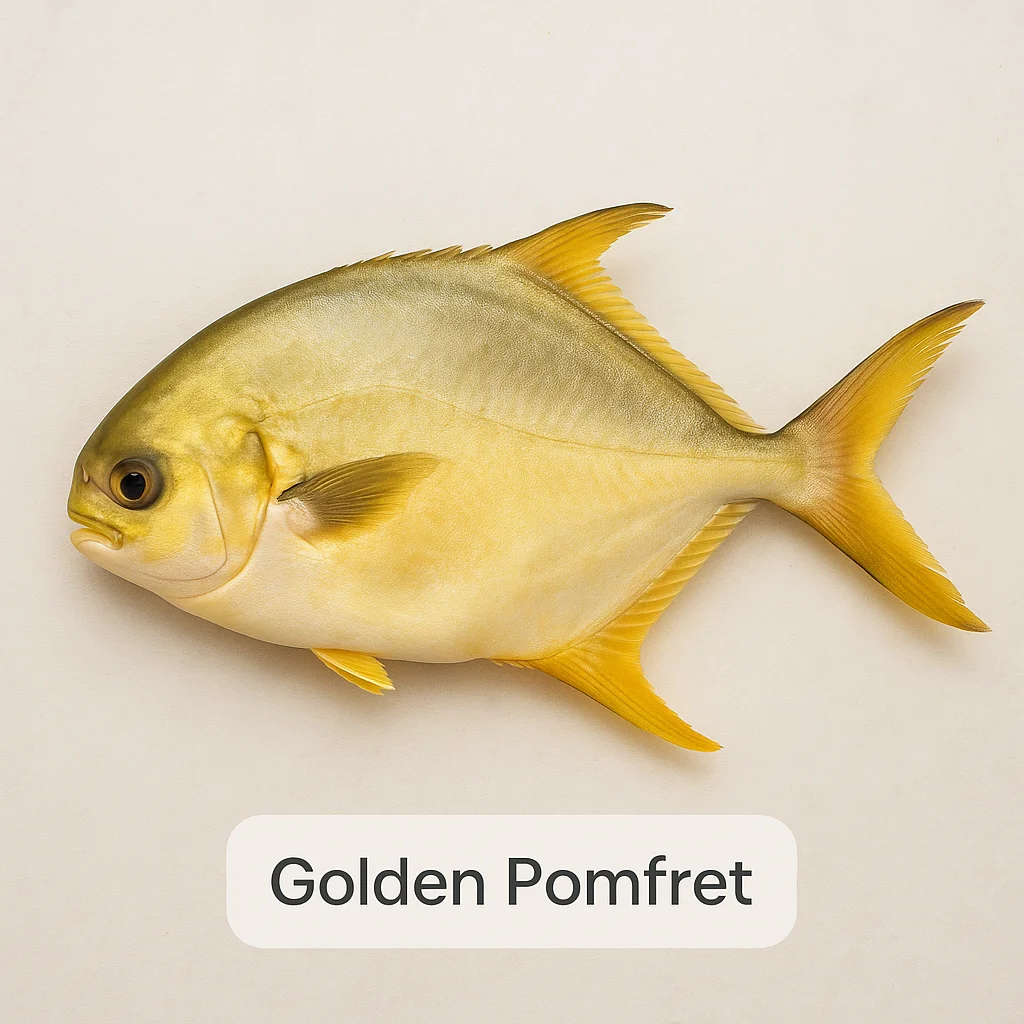
Consuming Golden Pomfret can be a culinary treat as it is adaptable to numerous cooking methods. It is cherished not only for its taste but also for its aesthetic appeal when served whole. Its appealing texture and flavor make it an excellent choice for those seeking a mild, sweet fish that pairs well with a variety of dishes worldwide.
🐠 Taste & Texture
Golden Pomfret features a delightful balance of mildness and sweetness. The fish is neither too oily nor too lean, which gives it a satisfying mouthfeel. Fresh Golden Pomfret has a delicate smell, indicative of high freshness, and a smooth, buttery texture that flakes gently upon cooking.
- Mildly sweet flavor
- Medium fattiness
- Moist and tender mouthfeel
- Soft flakes
- Fresh, oceanic smell when raw
🌊 Origin & Habitat
Golden Pomfret thrives in the warm coastal waters of the Indo-Pacific region. It is commonly found in tropical and subtropical reefs, where it inhabits sandy and muddy bottoms. This fish is harvested both in the wild and through aquaculture, with farmed varieties rising in popularity due to their consistent availability.
Major sources of Golden Pomfret include regions around Southeast Asia and the Indian Ocean. In these waters, the fish can grow abundantly, allowing for sustainable farming practices that do not heavily impact wild populations.
📅 Best Season
The peak season for Golden Pomfret often coincides with warmer months, although its availability may vary significantly by region. Understanding peak seasons can help consumers purchase fish with optimal fat content and taste quality, as Golden Pomfret tends to be richer during these times. However, thanks to aquaculture, Golden Pomfret is available year-round in many areas.
If region-specific seasonal data is unavailable, consult local fish markets or sources for guidance on the best time to buy Golden Pomfret.
🔪 Preparation
Preparing Golden Pomfret is straightforward, making it a favorite for many kitchen enthusiasts. Start with cleaning the fish under cold running water. Follow by scaling, gutting, and removing the pin bones if necessary. Make sure to rinse the cavity well and pat it dry.
- Rinse under cold water
- Scale the skin with a fish scaler or back of a knife
- Gently cut open the belly to remove innards
- Remove any remaining pin bones
- Pat dry with a paper towel
For odor control, a quick dip in milk or a sprinkle of salt can help neutralize any persistent scents, ensuring a fresher finish when cooking.
❄️ Storage Tips
Golden Pomfret should be stored with care to maintain its quality. Fresh fish can be stored in the coldest part of the refrigerator, ideally on ice, for up to two days. Wrap it in airtight packaging to prevent exposure to air and absorb unwanted odors.
When planning to freeze, consider portioning the fish and using vacuum-sealed bags to prevent freezer burn. Thaw slowly in the refrigerator to maintain texture and flavor.
- Do keep the fish cold at all times
- Don’t store in the fridge for more than two days without freezing
- Do use airtight containers
- Don’t freeze without removing excess air from packaging
🍽️ Popular Dishes
Golden Pomfret's flexibility in cooking methods makes it suitable for an array of culinary dishes. Here are some notable ways it can be prepared:
- Grilled Pomfret: Often brushed with a mix of herbs and olive oil, then grilled to highlight its natural flavors.
- Pan-seared Pomfret: Quickly searing on high heat allows the skin to become crispy while maintaining the fish’s moist interior.
- Pomfret Stew: A comforting option, simmered with vegetables and spices.
- Fried Pomfret: Usually deep-fried in batter or breading, perfect for a crunchy texture.
- Steamed Pomfret: Steamed whole with ginger and soy sauce, this classic Asian preparation keeps the fish tender.
- Baked Pomfret: Baked at a gentle temperature, often with lemon and herbs.
- Ceviche-style Pomfret: Cured in citrus juices, though it's vital to ensure the fish is sashimi-grade for raw preparations.
When serving raw dishes, prioritize food safety by sourcing high-quality, sashimi-grade Golden Pomfret to minimize health risks.
🥗 Nutritional Benefits
Golden Pomfret is a nutritionally beneficial choice, providing a good source of protein and vitamins essential to a balanced diet. It is also relatively low in calories and fats, making it a heart-friendly option.
- Rich in protein
- Contains omega-3 fatty acids
- Good source of vitamin D
- Provides essential minerals like calcium and iron
⚠️ Who Should Eat & Caution
Individuals with fish allergies should obviously avoid consuming Golden Pomfret. Additionally, like other seafood, cross-contact in shared kitchen environments is a risk, and appropriate measures should be taken to avoid allergen transfer.
Mercury levels in Golden Pomfret may vary, and consumers are advised to take general precautions, especially those who are pregnant or feeding young children. It's also important to handle raw fish properly to reduce risks associated with parasites and foodborne illnesses.
📌 Summary
Golden Pomfret is a versatile and mild-flavored fish enjoyed in a variety of dishes globally. Its adaptability in the kitchen makes it a favorite among seafood lovers. When purchasing, ensure freshness by checking the eyes, gills, and overall firmness.
With proper handling and storage, Golden Pomfret remains a wise choice for those looking to incorporate a delicious and nutritious fish into their diet.
- Mild taste with a sweet undertone
- Flakey, tender texture
- Available year-round in many regions
- Suited for grilling, steaming, frying, and baking
- Store properly to maintain freshness and flavor