🐟 Carp
Carp is a freshwater fish that has long been a staple in various cuisines around the world. Known for its adaptability, carp is found in numerous waterways and is appreciated for its slightly sweet flavor and delicate texture. It is often consumed as a versatile fish that can be prepared in multiple ways, from frying to stewing, making it a popular choice among seafood enthusiasts. Its presence in cultural dishes in Europe, Asia, and beyond underscores its widespread appeal. Carp is a lean fish, meaning it has less fat than oily fish like salmon, making it a lighter choice for those conscious of their fat intake.
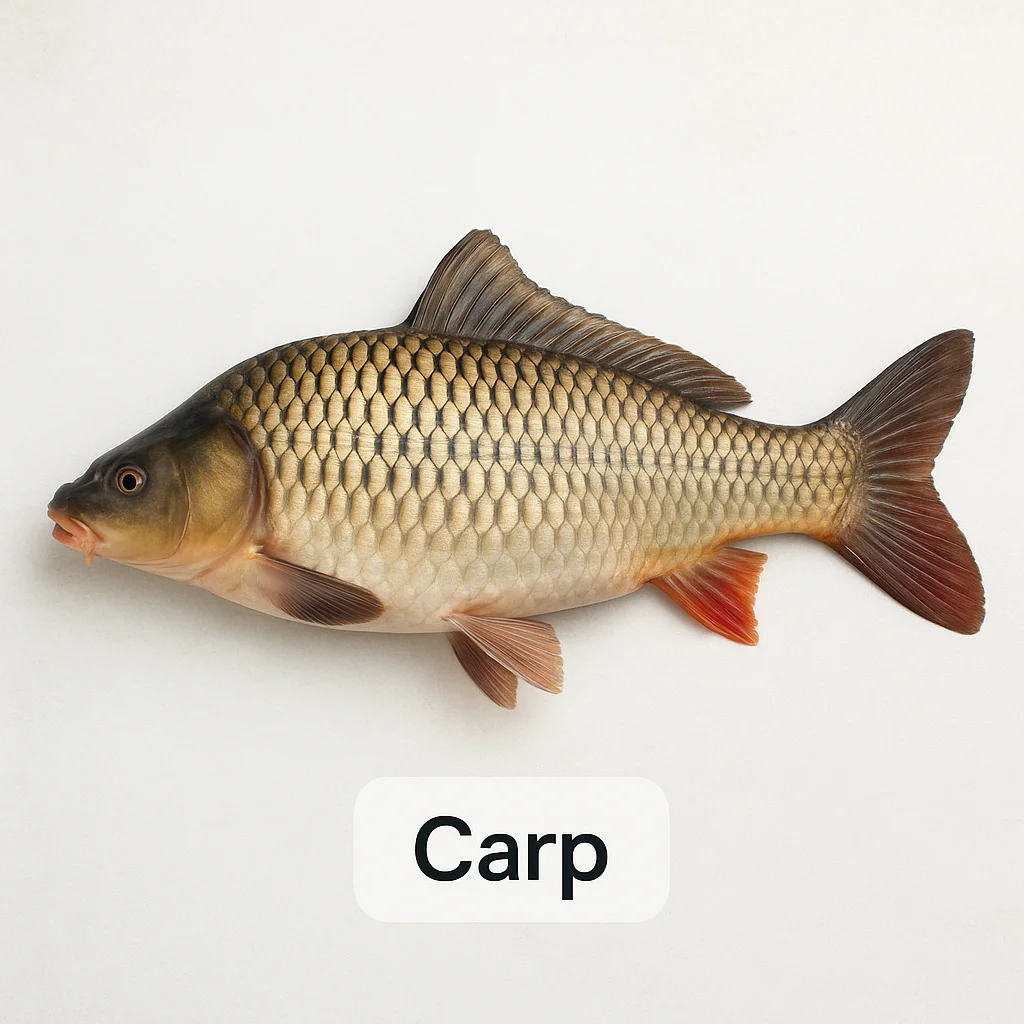
People often opt for carp not only for its culinary flexibility but also for its availability. Farmed carp is particularly common and provides a consistent supply in markets worldwide. Alternative names for carp include "Cyprinidae," a family to which carp belongs, and "Common carp," which is a specific species within this group. Understanding the characteristics of carp can enhance one’s culinary use and ensure a delightful dining experience.
🐠 Taste & Texture
The taste of carp can be described as mild and slightly sweet, with a delicate, flaky texture. Fresh carp emanates a clean, watery aroma reminiscent of its freshwater origins. When cooked correctly, the meat is moist and tender, contributing to its appeal in various cooking methods.
- Mild, slightly sweet flavor
- Delicate, flaky texture
- Moist and tender when cooked
- Freshwater aroma when fresh
🌊 Origin & Habitat
Carp are native to Asia but have been introduced to many parts of the world. They inhabit a wide range of environments, from rivers to lakes. While wild carp are available, farm-raised carp are more commonly found in markets, providing a more controlled and consistent product. This has implications on flavor and texture, with farmed carp often being more uniform in these aspects. The common regions for carp farming and harvesting include parts of Europe, Asia, and North America.
📅 Best Season
Seasonality varies by region; however, carp are often available year-round due to aquaculture practices. The peak season for fishing wild carp is usually in the summer when the waters are warmer, enhancing the fat content of the fish, which can enrich flavor and texture.
🔪 Preparation
Preparing carp requires careful cleaning and scaling due to its thick scales. Gutting is necessary, and attention should be paid to removing all the pin bones for a safer eating experience. Proper trimming will also enhance presentation and cooking.
- Use a sharp knife for scaling
- Remove entrails and rinse thoroughly
- Check for and remove pin bones
- Trim edges for a clean appearance
To manage carp’s natural fishy aroma, soaking it briefly in milk or a saltwater solution before cooking can neutralize strong odors. A quick rinse under cold water can also be effective.
❄️ Storage Tips
For optimal freshness, store carp in the refrigerator for no more than 2-3 days. Use ice or airtight wrapping to maintain quality. When freezing, portion carp into meal sizes, removing as much air as possible to prevent freezer burn. Thaw carp safely in the refrigerator, never at room temperature.
- Do: Use airtight containers or wrapping
- Do: Store on ice in the fridge for short-term
- Don't: Leave out at room temperature
- Don't: Refreeze once thawed
🍽️ Popular Dishes
Carp is celebrated in various cuisines, offering a canvas for diverse flavors. Popular dishes include:
- Grilled carp with herbs, which highlights its delicate texture through quick, high-heat cooking
- Steamed carp in ginger sauce, where gentle cooking retains moisture and preserves tenderness
- Fried carp with a crispy herb coating, offering a delightful crunch
- Baked carp with lemon and dill for a refreshing taste
- Carp chowder, utilizing slow cooking for a comforting dish
- Carp ceviche, using acid to marinate; advisable only with sashimi-grade fish due to raw preparation
When considering raw preparations like ceviche, ensure sourcing from a reputable supplier to minimize risks associated with parasites.
🥗 Nutritional Benefits
Carp provides a solid source of protein, making it a healthy addition to any diet. It is known for containing essential vitamins and minerals, contributing to overall well-being.
- High in protein
- Source of omega-3 fatty acids
- Contains vitamins such as B12
- Rich in minerals like selenium and phosphorus
⚠️ Who Should Eat & Caution
Like all fish, carp can cause allergic reactions in sensitive individuals due to fish allergens. Cross-contact in kitchens is also a concern, especially for those with severe allergies. While generally low in mercury, it’s always prudent for pregnant individuals and young children to consume fish in moderation. The risks of consuming raw or undercooked carp include exposure to parasites, emphasizing the need for proper handling and preparation techniques. Always maintain food safety standards such as hand washing and using clean utensils and surfaces.
📌 Summary
Carp offers a mild, slightly sweet taste and a flaky, tender texture, making it a versatile choice in many recipes. Available year-round, especially from farmed sources, it’s a reliable option for seafood lovers worldwide. Proper preparation and storage are key to maximizing carp’s culinary potential.
- Flavor: Mild, slightly sweet
- Texture: Flaky, tender
- Best Uses: Grilled, steamed, fried, baked, ceviche (safety first)
- Storage: Refrigerate up to 3 days, freeze properly
- Safety: Follow safe-handling practices