🐟 Barramundi
Barramundi, also known as Asian sea bass, is a versatile and popular fish found in both wild and farmed environments. Known for its mild flavor and firm texture, barramundi is a favorite choice among seafood lovers worldwide. It's often praised for its ability to adapt to various cooking methods, making it a staple in many culinary traditions. People eat barramundi not only for its delightful taste but also for its potential health benefits, as it's rich in nutrients that may support heart and brain health.
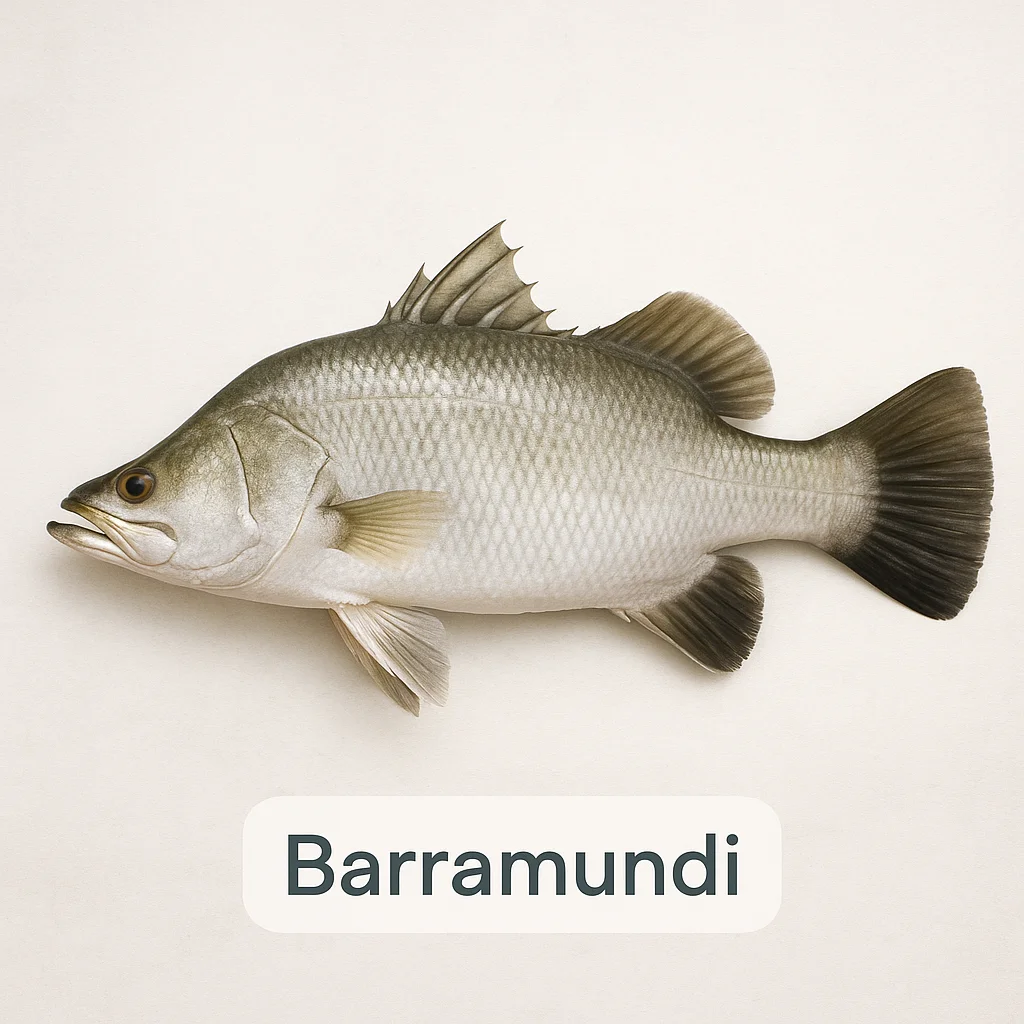
Barramundi is typically found in the Indo-Pacific region, ranging from Southeast Asia to Northern Australia. It is known by various names depending on the locale, which can include Asian sea bass in culinary contexts. The fish is commonly prepared in a variety of styles, offering delightful flavor profiles and textures that satisfy diverse palates.
🐠 Taste & Texture
The flavor of barramundi is often described as mild and slightly sweet, making it an excellent option for those who appreciate subtle seafood flavors. It is a lean fish, with a firm yet moist texture, and it flakes easily when cooked. Fresh barramundi does not have an overpowering fishy smell, which is a testament to its freshness and quality.
- Mild, slightly sweet flavor
- Firm, moist texture
- Large, opaque flakes
- Fresh aroma with minimal fishiness
🌊 Origin & Habitat
Barramundi thrives in a range of water environments, from coastal shores and river mouths to freshwater lakes and estuaries. It is found throughout the Indo-Pacific region, particularly in countries such as Australia, Indonesia, and Thailand. While wild-caught barramundi is available, much of the barramundi consumed globally is farmed. Farming offers a consistent and sustainable source, with farmed barramundi often having a slightly milder flavor and firmer texture compared to its wild-caught counterpart.
📅 Best Season
While the specific peak season for barramundi can vary depending on the region, generally, the best season for wild-caught barramundi is during the warmer months when the fish head into estuaries for breeding. Farmed barramundi, however, is available year-round, providing a reliable option for consumers. Seasonality matters as it can affect the fat content and texture of the fish, with peak seasons often yielding superior quality specimens.
🔪 Preparation
Preparing barramundi involves several key steps to ensure the best culinary results. Begin by scaling and cleaning the fish thoroughly. Remove the guts and trim off any unwanted fins. Pay attention to pin bones, which can be carefully removed with tweezers. Using a sharp knife and practicing safe handling techniques is essential for effective preparation.
- Scale and clean thoroughly
- Remove guts and trim fins
- Remove pin bones
- Use sharp knives and safe handling practices
To manage any lingering fishy odor, consider soaking the fish briefly in milk or a lightly salted water solution, followed by a quick rinse. This can help further enhance its mild flavor without overpowering it.
❄️ Storage Tips
Keeping barramundi fresh requires proper storage techniques. In the fridge, it is best consumed within 1–2 days. For ice storage, place fish on a bed of crushed ice in a colander to allow drainage and maintain a cold temperature. Wrapping the fish in airtight packaging can help preserve its quality.
If freezing, portion the fish and remove as much air as possible to prevent freezer burn. Label and date packages to monitor storage time. For thawing, use the refrigerator or cold water method shortly before cooking.
- Do refrigerate and use within 1–2 days
- Do keep wrapped airtight for storage
- Don’t leave at room temperature for extended periods
- Don’t refreeze once thawed
- Don’t thaw at ambient temperature
🍽️ Popular Dishes
Barramundi lends itself well to a variety of cooking methods, highlighting its mild flavor and firm texture. Here are some popular dishes featuring barramundi:
- Grilled Barramundi with Lemon and Herbs - High heat grilling accentuates the crisp, textured exterior.
- Pan-Seared Asian Sea Bass - Quick pan-searing keeps the fish tender and moist, enhancing its mild sweetness.
- Barramundi Stew - Slow-cooked with vegetables, this dish highlights a rich and comforting texture.
- Fried Barramundi Fillets - Lightly battered and fried for a crispy finish, offering a delightful contrast to its firm meat.
- Steamed Barramundi with Ginger and Soy - Gentle steaming preserves moisture and allows the infusion of aromatic flavors.
- Baked Barramundi with Vegetables - Even, gentle cooking highlights barramundi's flaky quality.
For raw preparations like ceviche, ensure a high-quality, sashimi-grade fish to minimize risks associated with raw seafood consumption.
🥗 Nutritional Benefits
Barramundi is an excellent source of lean protein, providing essential amino acids that support body and muscle health. It often contains beneficial omega-3 fatty acids that contribute to overall wellness. Additionally, barramundi is a source of various vitamins and minerals, including Vitamin D, potassium, and selenium.
- Rich in protein
- Contains omega-3 fatty acids
- Source of essential vitamins and minerals
⚠️ Who Should Eat & Caution
Those with fish allergies should avoid consuming barramundi to prevent any adverse reactions. Cross-contact in kitchens is a concern for anyone with severe allergies. While barramundi typically has lower mercury levels than many other fish, consuming it in moderation is advised, especially for pregnant people and young children.
Individuals interested in raw or undercooked preparations should ensure proper sourcing to avoid parasite risks. Safe-handling practices remain crucial, with emphasis on clean tools, separation of raw seafood, and proper handwashing to prevent cross-contamination.
📌 Summary
Barramundi is a versatile fish celebrated for its mild and slightly sweet flavor, firm texture, and adaptability to various cooking methods. Whether grilled, steamed, or pan-seared, barramundi brings subtlety and elegance to the dining table. Proper storage extends its freshness, and consuming in moderation offers nutritional benefits without undue risk concerns.
- Mild, delicate flavor with a firm texture
- Suitability for diverse culinary styles
- Mindful handling for safety and freshness