🐟 How Long Fish Lasts in the Fridge and Freezer (By Type & Cut)
🧭 Quick Overview
Learning how to properly store fish is a crucial skill for preserving its freshness, taste, and quality. This guide is perfect for cooks of all levels who want to maximize the shelf life of their seafood and avoid spoilage.
- Best for: Home cooks, seafood enthusiasts, meal preppers.
- Common problems solved: Preventing spoilage, extending shelf life, maintaining flavor and texture.
- What you need: Refrigerator, freezer, airtight containers, proper labeling tools.
🧠 Why This Matters
Fish is not only a flavorful and nutritious option but also delicate and perishable. Proper storage can prevent food waste, save money, and ensure safe consumption by protecting against harmful bacteria.
✅ Step-by-Step Method
Follow these steps to store your fish properly, whether you’re refrigerating or freezing it.
- Step 1: Immediately refrigerate or freeze fish after purchasing to slow down bacterial growth.
- Step 2: For the fridge, store fresh fish in the coldest part, ideally between 32°F and 38°F, using a tightly sealed container or wrapping it in wax paper and placing it in a bowl of ice.
- Step 3: For the freezer, wrap fish tightly in plastic wrap, followed by aluminum foil, ensuring no air pockets remain.
- Step 4: Label containers with the date of storage to track freshness.
- Step 5: Thaw frozen fish in the refrigerator or in cold water and use it soon after thawing.
🧾 Checklist
Ensure optimal storage for all types of fish and cuts with this checklist.
- Always choose fresh fish for longer storage potential.
- Keep fish cold and properly sealed in the fridge or freezer.
- Regularly check storage temperatures and consume or freeze before expiration.
⚠️ Common Mistakes & Fixes
- Mistake: Storing fish on the fridge door. Fix: Keep it in the coldest part, away from fluctuating temperatures.
- Mistake: Freezing fish in a single layer in plastic bags. Fix: Wrap it tightly to prevent freezer burn.
- Mistake: Thawing fish at room temperature. Fix: Thaw it in the fridge or a cold water bath to maintain quality.
🌍 Variations by Fish Type
The type and cut of fish play a critical role in how long they can be stored. Here’s how different types vary:
- Oily fish: Such as salmon and mackerel, last 1-2 days in the fridge and 2-3 months in the freezer.
- Lean white fish: Cod and haddock can last up to 3 days refrigerated and 6 months frozen.
- Thick steaks: Like swordfish, are best consumed within 1-2 days if refrigerated, but can be frozen for up to 4 months.
- Thin fillets: Such as flounder, stay fresh for 1-2 days in the fridge and can be frozen for up to 2 months.
🧊 Storage & Leftovers
For leftover fish, ensure prompt cooling and storage. Leftovers should be placed in airtight containers and stored in the fridge within two hours of cooking, lasting up to 2 days. Reheat to an internal temperature of 145°F for safety.
🛒 Buying Tips
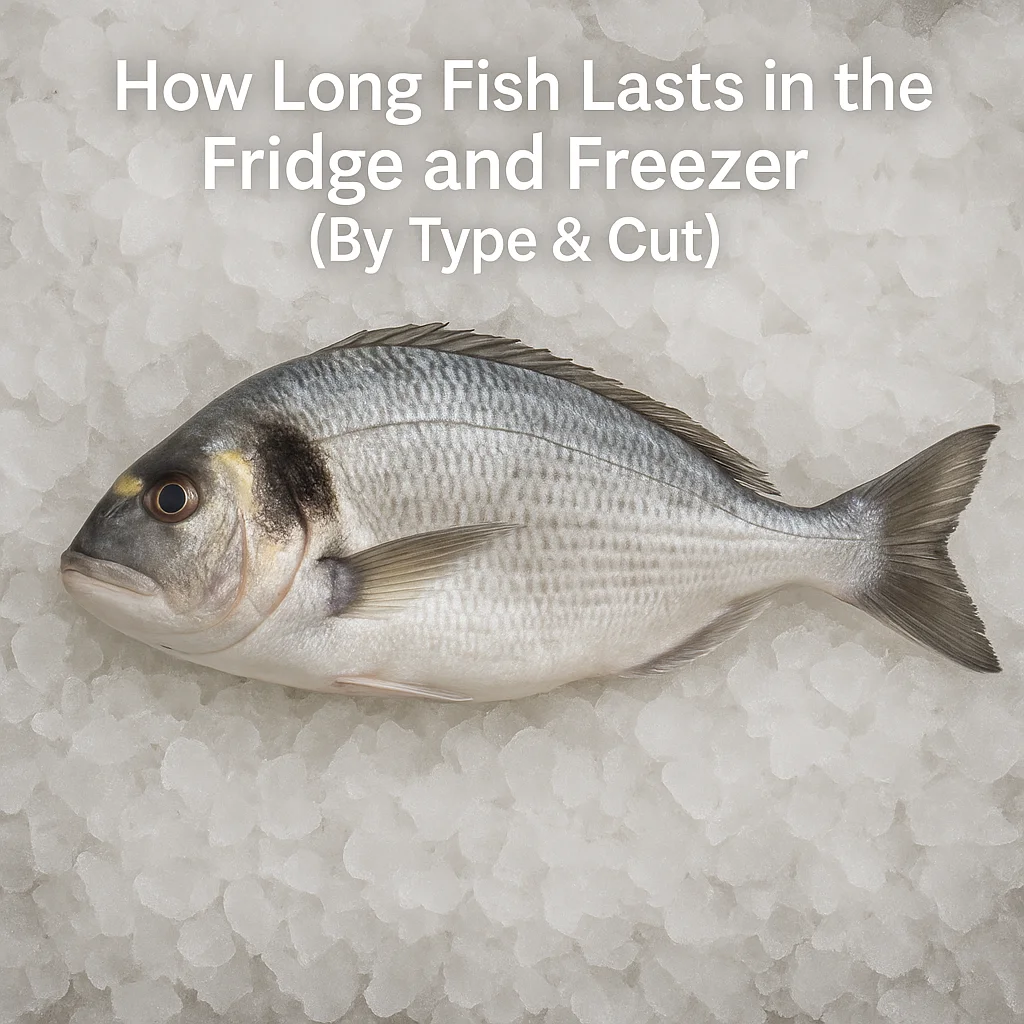
When shopping for fish, look for whole fish with clear eyes and shiny skin. Avoid any with dull coloration or an off-putting smell. For fillets, opt for fresh-smelling varieties with firm, translucent flesh.
🧼 Safety Notes
Minimize cross-contamination by using separate cutting boards and knives for fish. Always sanitize kitchen surfaces after handling raw fish. Cook fish to a minimum internal temperature of 145°F to ensure safety.
❓ FAQs
- Question: Can I refreeze fish once thawed? Answer: Generally, it is best not to refreeze fish to maintain quality, unless it was thawed in the refrigerator.
- Question: How can I tell if fish has gone bad? Answer: Check for a sour smell, slimy texture, and discoloration as signs of spoilage.
- Question: Is vacuum-sealing fish effective? Answer: Yes, it significantly extends storage life by preventing air exposure.
📌 Summary
- Store fish in optimal temperatures to extend freshness and safety.
- Oily fish has a shorter shelf life than lean types due to higher fat content.
- Proper preparation before freezing helps maintain taste and texture.