🐟 Sweet Shrimp
Sweet Shrimp, also known as Amaebi, is a popular seafood delicacy enjoyed worldwide for its delicate sweetness and tender texture. Often prized in sushi and sashimi dishes, Sweet Shrimp offers a unique flavor profile that stands apart from other types of shrimp and seafood. Enjoyed raw or cooked, Sweet Shrimp is an enticing option for those who relish the subtle interplay of flavors and textures that quality seafood provides.
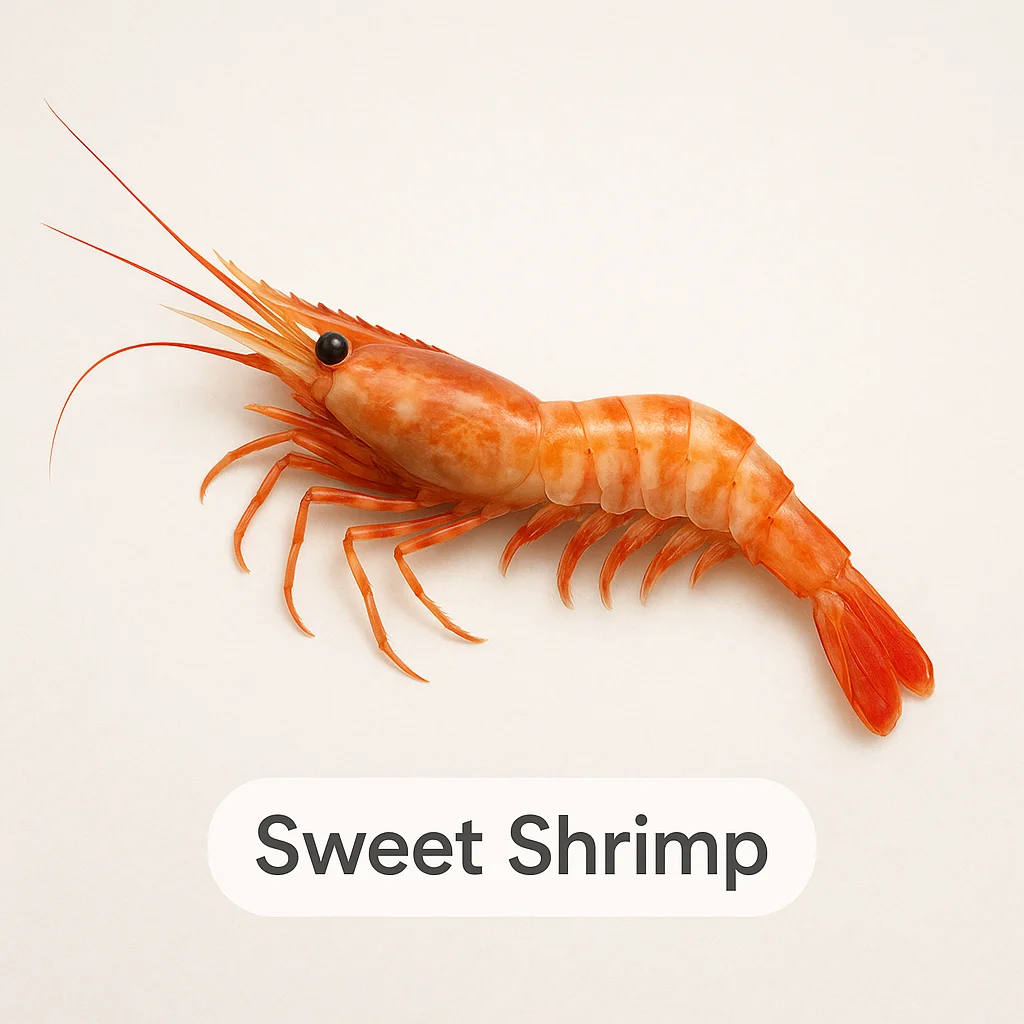
People enjoy Sweet Shrimp not only for its taste but also for its versatility in cooking methods. Whether incorporated into a refreshing raw dish like sushi or lightly cooked, its sweet taste is accentuated, making it a favored choice among chefs and seafood lovers alike. Known for its translucent flesh and delicate size, Sweet Shrimp is often highlighted in meals that celebrate raw seafood.
🐠 Taste & Texture
Sweet Shrimp is renowned for its distinct sweetness and extremely tender texture. Its sweetness is not overpowering but has an alluring mildness that pairs well with a variety of seasonings and preparations. When fresh, its aroma is subtle and possesses a characteristic oceanic scent, free from any overpowering fishiness.
- Flavor Intensity: Mildly sweet with subtle brininess
- Texture: Extremely tender and slightly creamy
- Mouthfeel: Smooth and soft
- Flake Size: Minimal flake, clings together
- Smell when Fresh: Clean ocean aroma
🌊 Origin & Habitat
Sweet Shrimp are typically found in cold waters, flourishing in coastal regions and deep, sandy areas of the ocean. These shrimps are most commonly harvested in the North Pacific, particularly off the coasts of Japan, Canada, and Norway. Both wild-caught and farmed varieties exist, with wild-caught often regarded for their superior flavor and firmer texture, while farmed ones tend to offer more consistent availability.
📅 Best Season
Seasonality for Sweet Shrimp varies by region, but they are generally at their peak during the colder months. This peak seasonality is significant as it affects the shrimp's fat content and texture, often making them more flavorful and tender. Understanding when Sweet Shrimp is in peak season can lead to a more enjoyable culinary experience, sometimes also offering a more appealing price point.
🔪 Preparation
Preparing Sweet Shrimp involves careful cleaning and possibly shell removal, depending on the dish. They are usually served raw in sushi or lightly cooked in other dishes, and proper handling is crucial to maintaining their delicate flavor and texture.
- Use a sharp knife to gently peel the shell
- Remove the head and digestive tract if necessary
- Rinse in cold water to clean thoroughly
- Pat dry with a paper towel before use
For odor control, a quick rinse with salt water or a light soak in milk can help reduce any undesirable smells, ensuring the shrimp's natural sweetness and freshness stand out.
❄️ Storage Tips
To maintain freshness, Sweet Shrimp should be stored correctly. When refrigerating, keep them wrapped tightly in airtight containers to minimize exposure to air. If storing on ice, ensure the shrimp are not in direct contact with ice to avoid waterlogging.
- Do not leave shrimp at room temperature
- Refrigerate promptly if not consuming immediately
- Avoid overpacking to enable air circulation
- When freezing, remove as much air as possible from packaging
- Thaw slowly in the refrigerator before use
🍽️ Popular Dishes
Sweet Shrimp is versatile and used in a range of culinary styles globally. Popular dishes include:
- Sushi and Sashimi: Raw, served with soy and wasabi
- Tempura: Lightly battered and fried for a crispy exterior
- Grilled: Quickly seared on a hot grill to maintain tenderness
- Steamed: Gentle steaming preserves sweetness and moisture
- In Salads: Tossed with fresh vegetables and a light vinaigrette
- Ceviche: Marinated in citrus, though caution with raw preparation is advised
When preparing dishes using raw Sweet Shrimp, ensure that the shrimp is sashimi-grade, a marketing term indicating suitability for raw consumption.
🥗 Nutritional Benefits
Sweet Shrimp offers a range of nutritional benefits, providing important nutrients that support a healthy diet. While it's a source of lean protein, it also contributes omega-3 fatty acids, vital for various bodily functions.
- Rich source of protein
- Contains omega-3 fatty acids
- Includes vitamins like B12
- Contains essential minerals such as selenium and zinc
⚠️ Who Should Eat & Caution
While Sweet Shrimp is enjoyed by many, individuals with shellfish allergies should refrain from consuming it. Like many seafood options, it may contain varying levels of mercury, so consumption should be moderate, especially for pregnant individuals and young children. Raw or undercooked shrimp can pose health risks, so it's crucial to ensure proper handling and preparation to avoid cross-contamination. Always use separate cutting boards and clean tools thoroughly after handling raw shrimp.
📌 Summary
Sweet Shrimp is a delicate, flavorful seafood option that excels in both raw and cooked dishes. Celebrated for its sweetness, it pairs perfectly with a variety of culinary styles, from traditional sushi to innovative Western preparations. Proper handling and storage ensure its freshness and flavor, making it a versatile choice that enriches a diverse array of meals.
- Known for its sweet, mild flavor
- Ideal for raw and lightly cooked dishes
- Ensure proper preparation for food safety
- Store and handle with care to maximize freshness and taste