🐟 Spot Shrimp
Spot shrimp, also known as spot prawns, are a prized type of shellfish celebrated for their exceptional flavor and texture. These shrimp are a popular choice among seafood enthusiasts around the globe, especially known for their larger size compared to other shrimp types. Often found in various recipes due to their sweet and succulent flesh, spot shrimp are a delicious and versatile ingredient.
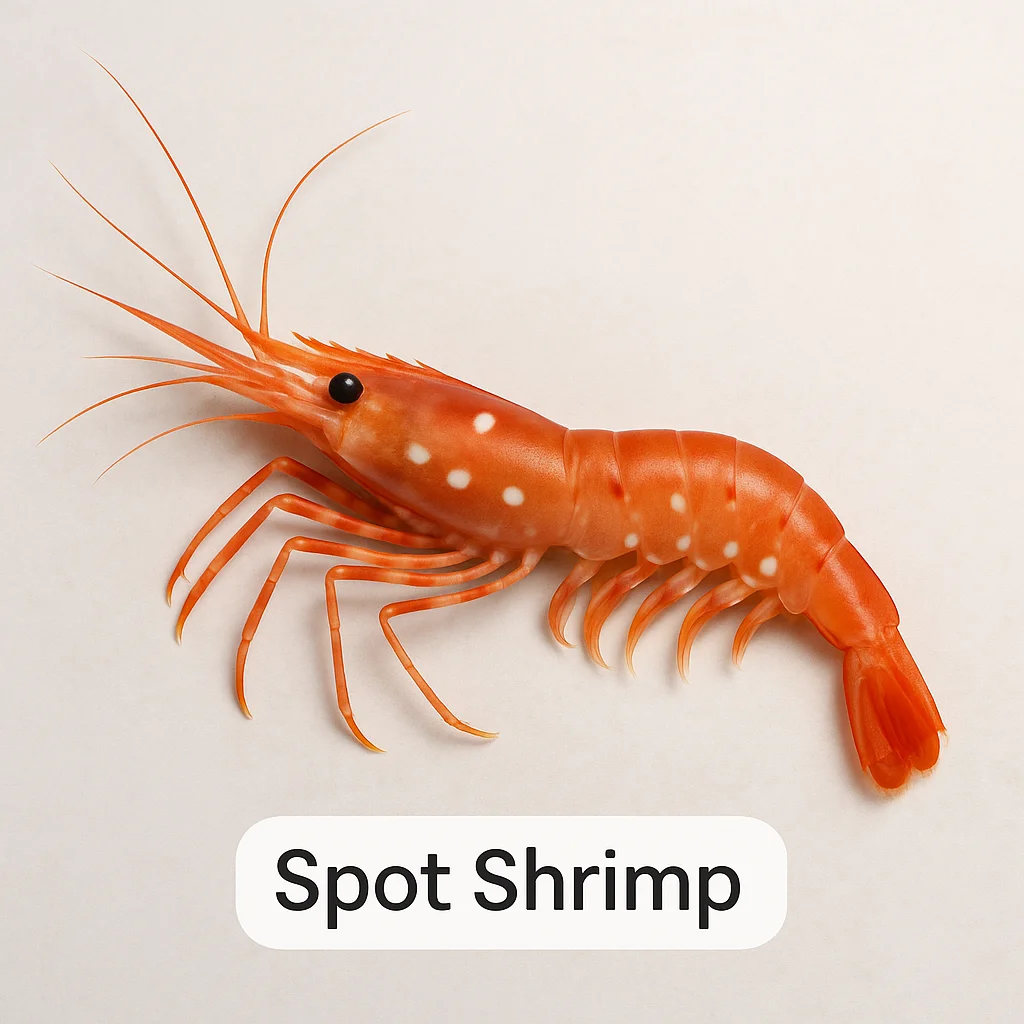
Spot shrimp are primarily harvested from cold North Pacific waters and are readily identified by the distinctive white spots on their shells, from which they derive their name. Their popularity stems from their sweet, rich flavor and firm texture, making them ideal for a variety of cooking methods. Consumed worldwide, spot shrimp are a must-try for anyone interested in exploring premium seafood options.
🐠 Taste & Texture
The taste of spot shrimp is often described as sweet and delicately briny, with a notable difference in flavor when compared to other shrimp varieties. Their flesh is tender and firm when cooked, with a pleasant, slightly chewy texture that holds up well to various cooking methods.
- Flavor Intensity: Rich, sweet
- Sweetness: Noticeably sweet with a mild brininess
- Fatty Content: Lean
- Mouthfeel: Firm and slightly chewy
- Flake Size: Medium-large flakes
- Smell When Fresh: Subtly oceanic, not overly fishy
🌊 Origin & Habitat
Spot shrimp inhabit the Pacific waters, predominantly along the coasts of Alaska, British Columbia, and Washington. They thrive in deeper, cold-water environments and are typically found at depths between 300 to 450 feet. These shrimp are usually wild-caught, although there are some limited farming initiatives that focus on sustainability and quality.
The habitat of spot shrimp plays a significant role in their taste profile, as the cold, nutrient-rich waters contribute to their sweet, robust flavor. Wild-caught spot shrimp are recognized for their superior quality, though farm-raised variants may also be available in some markets.
📅 Best Season
The peak season for spot shrimp varies by region but generally occurs from late spring to early summer. During this time, spot shrimp are most abundant, leading to lower prices and better quality. Seasonality is important, as the shrimp's fat content and texture can change outside of peak harvest times, influencing flavor and cooking outcomes.
For the freshest options, it is advisable to look for locally-sourced spot shrimp during these peak months wherever possible. However, since availability varies, it is best to consult local guides or markets for the most accurate seasonal timing.
🔪 Preparation
Preparing spot shrimp involves a few straightforward steps to ensure maximum flavor and safety. Start by rinsing the shrimp under cold water and removing the heads, if still attached. The shells can be left on for cooking or removed based on preference. If peeling, start from the underside near the legs and work your way around the body. Be sure to de-vein the shrimp to improve taste and presentation.
- Rinse thoroughly under cold water
- Remove head, if desired
- Peel shell from the underside, if needed
- De-vein for better taste and texture
- Use clean utensils and separate cutting boards to prevent cross-contamination
For odor control, a quick rinse in a mild saltwater solution or soaking briefly in milk can help neutralize any remaining brininess, making the shrimp's aroma more appealing when cooked.
❄️ Storage Tips
Spot shrimp should be consumed as fresh as possible, but with proper storage, they can remain safe and tasty for later use. When refrigerating, keep them in an airtight container and consume within 1-2 days. Placing the shrimp on ice in the fridge can help maintain their freshness.
For longer-term storage, freezing is advisable. Before freezing, portion the shrimp into suitable sizes and remove as much air as possible from the storage bag to prevent freezer burn. It is recommended to thaw frozen shrimp in the refrigerator overnight to preserve texture and prevent contamination risks.
- Do: Store in the fridge on ice for short-term freshness
- Do: Freeze in airtight bags with portions in mind
- Don't: Leave at room temperature for prolonged periods
- Don't: Thaw at room temperature
🍽️ Popular Dishes
Spot shrimp are versatile and adaptable to numerous cooking styles across various cuisines. Here are some popular dishes where they shine as the star ingredient:
- Grilled Spot Shrimp: Grilled quickly on high heat, highlighting their natural sweetness and firm texture.
- Shrimp Scampi: Sautéed in garlic and butter, served over pasta for a rich and satisfying dish.
- Tempura Spot Shrimp: Lightly battered and deep-fried, emphasizing their delicate flavor and crispy texture.
- Spot Shrimp Ceviche: Cold and marinated in citrus juices; be cautious with raw preparations and ensure safe sourcing.
- Shrimp Stew: Gently simmered in a spicy broth, pairing well with vegetables and grains.
- Baked Spot Shrimp: Slowly baked with herbs and spices, perfect for retaining moisture and flavor.
- Steamed Spot Shrimp: Steamed over aromatic herbs, resulting in a softer texture and intensified natural sweetness.
🥗 Nutritional Benefits
Spot shrimp are not only delicious but also packed with nutritional benefits. They are an excellent source of lean protein, making them a healthy addition to your diet. In addition to being low in calories and fat, they offer essential nutrients found naturally in seafood.
- High in protein
- Rich in omega-3 fatty acids
- Good source of vitamins B12 and E
- Contains essential minerals like zinc and selenium
⚠️ Who Should Eat & Caution
Spot shrimp, like all shellfish, can pose allergy risks. Individuals allergic to shellfish should avoid consumption, and care should be taken to prevent cross-contact during preparation. Additionally, while spot shrimp are generally low in mercury, pregnant individuals and young children should still consume them in moderation.
For those considering raw preparations such as ceviche, sourcing from a reputable supplier is critical to minimize risks associated with parasites. Adhering to safe cooking practices, including cooking until the shrimp become opaque and firm, will help prevent foodborne illnesses.
📌 Summary
Spot shrimp offer an exquisite taste that features a sweet and slightly briny profile. Their firm and chewy texture allows them to be prepared using a wide array of culinary methods, making them a versatile ingredient in many cuisines. With proper handling and storage, they provide a nutrient-rich seafood option for many worldwide.
- Rich, sweet flavor with firm texture
- Seasonality varies, but best from late spring to early summer
- Can be grilled, baked, steamed, or used in ceviche
- Nutritious, rich in protein and essential vitamins
- Handle carefully to minimize allergy and contamination risks