🐟 Dungeness Crab
The Dungeness Crab is a beloved shellfish known for its sweet, tender meat and impressive culinary versatility. Found primarily on the Pacific coast of North America, this crab has earned a reputation as a delicacy with its robust flavor and easy-to-crack shell. People often seek out Dungeness Crabs for their rich taste and the enjoyment of the traditional crab boil. Often referred to simply as "Dungeness" or "Dungie," these crabs are a staple in seafood culinary experiences across various cultures.
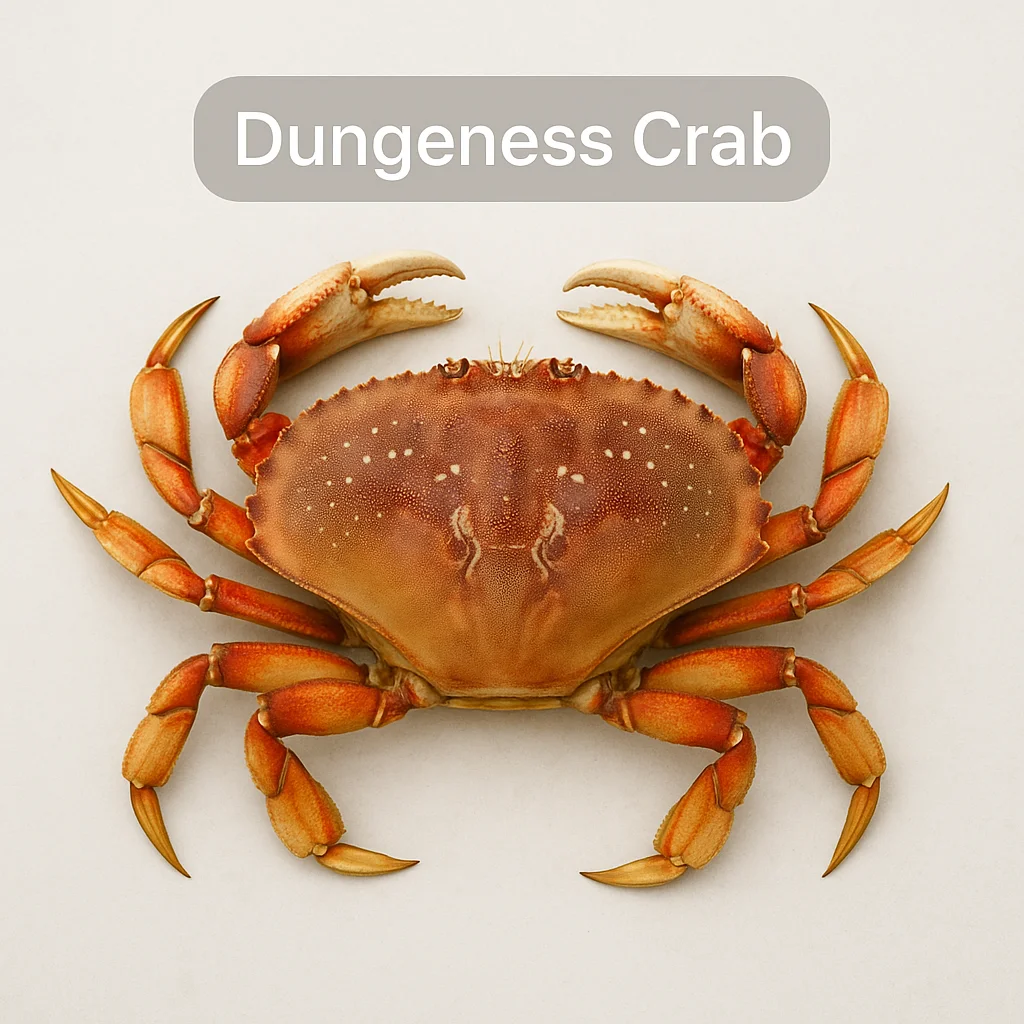
Characterized by their firm, succulent meat, Dungeness Crabs offer a fresh oceanic aroma and are celebrated both for solo consumption and as an ingredient in complex dishes. Their popularity stems not only from their taste but also from their nutritional benefits, making them a favored choice for those seeking a healthier seafood option.
🐠 Taste & Texture
Dungeness Crab is renowned for its rich and sweet flavor with a hint of ocean freshness. The meat is lean yet satisfying, offering a delicate balance between firmness and flakiness. The texture is tender and doesn't possess the oiliness found in some other shellfish, providing a delightful mouthfeel. When fresh, Dungeness Crabs have a clean, briny aroma that is inviting and indicative of their high quality.
- Quick Taste Profile:
- Flavor: Rich and sweet
- Texture: Tender, slightly firm
- Aroma: Fresh, briny sea scent
- Flake Size: Medium
🌊 Origin & Habitat
Dungeness Crabs inhabit the cold waters of the Pacific Ocean, thriving along the coasts of the United States from Alaska to California, and extending to British Columbia in Canada. These crabs are typically found in sandy or muddy bottom areas, emphasizing their preference for cooler, coastal environments. While they are primarily wild-caught, farming Dungeness Crab has not been extensively developed due to their natural habitat preferences.
Harvest of Dungeness Crabs is prominent in regions like Washington, Oregon, and California, where they form a significant part of the local seafood industry. Their distribution makes them more accessible in North American markets, while exports allow global seafood lovers to enjoy this prized shellfish.
📅 Best Season
The peak season for Dungeness Crab varies by region but generally occurs from late fall through early spring. This period is significant as it coincides with the crabs being at their heaviest and most flavorful, contributing to a fuller yield of meat. Seasonality can impact availability and pricing, making it beneficial to buy locally during peak times to ensure freshness and economic value.
🔪 Preparation
Preparing Dungeness Crab can be an enjoyable and rewarding process. Begin by thoroughly cleaning the crab. Remove the legs and claws, then detach the top shell to access the meat. Trim away the gills and other inedible parts carefully. The key to a successful preparation involves using sharp, clean knives and being mindful of safety protocols to avoid cross-contamination.
- Checklist for Beginners:
- Ensure the crab is fully thawed if previously frozen
- Twist off legs and claws
- Lift off back shell and remove the gills
- Rinse crab under cold water to remove debris
- Use a crab cracker or mallet to access meat in claws and legs
To manage any seafood odor, consider rinsing the crab pieces in a light saltwater solution. This step can help neutralize any lingering scent without overpowering the crab's natural flavors.
❄️ Storage Tips
Store Dungeness Crab in the fridge for up to two days if fresh, ensuring it is kept on ice or in an airtight container to maintain quality. For longer storage, consider freezing the crab meat. Portion the meat before freezing, remove as much air as possible from packaging to prevent freezer burn, and thaw slowly in the refrigerator to retain moisture and texture.
- Do/Don’t List:
- Do keep crabs cool immediately after purchase
- Don’t store crabs for more than two days fresh
- Do use airtight packaging for freezing
- Don’t refreeze once thawed
🍽️ Popular Dishes
Dungeness Crabs can be enjoyed in a myriad of dishes that span various culinary traditions:
- Crab Boil: Cook in seasoned water for a flavorful feast, best enjoyed outdoors with friends and family.
- Crab Cakes: Combine crab meat with breadcrumbs and spices, fry until golden, highlighting the crab's natural sweetness.
- Crab Bisque: Utilize the crab's richness for a creamy, luxurious soup.
- Grilled Crab: Enhances the natural flavors with a hint of smokiness.
- Crab Omelette: A savory breakfast option that pairs the tender crab with fluffy eggs.
- Crab Salad: Mix with fresh greens and a light vinaigrette for a refreshing dish.
- Steamed Dungeness Crab: Preserve the sweet, moist meat with gentle steaming.
While raw preparations like ceviche can be appealing, Dungeness Crab should be sourced from a reliable provider to minimize the risk of foodborne illnesses.
🥗 Nutritional Benefits
Dungeness Crab is a nutritious option rich in protein, making it a great choice for those looking to add lean seafood to their diet. It provides beneficial omega-3 fatty acids, which contribute to overall health. Additionally, this crab is a good source of vitamins and minerals, including vitamin B12, selenium, and zinc.
- Notable Nutrients:
- High-quality protein
- Omega-3 fatty acids
- Essential vitamins (B12)
- Vital minerals (selenium, zinc)
⚠️ Who Should Eat & Caution
As with all shellfish, individuals with allergies should exercise caution when consuming Dungeness Crabs. Cross-contact in kitchens can also pose a risk for those sensitive to shellfish. Although this crab is generally considered to have lower mercury levels than larger fish species, pregnant individuals and young children may want to limit intake as part of a balanced diet.
Consuming raw or undercooked Dungeness Crab can increase the risk of bacterial infection, so it's essential to ensure the crab is cooked properly, reaching an internal temperature appropriate for seafood safety. Always practice safe handling and thorough cleaning to maintain optimal food safety standards.
📌 Summary
Dungeness Crabs offer a sweet, rich taste symbolic of the Pacific coastline. They suit a variety of culinary uses, from hearty boils to delicate soups. Proper storage and handling ensure their freshness and safety for consumption.
- Key Takeaways:
- Best enjoyed fresh during peak seasons
- Rich in protein and essential nutrients
- Versatile cooking methods enhance flavors
- Handle with care to prevent cross-contamination