🐟 Crab
Crabs are a type of shellfish that are cherished as a delicacy around the world. They belong to a group known as decapod crustaceans, which also includes lobsters and shrimp. People enjoy crab for its rich, sweet meat and versatility in culinary applications. Known commonly by names such as blue crab, snow crab, and king crab, these creatures have adapted to various aquatic environments and can be found from coastal shallows to deep oceanic waters.
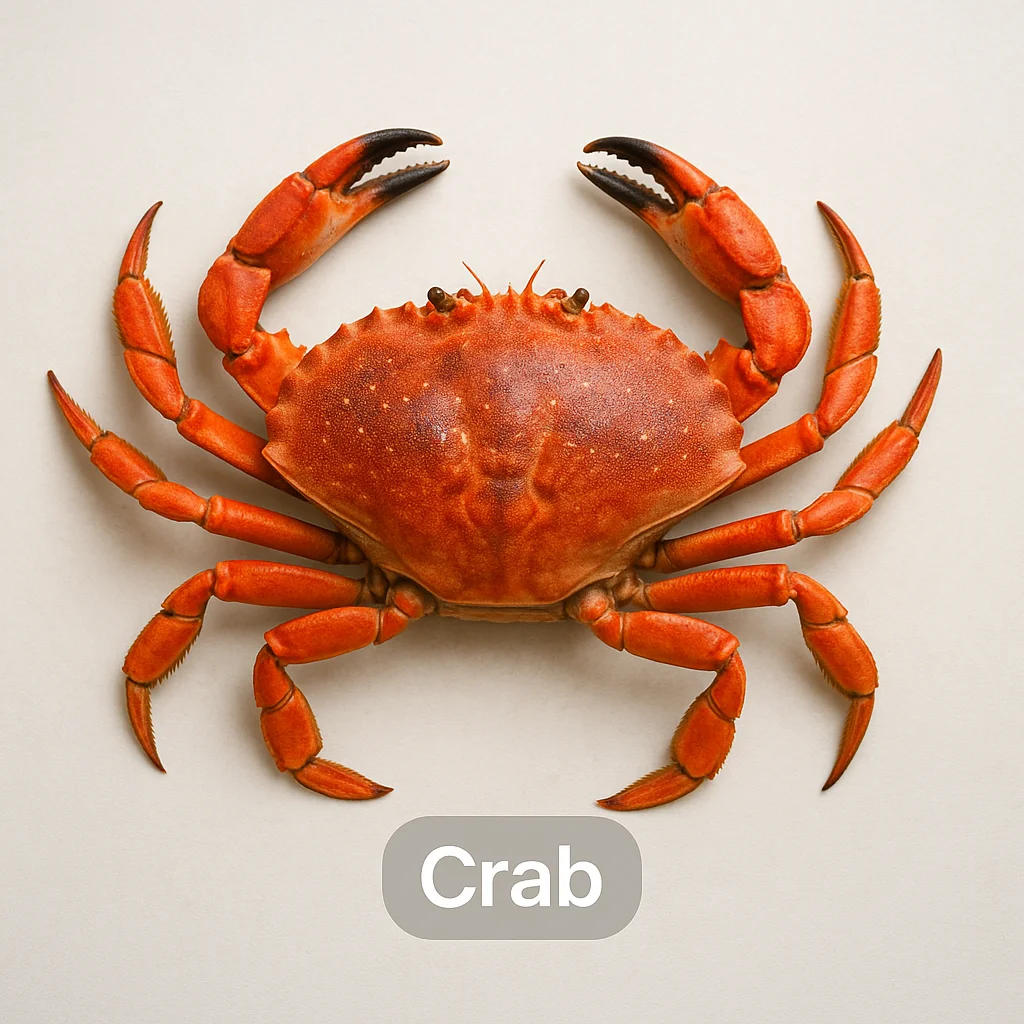
The consumption of crab spans many cultures and cuisines, offering a unique flavor profile that makes it a preferred choice for numerous dishes. The meat is often described as tender and succulent, while the shells are typically cooked to extract maximum flavor. The most common way people enjoy crab is through steaming; however, it is also incorporated into soups, pasta, and even sushi. Worldwide, dishes like crab cakes and crab bisques remain highly popular.
🐠 Taste & Texture
Crab meat is celebrated for its delectable taste, often characterized by a sweet and slightly salty flavor. The inherent sweetness varies between crab species, with certain types offering richer, more buttery notes. The texture of crab can range from delicate and flaky to firm, depending on the species and preparation method. When fresh, crab meat should have a mild ocean aroma without any overpowering fishy smell.
- Sweet and slightly salty
- Varies from delicate to firm
- Mild oceanic aroma when fresh
🌊 Origin & Habitat
Crabs inhabit a wide variety of aquatic environments, ranging from high-tide coastal areas to the depths of the ocean. Some species are found in freshwater rivers as well. The habitat often influences the crab's taste and texture; for example, saltwater species may have a slightly saltier taste. Crabs are harvested globally, with notable fisheries in North America, Asia, and Europe. Wild-caught crabs are generally preferred for their more robust flavor, while farmed crabs offer consistent quality and availability.
📅 Best Season
The seasonality of crab can greatly influence its taste and texture, which are often at their peak during specific times of the year. For instance, Alaskan king crab is best in the fall, while blue crab is typically harvested in late summer. Access to fresh crab meat may vary with regional climate changes, making "seasonality varies by region" a common occurrence. During peak seasons, crabs are at their fullest, offering rich meat content which can also affect pricing.
🔪 Preparation
Preparing a crab can seem daunting, but with practice, it becomes an approachable task. Begin by washing the crab under cold water and removing the apron (the small flap on the underside) and the gills. You can then separate the legs and claws from the body. Cracking open the shell requires a steady hand and a good grip; using a dedicated crab cracker or a mallet can help.
- Start with cold water rinse
- Remove apron and gills
- Crack and remove shell with care
To control any lingering odor, a soak in milk or a rinse in saltwater can be effective. Be cautious of cross-contamination when handling raw seafood by keeping equipment and surfaces clean and separated.
❄️ Storage Tips
Proper storage is essential to maintain the freshness and quality of crab meat. Fresh crab should be kept in the refrigerator and consumed within a day or two. Placing crabs between ice layers can help prolong freshness. For longer storage, freezing is recommended. Portion the crabs into airtight containers or vacuum-sealed bags, removing as much air as possible to prevent freezer burn. When thawing, place in the refrigerator to ensure a slow and safe process.
- Do refrigerate promptly
- Do freeze in airtight packaging
- Don’t leave out at room temperature
🍽️ Popular Dishes
Crab is universally celebrated in various culinary creations. Some classic dishes include:
- Grilled Crab: High heat enhances its natural sweetness.
- Crab Cakes: A blend of crab meat and bread crumbs, pan-fried to perfection.
- Crab Bisque: A creamy soup that emphasizes a smooth texture.
- Steamed Crab: Simple yet popular, accentuating the natural flavor.
- Crab Sushi: Offers a delicate, fresh taste; ensure sushi-grade safety.
- Crab Rangoon: Fried wontons filled with crab and cream cheese.
🥗 Nutritional Benefits
Crab meat is not only delicious but also offers a range of nutritional benefits. It is a rich source of high-quality protein and provides essential nutrients such as omega-3 fatty acids, vitamins, and minerals. These compounds can contribute to overall health, supporting heart health and brain function.
- High-quality protein source
- Contains omega-3 fatty acids
- Rich in essential vitamins and minerals
⚠️ Who Should Eat & Caution
While crab is a nutritious choice for many, there are some important considerations. People with shellfish allergies should avoid crab altogether to prevent allergic reactions. Pregnant individuals and young children should be cautious due to potential mercury content, opting for moderate consumption. Additionally, the risk of foodborne illness from raw or undercooked crab necessitates adherence to safe handling practices, such as thorough cooking and proper kitchen hygiene.
📌 Summary
Crab is a versatile seafood that adds rich flavor and texture to a variety of dishes. From steaming to grilling, it can be prepared in many delightful ways. Proper storage and preparation are vital to enjoy this delicacy safely and to its fullest potential.
- Enjoy during peak seasons for the best flavor and texture
- Practice safe handling and proper storage techniques
- Versatile in dishes across global cuisines