🐟 Blue Crab
Blue Crab, scientifically known as Callinectes sapidus, is a popular seafood enjoyed by many around the world for its delicious meat and distinctive taste. It is a type of shellfish, which distinguishes it from finned fish. Shellfish include crustaceans like crabs and shrimp, as well as mollusks such as clams and oysters. Blue Crab is prized for its sweet, tender meat and is an integral part of many coastal cuisines. It is also commonly known as "Atlantic Blue Crab" or simply "Blue Claw" in some regions.
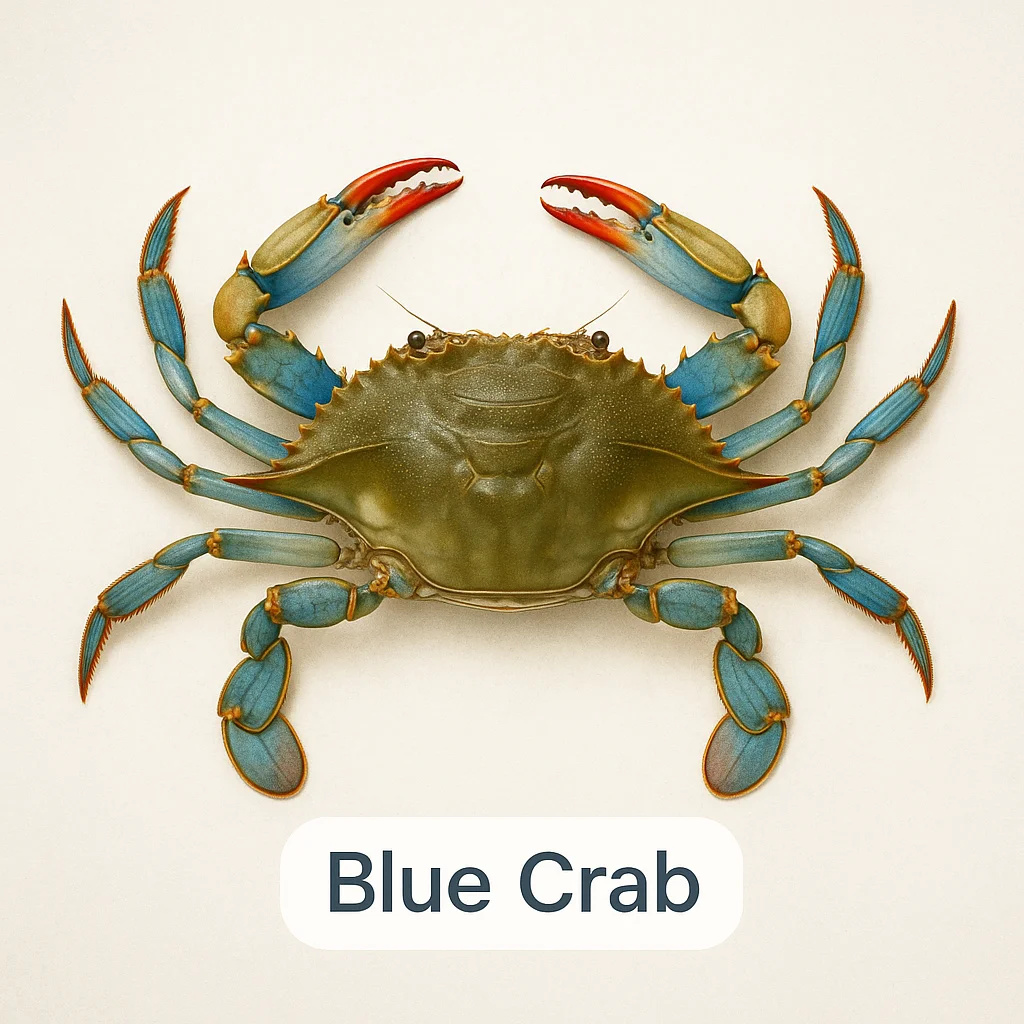
People often savor Blue Crab for its unique culinary qualities. The versatility of its meat makes it suitable for a variety of dishes, from soups and stews to grilled and steamed preparations. Blue Crab is also often a feature in regional dishes such as the renowned Maryland crab cakes in the United States. Its popularity stems not only from its taste but also from its relatively affordable market price compared to other shellfish.
🐠 Taste & Texture
The taste of Blue Crab is mild yet distinctively sweet, with a subtle ocean-like saltiness that is not overpowering. The meat is known for its delicate, almost creamy texture and tender flake, making it a delight to consume. When fresh, Blue Crab does not have a strong fishy odor but rather a clean, briny smell reminiscent of the sea.
- Flavor intensity: Mild and sweet
- Texture: Tender and creamy
- Smell: Fresh, ocean-like scent
🌊 Origin & Habitat
Blue Crabs are typically found in the coastal waters of the Atlantic Ocean and the Gulf of Mexico. They thrive in estuaries, bays, and rivers where the water is relatively warm and brackish. This species of crab is wild-caught, as there are currently no significant farming operations for Blue Crabs, although some experimental aquaculture does exist. Wild-caught Blue Crabs are considered to have superior flavor and texture compared to farmed varieties of other crab species.
Common harvesting regions for Blue Crab include the eastern coast of the United States, particularly in the Chesapeake Bay area, the Gulf of Mexico, and parts of Central and South America.
📅 Best Season
The best season for Blue Crab varies greatly depending on the region, but generally, they are most abundant and flavorful during the warmer months. In the Chesapeake Bay, for example, Blue Crab season peaks from late spring to early fall. Seasonality affects the fat content and texture of the crab meat, making crabs caught during the peak season more desirable and often more affordable.
🔪 Preparation
Preparing Blue Crab requires some specific techniques to ensure the best flavor and texture. Cleaning involves removing the shell, gutting the crab, and extracting the meat. For beginners, here’s a simple checklist:
- Rinse the crab under cool running water to remove sand and debris.
- Carefully remove the top shell (carapace) by holding the crab and pulling it off.
- Remove the gills and internal organs, leaving only the meat.
- Crack the claws and legs to extract the meat using a nutcracker or mallet.
For odor control, a quick rinse or soaking the crab meat in a milk solution before cooking can help neutralize any strong or unpleasant smells.
❄️ Storage Tips
For optimal freshness, Blue Crabs should be stored properly. Refrigerate live crabs for up to two days, keeping them in a breathable container covered with a moist cloth. Once cooked, consume the crab meat within three days. For longer storage, freezing is recommended.
- Do: Freeze immediately after cooking, portion into small sections, and store in airtight containers.
- Don't: Store crabs at room temperature or leave them unrefrigerated for long periods.
To prevent freezer burn, remove as much air as possible from the packaging. Thaw frozen crab safely in the refrigerator before use.
🍽️ Popular Dishes
Blue Crab is celebrated in many culinary traditions worldwide. Here are a few popular dishes:
- Maryland Crab Cakes: Made with crab meat, breadcrumbs, mayonnaise, and seasoning, they are lightly fried or baked.
- Crab Stew: A hearty stew often featuring crab meat, vegetables, and spices simmered slowly.
- Grilled Crab: Whole crabs seasoned and grilled, highlighting their natural sweetness.
- Crab Stir-fry: Quick-fried with vegetables, this dish maintains the tender texture of the crab meat.
- Steamed Crab: A simple yet effective method to bring out the crab's inherent flavors.
- Sopa de Jaiba: A spicy Central American crab soup with tomatoes, onions, and peppers.
While crab ceviche is another option, it's crucial to ensure the crab is sourced from a reputable supplier to reduce the risk of foodborne illness. Always prioritize food safety and proper handling.
🥗 Nutritional Benefits
Blue Crab is not only delicious but also nutritious. It is a good source of high-quality protein, essential for muscle maintenance and repair. Additionally, Blue Crab contains beneficial omega-3 fatty acids, which may support heart health. It also provides essential vitamins and minerals, such as vitamin B12, zinc, copper, and selenium.
- Rich in proteins
- Contains omega-3 fatty acids
- Provides essential vitamins and minerals
⚠️ Who Should Eat & Caution
While Blue Crab offers many nutrients, it's important to consider potential allergies and dietary restrictions. Shellfish allergies are relatively common, so those with known allergies should avoid consumption. There is a potential for cross-contact in restaurants that handle a variety of seafood.
Mercury content in Blue Crab is generally low, but it's recommended to limit consumption if you are pregnant or planning for children. As with all seafood, there is a risk of parasites when consuming raw or undercooked crab meat. Ensure proper cooking to a safe temperature until the meat is opaque and flakes easily.
📌 Summary
Blue Crab is a delectable seafood option cherished for its sweet and tender meat. Its versatility allows it to be a highlight in many dishes, from classic crab cakes to grilled preparations. Proper storage and handling ensure the best flavor and food safety, making it an excellent choice for seafood lovers.
- Blue Crab is mild, sweet, and tender
- Widely available in the Atlantic and Gulf regions
- Popular in various global dishes
- Offers several nutritional benefits but be cautious of allergens