🐟 Sargassum
Sargassum is a genus of brown seaweed that thrives in various regions of the world's oceans. Commonly found floating in dense mats, it is known for its buoyant and versatile nature. While often viewed as a nuisance when it washes ashore, Sargassum holds potential as a nutritional food source. It contains a captivating combination of flavors and textures that can be incorporated into culinary dishes around the globe.
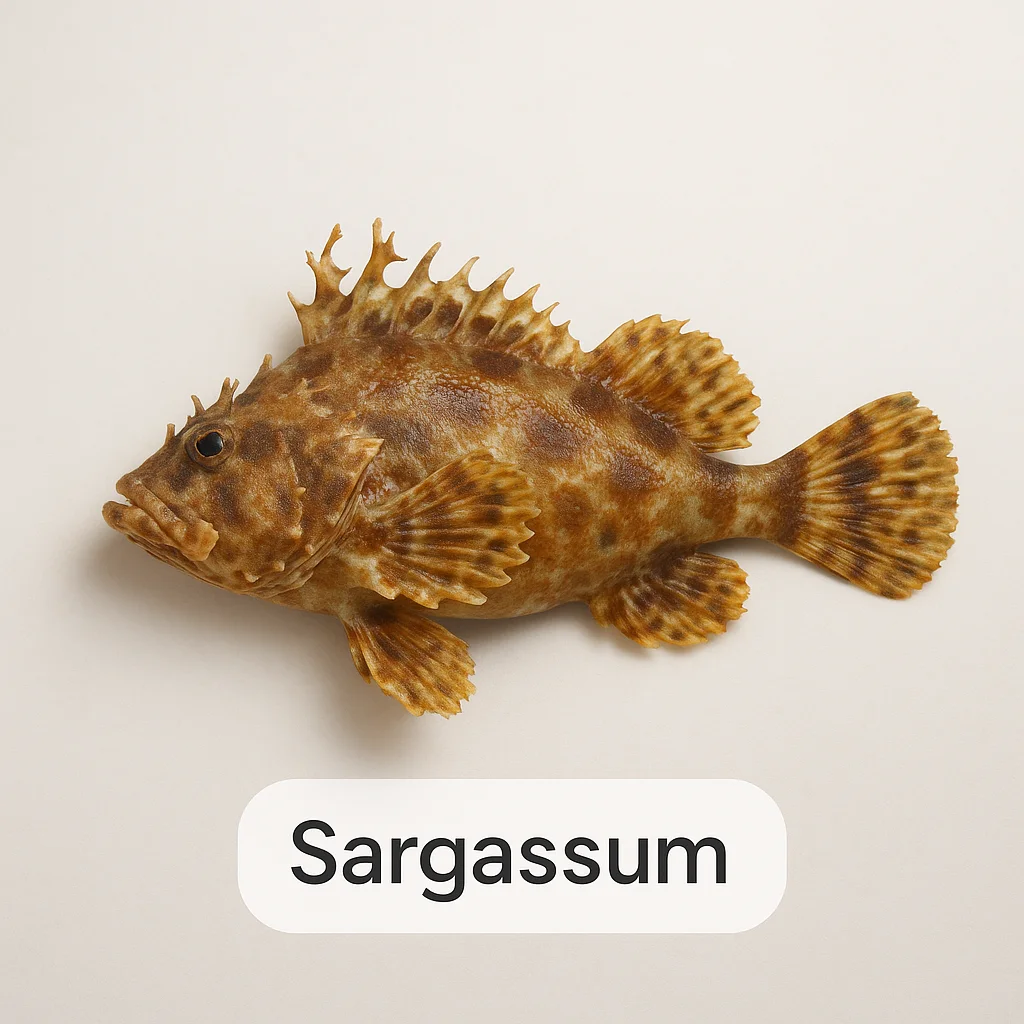
This kelp-like seaweed is sometimes eaten due to its unique taste and nutritional benefits. It can add depth to dishes with its mild yet distinct flavor profile. Though not commonly consumed worldwide, it has been gaining interest in both culinary and sustainable food discussions. Sargassum is also sometimes referred to in various regional names, such as Gulfweed or Tapeweed.
🐠 Taste & Texture
The taste of Sargassum is somewhat complex, reflecting its oceanic origins. It offers a subtle salty flavor with a hint of umami, often complemented by a touch of earthiness. This seaweed pairs well with other seafood, where its marine notes can enhance the primary flavors. The texture is typically chewy, which may vary slightly depending on preparation and cooking methods.
- Quick taste profile:
- Subtle saltiness
- Earthy undertones
- Chewy texture when cooked
- Light marine scent
🌊 Origin & Habitat
Sargassum floats freely in marine environments, mainly in warm coastal waters. It is most famously associated with the Sargasso Sea in the North Atlantic Ocean but can be found in tropical and subtropical waters globally. Unlike many other seaweeds, it grows in vast, floating beds on the ocean surface rather than anchored to the seabed. While there is interest in cultivating Sargassum for food and other purposes, it's primarily harvested wild, which influences its varying availability and flavor profiles.
Common regions include parts of the Atlantic Ocean, Caribbean Sea, and even stretches of the Pacific Ocean. It thrives in nutrient-rich environments and often appears in massive quantities, especially during certain seasons or oceanic conditions.
📅 Best Season
The availability and quality of Sargassum can fluctuate over the year, as the seaweed often blooms in response to seasonal changes in ocean temperatures and nutrient flows. The peak season for Sargassum varies considerably depending on location: some areas see increased amounts during late spring to early summer. As such, seasonality varies by region, and it is important to source it responsibly to minimize environmental impact and ensure optimal taste and texture.
🔪 Preparation
Cleaning and preparing Sargassum requires attention to detail to remove excess salt and any potential debris. Here's a simple guide for beginners:
- Rinse thoroughly under cold water
- Remove any obvious debris or non-seaweed material
- Blanch briefly to soften texture and reduce salinity
- Trim tough sections or stems as needed
For controlling the odor, a quick soak in fresh water or a mild saltwater solution can help reduce any overpowering marine notes, although Sargassum typically has a more neutral scent when fresh.
❄️ Storage Tips
Proper storage is essential for preserving the freshness of Sargassum. Follow these tips for optimal storage:
- Refrigerate promptly in a sealed container
- Keep on ice for short-term preservation
- Avoid exposure to air to prevent drying out
- Freeze in portions with air removed in airtight bags for extended storage
- Thaw gently in the fridge to maintain structure
Do not keep for more than a few days unfrozen, and avoid refreezing thawed Sargassum to preserve texture and taste.
🍽️ Popular Dishes
Sargassum offers culinary versatility across diverse cuisine styles:
- Grilled Sargassum: Lightly oiled and seasoned, then grilled at high heat to impart a smoky flavor
- Sargassum and Fish Stew: Simmered gently with seafood to enhance the broth’s aroma
- Sargassum Salad: Mixed with fresh vegetables and a light vinaigrette for a refreshing side dish
- Sargassum Tempura: Battered and flash-fried, promoting crispness while preserving the chewy core
- Sargassum Soup: Slow-cooked in a vegetable broth to release its umami qualities
- Sargassum Sushi: Wrapped in sushi rolls, providing a maritime complement to various fillings
For raw dishes like sushi, ensure the Sargassum is sourced from reliable suppliers and handle it with good food safety practices to mitigate contamination risks.
🥗 Nutritional Benefits
Sargassum is praised for its nutritional content, contributing several health-promoting compounds:
- Rich in essential minerals like iodine, potassium, and magnesium
- Contains dietary fiber which may aid digestion
- Provides a low-calorie option for competitive dieters
- May offer antioxidants that support cellular health
⚠️ Who Should Eat & Caution
While Sargassum is nutritious, there are a few considerations one should keep in mind. Some people might experience allergic reactions, similar to those occurring with other types of seafood, due to potential shellfish-like allergens. Cross-contact at seafood processing facilities can also pose a risk. Furthermore, watch for mercury considerations, especially if consumed in large quantities, and this may be important for pregnant individuals, nursing mothers, and young children.
For those who wish to consume raw dishes, be aware of the associated risks. Ensuring proper storage, handling, and cleaning can reduce the chance of contamination. Always practice safe food handling to avoid foodborne illnesses.
📌 Summary
Sargassum is both a nutrient-rich and versatile seaweed, offering a range of uses in culinary practices. Its subtle taste profile and nutrient makeup make it a valuable addition to diets worldwide. When sourced responsibly, it can serve as a sustainable food source.
- Key takeaways:
- Offers a mild, salty, earthy taste
- Abundant in warm coastal regions
- Proper preparation and storage are crucial
- Check for freshness indicators when purchasing
- Exercise caution with allergies and safe handling