🐟 Nori
Nori is a type of edible seaweed that is commonly used in various culinary dishes worldwide. It is typically associated with Japanese cuisine, where it is used to wrap sushi rolls or to garnish a variety of other dishes. This sea vegetable, often called laver in English-speaking regions, is renowned for its unique umami flavor and nutritional benefits.
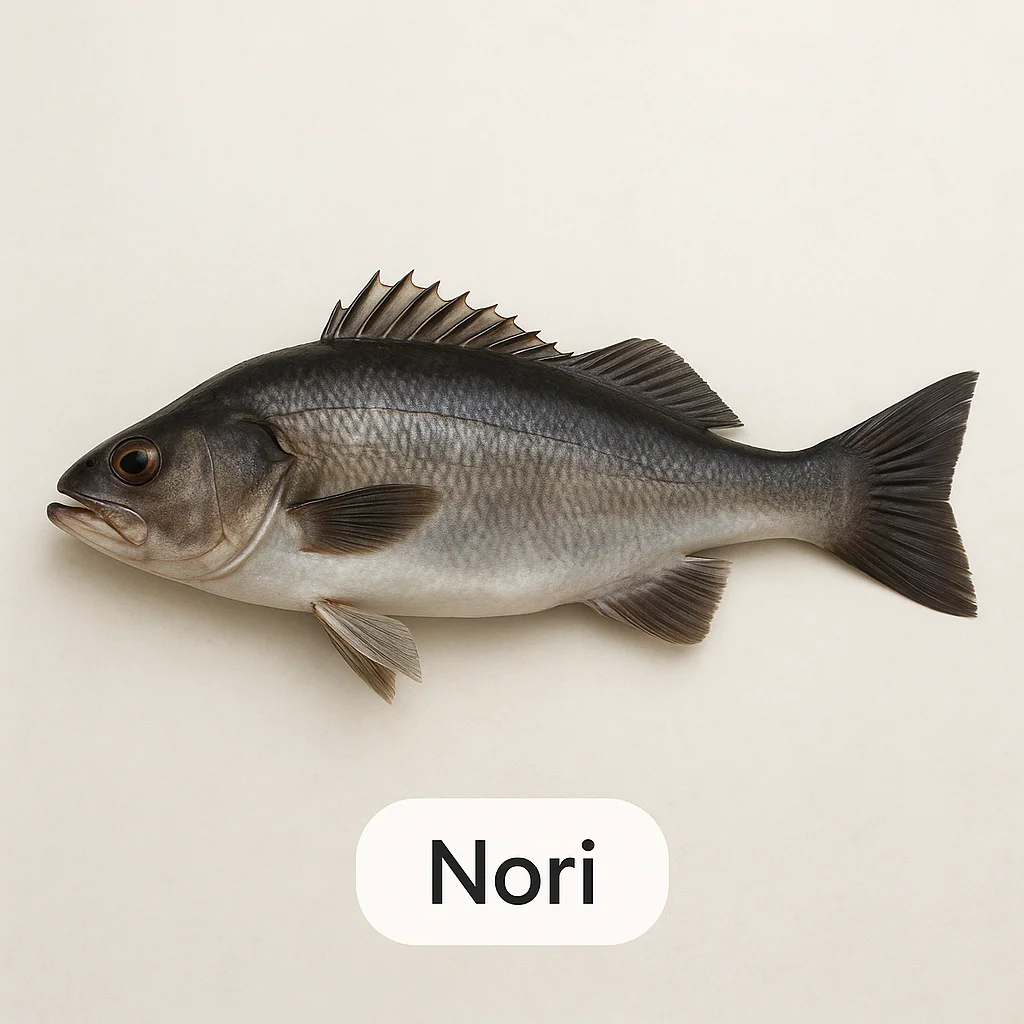
People consume nori primarily for its distinctive taste and texture, but it also provides a host of nutritional benefits, making it a popular addition to diets for those seeking a healthy lifestyle. Its diverse uses, from sushi wrapping to salad garnishment, demonstrate its versatility in the kitchen.
🐠 Taste & Texture
Nori's taste is often described as a blend of savory and slightly sweet flavors with a significant umami presence. Its texture is somewhat chewy when moist and crisp when dry, which adds an interesting contrast to many dishes.
- Flavor Intensity: Mellow yet prominent
- Sweetness/Saltiness: Balanced slightly towards salt
- Fattiness: Lean, with minimal oiliness
- Mouthfeel: Chewy when wet, crisp when dry
- Smell: Fresh and oceanic
🌊 Origin & Habitat
Nori is harvested predominantly in coastal waters, where the seaweed grows attached to underwater rocks or suspended from floating nets in farms. It thrives in areas with clean, nutrient-rich waters, which can affect its overall flavor and quality. Both wild and farmed varieties of nori exist, with farmed nori being more commonly available commercially due to its consistent quality and sustainable cultivation methods.
Regions known for nori cultivation include Japan, Korea, and China, but it's also harvested in parts of Europe and North America, particularly along temperate shorelines.
📅 Best Season
Nori's peak season can depend on the region of cultivation, but generally, it is harvested in the cooler months of the year. This timing is crucial because during these months, the seaweed tends to have a richer flavor and texture, offering better quality for culinary purposes. However, due to advancements in aquaculture, high-quality nori may be available year-round.
🔪 Preparation
Preparing nori for culinary use depends on its final role in cooking. When using nori as a wrap for sushi, it should be lightly toasted to enhance its crispiness. For other uses, like garnishing, nori can be crumbled directly over dishes.
- Check for freshness: Ensure nori sheets are not brittle or have an off-smell
- Toasting: Briefly pass the sheet over a low flame to crisp it up
- Cutting: Use sharp, dry knives to prevent tearing
- Storing: Keep unused sheets in an airtight container to maintain crispness
To manage any fishy odor that may arise, consider a brief rinse or pairing nori with aromatic ingredients like ginger or lemon.
❄️ Storage Tips
Nori should be stored in a dry, cool place and protected from moisture to prevent it from losing its crispness. If refrigerated, keep it in an airtight container to keep humidity at bay.
- Do store in a cool, dry place
- Don't expose to moisture
- Do use airtight containers
- Don't refrigerate without a moisture barrier
Freezing nori is generally not recommended as it can affect its texture and flavor. If necessary, ensure it is well-sealed and consume it shortly after thawing.
🍽️ Popular Dishes
Nori is a versatile ingredient that plays an integral role in many dishes across different cuisines. Here are some popular nori-based dishes:
- Sushi Rolls: Nori is used as a wrapper for various sushi types, highlighting its crisp texture.
- Miso Soup: Thin strips of nori are added to miso soup for an umami punch.
- Rice Balls (Onigiri): Nori is wrapped around rice balls, providing a savory contrast to the rice.
- Seaweed Salad: Mixed with sesame oil and vinegar for a refreshing side dish.
- Ramen Topping: Added to ramen soups, offering additional flavor depth.
- Sandwich Wraps: Alternative to traditional wraps, especially for gluten-free diets.
When preparing dishes that include raw nori, ensure it is of food-grade quality to prevent food safety issues.
🥗 Nutritional Benefits
Nori is a nutrient-dense food that can be part of a balanced diet. It is low in calories but high in essential nutrients.
- Rich in Vitamins A, C, and E
- Contains essential minerals such as iodine and iron
- Good source of protein and dietary fiber
While nori offers various health benefits, it's important to consume it in moderation due to its iodine content, particularly for individuals with thyroid conditions.
⚠️ Who Should Eat & Caution
While nori is generally safe for consumption, individuals with seafood allergies should avoid it due to potential cross-contact in production areas. Additionally, the mercury content in nori is generally low compared to other seafood, but caution should still be exercised, especially by pregnant individuals and young children.
As with all seafood, handling nori with clean hands and utensils is crucial to prevent contamination, and it's advisable to purchase nori from reputable sources to ensure quality and safety.
📌 Summary
Nori offers a unique taste profile with its umami-rich flavor and versatile use in various culinary applications. Proper storage and handling will ensure its best quality, and its nutritional benefits make it a valuable addition to the diet.
- Nori provides both flavor and health benefits.
- Store properly to keep it crisp and flavorful.
- Enjoy a wide variety of dishes, from sushi to salads.