🐟 Kombu
Kombu, a type of seaweed, is a fundamental ingredient in numerous global cuisines, especially within Japanese dishes where it is renowned for its use in making dashi, a traditional broth. Kombu belongs to the kelp family, offering a unique umami flavor that enhances the taste profile of dishes. People around the world consume Kombu not only for its distinctive taste but also for its nutritional benefits and versatility in cooking.
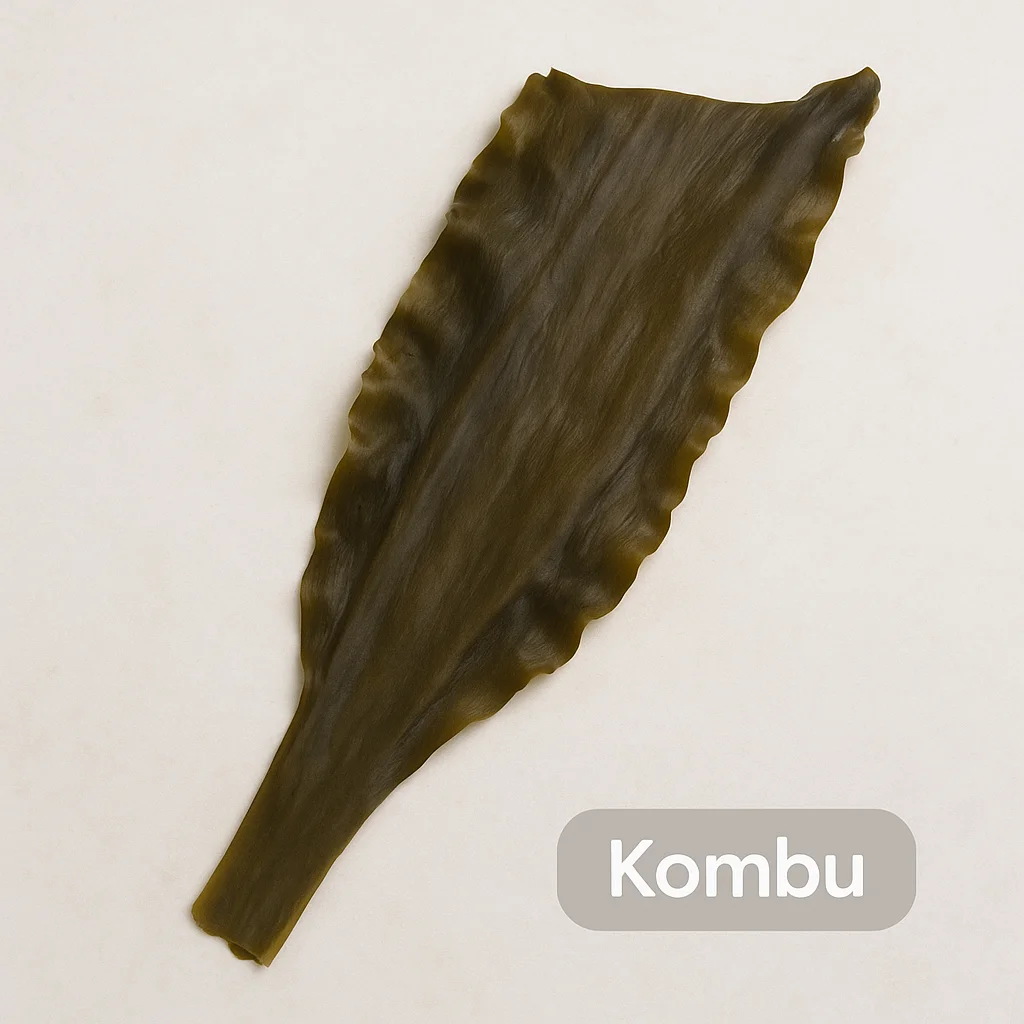
As an edible marine algae, Kombu has gained popularity due to its health benefits and its role as a sustainable food source. It is often used dried, fresh, or pickled, and serves as a base for soups, stocks, and salads. Its rich umami flavor makes it a perfect substitute for stocks that are otherwise fish-based or involve more animal-derived products.
🐠 Taste & Texture
When it comes to taste, Kombu provides a savory umami flavor that is mild yet distinct. It has a slightly sweet undertone, influenced by the natural sugars it contains. The texture of Kombu varies due to its form; the dried version tends to be leathery and firm, whereas fresh Kombu is softer and more pliable.
- Flavor intensity: Medium to strong, with prominent umami
- Sweetness/saltiness: Slightly sweet with natural saltiness
- Mouthfeel: Softer when cooked, chewy if dried
- Smell when fresh: Oceanic and slightly briny
🌊 Origin & Habitat
Kombu typically grows in cold, coastal waters and is predominantly found in the Northwest Pacific Ocean. It thrives on submerged rocks and reefs and can be farmed efficiently, making it widely available. While wild-harvested Kombu is considered premium, both wild and farmed types are readily available and used globally. Japan, China, and Korea are top producers, making Kombu a staple in Asian cuisine. Its habitat ensures it is nurtured with mineral-rich waters, which contribute to its nutritional value.
📅 Best Season
The seasonality of Kombu can vary by region; however, it is often harvested from April to September when its growth is most robust. Peak harvesting ensures that Kombu is at its freshest and most flavorful, with optimal texture and nutrient density. Due to its dried form, Kombu is widely available year-round, allowing cooks to enjoy its benefits even outside peak season. Consumers are encouraged to seek out freshly harvested Kombu during these months for superior taste and quality.
🔪 Preparation
Preparing Kombu is relatively simple. Start by rinsing it under cold water to remove any residual salt or sand. If using dried Kombu, soak it in water for 10-15 minutes until it becomes pliable. For cooking, ensure you do not boil Kombu excessively as it can become overly slimy. A gentle simmer is enough to extract its flavors.
- Rinse to remove surface salt
- Soak to rehydrate (for dried Kombu)
- Simmer gently for infusion in broths
- Trim edges if needed for aesthetic purposes
To control the oceanic odor that Kombu might have, a brief soak in milk or a quick rinse in water can help neutralize strong scents, ensuring it does not overpower the dish’s overall aroma.
❄️ Storage Tips
Store dried Kombu in a cool, dark place, and it can remain viable for months. If stored properly in an airtight container, the Kombu will retain its flavor and nutritional benefits. Refrigerate fresh Kombu for no more than a week to maintain its freshness. For freezing, wrap Kombu tightly in plastic to prevent freezer burn, and remove as much air as possible.
- Do refrigerate fresh Kombu
- Don’t store dried Kombu in humid environments
- Do wrap well before freezing
- Don’t thaw in direct sunlight
🍽️ Popular Dishes
Kombu shines in a variety of dishes from different cuisines. Notably used in Japanese dashi stock, it sets the foundation for countless soups and stews.
- Dashi: Kombu is gently simmered to extract umami; ideal as a soup base.
- Kombu tsukudani: Kombu simmered in soy sauce and mirin, served as a side dish.
- Sushi rice seasoning: Infusing rice with Kombu adds a subtle umami flavor.
- Seaweed salad: Lightly cooked and mixed with sesame oil, vinegar, and seeds.
- Steamed seafood: Wrap seafood in Kombu to enhance flavor during steaming.
- Vegetable soups: Use as a flavor base to complement a variety of vegetables.
For raw preparations or dishes requiring minimal cooking, ensure Kombu is sourced from a reputable supplier to avoid safety hazards associated with raw marine products.
🥗 Nutritional Benefits
Kombu is not only a flavor enhancer but also a nutrient-rich food. It is particularly known for its iodine content, vital for thyroid function. Additionally, Kombu contains iron, calcium, vitamins A, C, E, and K, making it a nutritionally dense addition to any diet.
- Iodine: Supports metabolism regulation
- Calcium: Essential for bone health
- Iron: Important for oxygen transport
⚠️ Who Should Eat & Caution
While Kombu is generally safe for most individuals, those with allergies to seaweed or iodine sensitivity should handle it with care. Cross-contact and contamination can occur in kitchens where fish and shellfish are prepared. As with all seafood, it’s advisable for pregnant individuals and young children to consume Kombu in moderation due to iodine levels and to avoid risks associated with excessive intake.
When handling Kombu, good hygiene practices such as washing hands and using separate utensils will minimize cross-contamination risks. Cooking Kombu thoroughly can reduce any potential adverse effects associated with raw consumption.
📌 Summary
Kombu offers a unique umami flavor, adding depth to a variety of dishes, especially in soups and stocks. Its ease of preparation and versatility in both dried and fresh forms make it a valuable ingredient in global cuisines. Proper storage techniques will ensure Kombu maintains its flavor and nutritional benefits over time. Whether you are seeking to enhance the umami of your dishes or add a nutritional boost, Kombu is an exceptional choice for culinary exploration.
- Rich in umami; enhances flavor profiles
- Available year-round due to dried form
- Versatile in soups, stocks, and salads
- Easy preparation with basic steps