🐟 Irish Moss
Irish Moss, scientifically known as Chondrus crispus, is a type of red algae found along the rocky parts of the Atlantic coast of Europe and North America. It is renowned for its gelling properties, making it a popular ingredient in food products and a natural thickener for soups and desserts. People often consume it for its unique texture and subtle oceanic flavor, as well as for its potential health benefits. Also referred to as carrageen moss, this seaweed is an integral part of many traditional dishes worldwide, particularly in Ireland.
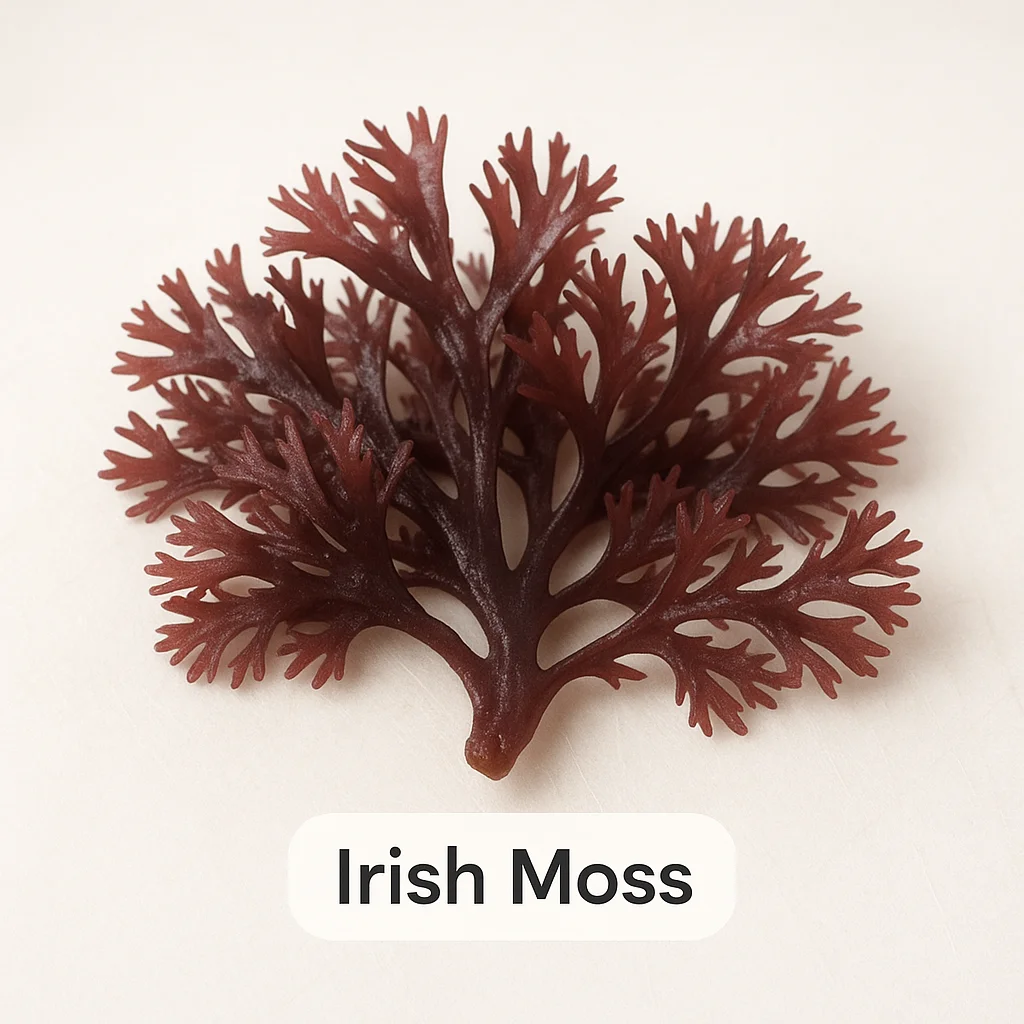
The appeal of Irish Moss lies in its versatility and nutritional profile. Rich in minerals such as iodine, which is vital for thyroid function, and containing essential vitamins, it supports various dietary needs. Beyond its nutritional value, the polysaccharides present in Irish Moss can give a smooth and creamy texture to both culinary dishes and commercial products, making it a creative addition to the kitchen.
🐠 Taste & Texture
Irish Moss offers a mild taste with a hint of the sea. Its unique texture is slightly firm yet gelatinous, providing a chewy mouthfeel. When fresh, it emits a delicate marine aroma, which dissipates once cooked or processed. Overall, Irish Moss is a lean ingredient without the richness or oiliness associated with certain seafood, making it a desirable choice for those seeking a light and healthy addition to meals.
- Quick taste profile:
- Mild oceanic flavor
- Gelatinous texture
- Slightly firm mouthfeel
- Lean and light
🌊 Origin & Habitat
Irish Moss typically thrives in the intertidal zones of the Atlantic Ocean. It can be found clinging to rocks in both shallow and moderate depths, where it absorbs sunlight and nutrients from the seawater. The majority of Irish Moss is harvested from the coasts of Ireland, Scotland, and Canada, where it grows wild and plentiful. While some are wild-harvested, efforts to farm Irish Moss are also underway, although wild variants are mainly favored for their richer texture and flavor.
📅 Best Season
Seasonality for Irish Moss varies by region, with the best harvests often occurring during the late spring to summer months. Peak seasonality is vital as it ensures the algae is at its freshest, providing maximum thickness and nutritional density. During peak times, Irish Moss may be more affordable and easier to find in markets. However, processed forms are available year-round, allowing for flexible use.
🔪 Preparation
Preparing Irish Moss involves several steps to ensure it is clean and ready for use. Begin by thoroughly rinsing the moss to remove any sand, salt, or debris. Soak it in water for several hours to soften and rehydrate it. Once soaked, give it another rinse to eliminate any remaining impurities. Trimming is generally unnecessary as the entire moss is often used. Basic kitchen safety measures like using clean utensils and surfaces are recommended, especially when handling any raw seafood beside Irish Moss.
- Preparation checklist for beginners:
- Rinse thoroughly under running water
- Soak in water for a few hours
- Rinse again after soaking
- Use clean knives and cutting boards
To manage odor during preparation, consider soaking Irish Moss in milk or a light salt brine, then rinsing before use. This helps to neutralize any strong sea scents without compromising the taste.
❄️ Storage Tips
For optimal freshness, store fresh Irish Moss in the refrigerator for up to two weeks. Keep it in a sealed container to maintain moisture and prevent exposure to air, which can dry it out. If ice storage is preferred, lay the moss on a bed of ice and ensure it remains chilled. For freezing, rinse the Irish Moss, portion it appropriately, and store it in airtight bags to avoid freezer burn. Allow it to thaw naturally in the refrigerator before use.
- Do:
- Store in a sealed container in the fridge
- Use ice storage methods if available
- Portion and use airtight bags for freezing
- Thaw naturally in the fridge
- Don't:
- Leave exposed to warm temperatures
- Store with strong-smelling foods
- Refreeze after thawing
🍽️ Popular Dishes
Irish Moss finds its way into a multitude of dishes across various cuisines, showcasing its versatile nature. Here are some popular recipes where it can be used:
- Creamy Chowder: A gentle simmer allows Irish Moss to release its thickening power, adding body without overpowering flavors.
- Seaweed Salad: Blanched Irish Moss tosses well with cucumbers, sesame oil, and a touch of soy sauce, creating a fresh and textural side dish.
- Vegan Pudding: Pureed Irish Moss serves as a natural thickener in dairy-free puddings, offering a smooth consistency and subtle taste.
- Carrageen Dessert: A traditional Irish treat where Irish Moss is boiled with milk and sugar, then set into a jelly-like dessert.
- Nutrient-Rich Smoothie: Blend soaked Irish Moss with fruits and greens for a nutrient-boosting addition to morning smoothies.
- Steamed Treats: Add chopped Irish Moss to steamed buns or dumplings for enhanced texture and moisture retention.
When using Irish Moss in raw preparations like salads or smoothies, ensure it is thoroughly cleaned to minimize any contamination risk.
🥗 Nutritional Benefits
Irish Moss is a powerhouse of nutrients, offering a range of health-supporting elements. Its protein content, although modest, can aid in a balanced diet when combined with other protein sources. The rich iodine content supports metabolic health, while other vitamins and minerals bolster immune function and overall well-being.
- Notable nutrients often associated with Irish Moss:
- Iodine
- Calcium
- Potassium
- Vitamin K
- Omega-3 fatty acids
⚠️ Who Should Eat & Caution
While Irish Moss can be a nutritious addition to many diets, certain individuals should consume it with caution. Those with specific allergies to seafood or seaweed might experience reactions, and cross-contact in kitchens is possible during preparation. Additionally, due to its iodine content, those with thyroid concerns or medications should consult healthcare providers before regular consumption. Due to the risks associated with mercury in some seafood, it is vital to verify mercury content, especially for pregnant people and young children.
Consuming raw or undercooked preparations of Irish Moss should always involve sourcing from reputable suppliers and ensuring rigorous cleanliness to avoid foodborne illnesses. Safe handling practices, such as handwashing and using separate preparation surfaces for raw and cooked foods, help mitigate risks.
📌 Summary
Irish Moss, with its delicate oceanic flavor and gel-like texture, is a unique ingredient found in various dishes, from puddings to savory chowders. Its nutritional qualities, paired with versatile culinary uses, have secured its spot in both traditional and contemporary recipes worldwide. When fresh, Irish Moss is easy to store and prepare, making it accessible for many home cooks.
- Key takeaways:
- Mild taste and gelatinous texture
- Best harvested late spring to summer
- Rich in iodine and essential minerals
- Versatile in traditional and modern dishes
- Safe preparation and storage are essential
- Caution advised for those with specific allergies or dietary conditions