🐟 Cross-Contamination Prevention: Safe Seafood Prep in Small Kitchens
🧭 Quick Overview
In this guide, you'll learn how to prevent cross-contamination in small kitchens while preparing seafood. This information is invaluable for home cooks who want to maintain cleanliness and safety in tight cooking spaces.
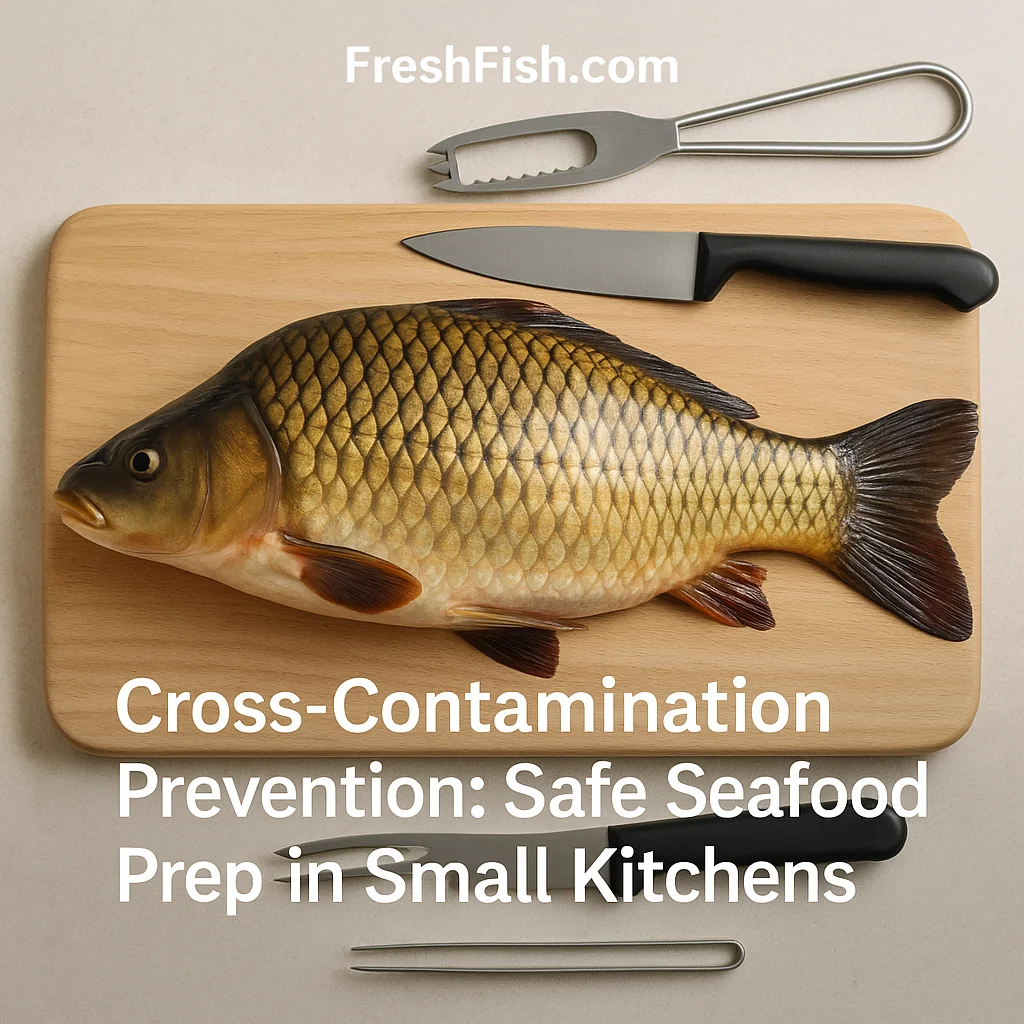
- Best for: Home cooks, apartment dwellers, small kitchen users
- Common problems solved: Avoiding cross-contamination, ensuring safe meal prep, maximizing limited space
- What you need: Clean towels, separate cutting boards, kitchen sanitizers, thermometer
🧠 Why This Matters
Cross-contamination can lead to foodborne illnesses, which are easily preventable with the right techniques. Ensuring safe seafood preparation not only enhances the taste and quality of your dishes but also protects your health.
✅ Step-by-Step Method
Follow these steps to minimize cross-contamination risks in your kitchen.
- Step 1: Gather separate cutting boards for seafood and other ingredients. Plastic boards are easier to sanitize than wood.
- Step 2: Set up a cleaning station with towels and kitchen sanitizers ready for immediate use.
- Step 3: Always wash your hands thoroughly before and after handling seafood.
- Step 4: Use a food thermometer to ensure seafood reaches the safe internal cooking temperature of 145°F (63°C).
- Step 5: Clean all surfaces and kitchenware with hot, soapy water after preparing seafood.
🧾 Checklist
Here is a practical checklist for safe seafood prep in small kitchens:
- Separate cutting boards for seafood and other foods
- Access to handwashing stations or sanitizers
- A reliable food thermometer
- Ready supply of clean, dry towels
- Designated cleaning materials and solutions
⚠️ Common Mistakes & Fixes
- Mistake: Using the same cutting board for seafood and other foods. Fix: Always have separate boards for seafood and non-seafood items.
- Mistake: Neglecting to wash hands between tasks. Fix: Wash hands after handling seafood and before moving on to other tasks.
- Mistake: Overcrowding the workspace. Fix: Tidy up as you go to maintain a clean and organized kitchen.
🌍 Variations by Fish Type
Here's how preparation requirements differ based on the type of seafood:
- Oily fish: Generally need thorough cleaning to remove excess oils
- Lean white fish: Typically have milder flavors, requiring less seasoning
- Thick steaks: Require longer cooking times to reach safe temperatures
- Thin fillets: Cook quickly, requiring close monitoring to avoid overcooking
🧊 Storage & Leftovers
Store seafood in the fridge for no more than two days, and ensure it's in a sealed container to prevent cross-contamination. If freezing, wrap tightly to avoid freezer burn. Reheat leftovers to an internal temperature of 165°F (74°C).
🛒 Buying Tips (if relevant)
When purchasing seafood, look for clear eyes and bright skin in whole fish. Fillets should be firm and shiny, with no strong odor. For frozen products, avoid any packages with ice crystals as that indicates improper storage.
🧼 Safety Notes
To avoid cross-contamination, always keep raw seafood and other foods separate. Cook seafood to the recommended internal temperature and use a thermometer for accuracy. When in doubt, prioritize sanitation and thorough cooking.
❓ FAQs
- Question: Can I reuse a cleaning cloth after wiping seafood? Answer: No, always use a clean cloth to prevent contamination.
- Question: How can I tell if seafood is fully cooked? Answer: Use a thermometer to check that the internal temperature is 145°F (63°C).
- Question: What's the best way to store leftover seafood? Answer: Store in a sealed container in the refrigerator for up to two days.
📌 Summary
- Always use separate cutting boards and utensils to prevent cross-contamination.
- Regular handwashing and cleaning help maintain a safe cooking environment.
- Monitor cooking temperatures to ensure seafood is safe to eat.