🐟 How to Portion Fish for Even Cooking (Steaks vs Fillets vs Butterflied)
🧭 Quick Overview
In this guide, you'll learn how to portion fish for even cooking, focusing on various techniques like cutting steaks, fillets, and butterflied portions. Perfect for cooks looking to master fish preparation, this article provides essential tips to enhance cooking consistency and flavor.
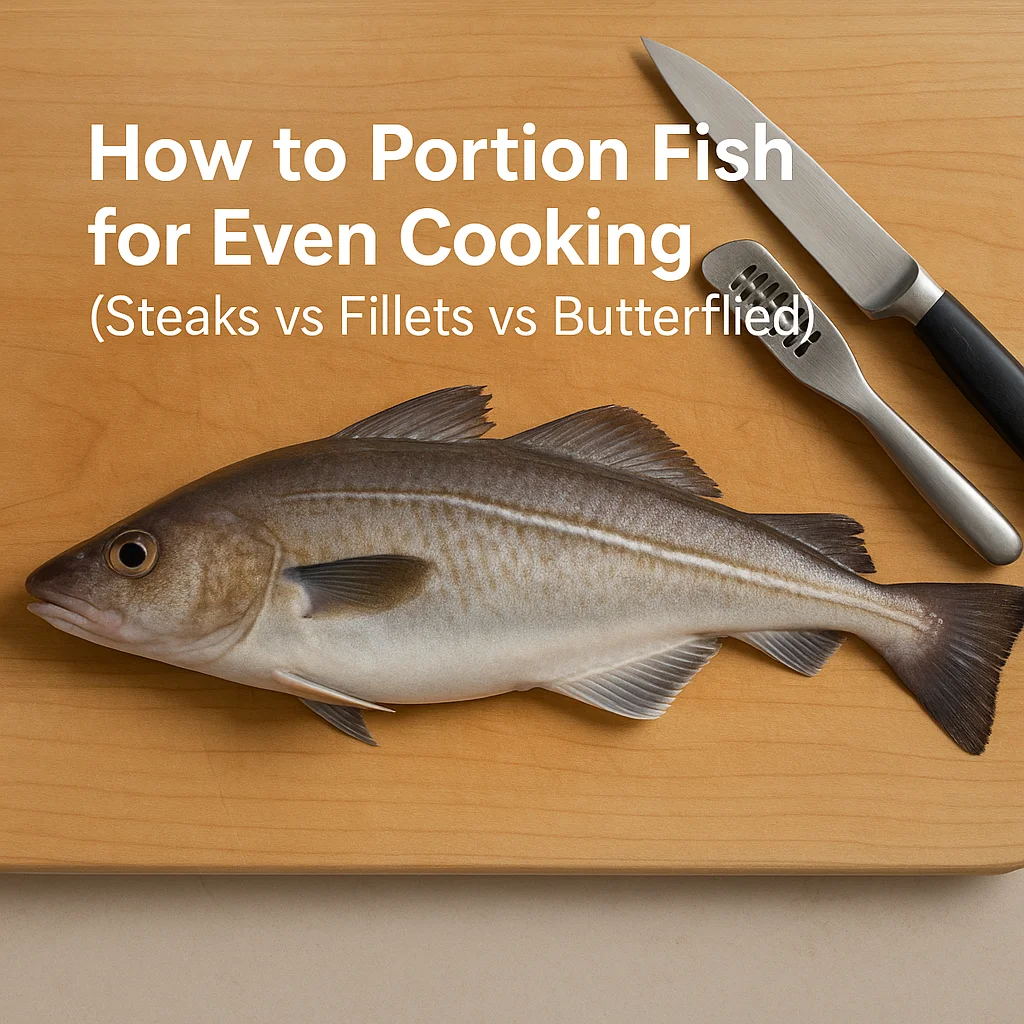
- Best for: Home cooks, culinary students, chefs
- Common problems solved: Uneven cooking, dry fish, inconsistent texture
- What you need: Sharp knife, cutting board, fish tweezers, kitchen towel
🧠 Why This Matters
Properly portioning fish is crucial for achieving even cooking, ensuring that each bite is delicious and properly textured. Whether you are preparing an elegant dinner or a quick family meal, understanding the differences between steaks, fillets, and butterflied fish can significantly impact your dish's final presentation and enjoyment.
✅ Step-by-Step Method
Follow these steps to efficiently portion fish:
- Step 1: Begin with a whole fish or a large section. Rinse it under cold water and pat dry with a kitchen towel.
- Step 2: Place the fish on a sturdy cutting board. Using a sharp knife, make a precise incision behind the gills down to the backbone for steaks.
- Step 3: For fillets, start at the head and cut downward along the backbones, removing the fillet with a steady, slicing motion.
- Step 4: For butterflied portions, remove the head and tail, then slice the fish open along the belly to lay it flat.
- Step 5: Remove any pin bones with fish tweezers and ensure all portions are consistent in thickness for even cooking.
🧾 Checklist
Check off these items to ensure perfectly portioned fish:
- Sharp knife and sturdy cutting board
- Consistent portion thickness
- No remaining pin bones
- Properly dried fish before cutting
- Avoid waste by making clean cuts
⚠️ Common Mistakes & Fixes
- Mistake: Uneven cuts leading to inconsistent cooking. Fix: Use a sharp knife and steady hand for precise cuts.
- Mistake: Leaving pin bones in fillets. Fix: Always check for pin bones with fish tweezers before cooking.
- Mistake: Wet fish slipping during cutting. Fix: Pat the fish dry and use a non-slip cutting board.
🌍 Variations by Fish Type
The portioning technique may vary depending on the type of fish:
- Oily fish: High in fats, better suited to filleting or butterflying.
- Lean white fish: Ideal for steaks or filleting to keep moist while cooking.
- Thick steaks: Perfect for grilling or roasting; consider even thickness.
- Thin fillets: Quick cooking methods like pan-searing or poaching work best.
🧊 Storage & Leftovers
Store fish portions in the refrigerator at below 40°F and consume within 1-2 days. If freezing, wrap tightly in plastic wrap and use within 3 months to maintain quality. Always ensure leftovers are thoroughly reheated to an internal temperature of 145°F.
🛒 Buying Tips (if relevant)
When buying fish, look for bright and clear eyes in whole fish, bright red gills, firm flesh, and a fresh ocean scent. For fillets, ensure they are firm and free from discoloration. Avoid any fish with an off-putting smell or slimy texture.
🧼 Safety Notes
Avoid cross-contamination by using a clean cutting board and knife for fish separate from other foods. Always wash hands and surfaces thoroughly after handling raw fish. Cook fish to an internal temperature of 145°F for safe consumption.
❓ FAQs
- Question: Can I portion fish the night before cooking? Answer: Yes, but ensure it is stored properly in the fridge.
- Question: How do I know if the fish is fresh? Answer: Look for clear eyes, firm flesh, and a fresh sea scent.
- Question: Is there a difference in taste between steaks and fillets? Answer: While the taste is mostly similar, the texture may vary due to cooking methods.
📌 Summary
- Ensure even cuts to promote uniform cooking.
- Choose the right portioning technique based on fish type.
- Follow safety and storage tips for quality and safety.