🐟 How to Fillet Fish at Home: Tools, Safety, and Simple Cuts
🧭 Quick Overview
Filleting fish at home can elevate your culinary skills and offer fresher dining options. This guide is perfect for home cooks wanting to master basic skills quickly and safely.
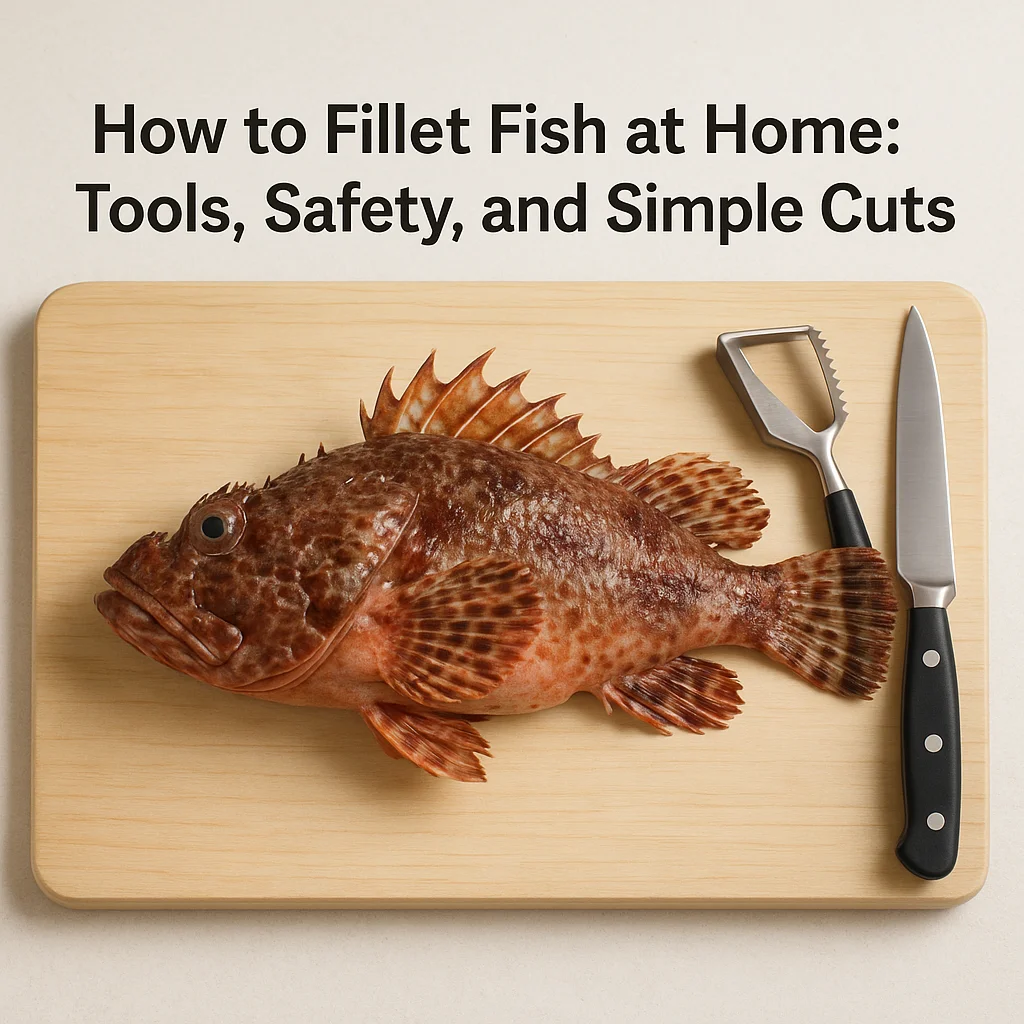
- Best for: Home chefs, grilling enthusiasts, fresh seafood lovers
- Common problems solved: Uneven cuts, wastage, improper storage
- What you need: Filleting knife, cutting board, kitchen towel, tweezers
🧠 Why This Matters
Filleting fish significantly enhances the taste and texture of your seafood dishes by allowing you to control the cut and freshness. Knowing how to fillet can also be cost-effective compared to pre-cut options.
✅ Step-by-Step Method
Follow these steps to fillet a fish like a pro:
- Step 1: Place the whole fish on a clean cutting board, ensuring it is fully visible from head to tail.
- Step 2: Using a sharp filleting knife, make a cut behind the gills down to the backbone.
- Step 3: Turn the fish with your knife along the backbone, slicing towards the tail to remove the fillet.
- Step 4: Remove pin bones with tweezers and remove any skin if desired by holding the tail end and cutting between the flesh and skin.
- Step 5: Repeat for the other side, ensuring both fillets are of even thickness.
🧾 Checklist
Ensure you have the following:
- Properly sharpened filleting knife
- Clean cutting board with a damp kitchen towel underneath for stability
- Fish tweezers for bone removal
- Understanding of the fish anatomy you're working with
⚠️ Common Mistakes & Fixes
- Mistake: Dull knife leads to ragged cuts. Fix: Keep your knife sharp and maintain it properly.
- Mistake: Losing too much meat. Fix: Practice makes perfect; be gentle and deliberate with cuts.
- Mistake: Bones left in fillets. Fix: Always double-check and use tweezers for any missed bones.
🌍 Variations by Fish Type
Different fish types require specific considerations during the filleting process.
- Oily fish: These such as salmon or mackerel tend to have firmer flesh, handle them gently to keep the fillets intact.
- Lean white fish: Delicate species like cod may flake easily, so use extra care when handling.
- Thick steaks: For thicker cuts, ensure even pressure and angle of the knife to maintain consistency.
- Thin fillets: Use a lighter touch and ensure your cuts are smooth to avoid tearing.
🧊 Storage & Leftovers
Store filleted fish in the refrigerator for up to two days, ensuring it's wrapped well to prevent exposure to air. For longer storage, consider freezing in airtight containers. Reheat by gently steaming or baking to maintain moisture.
🛒 Buying Tips
When selecting a whole fish, look for bright, clear eyes and shiny scales, which signal freshness. The flesh should be firm to touch, and it should smell subtly sea-like rather than fishy. If buying fillets, check for even color and moisture.
🧼 Safety Notes
Avoid cross-contamination by using separate boards for fish and other foods. Cook fish to an internal temperature of 145°F (63°C) to ensure safety. When in doubt, err towards overcooked rather than undercooked to eliminate potential pathogens.
❓ FAQs
- Question: How do I prevent my fillets from sticking? Answer: Ensure the pan or grill is preheated and lightly oiled before adding the fish.
- Question: Can I refreeze fish after it's thawed? Answer: It's generally not recommended due to potential texture degradation and safety concerns.
- Question: How can I tell if fish is cooked through? Answer: Look for opaque flesh that flakes easily with a fork.
📌 Summary
- Having the right tools and technique can make filleting fish at home simple and efficient.
- Understanding different fish types’ requirements improves your effectiveness and results.
- Safety, from proper storage to correct cooking, is paramount for a successful culinary result.