🐟 Periwinkle
The periwinkle, commonly known as a type of small edible sea snail, is a popular choice for seafood enthusiasts due to its chewy texture and mild yet distinctive briny flavor. Known in scientific terms as Littorina littorea, this shellfish is a staple in various coastal cuisines around the world. People enjoy periwinkles for their unique taste and texture, and they are often used in a range of dishes from simple appetizers to more complex stews and seafood platters. These creatures are marine gastropods with hard shells, and they are often harvested from rocky shorelines, making them an essential part of the intertidal ecosystem.
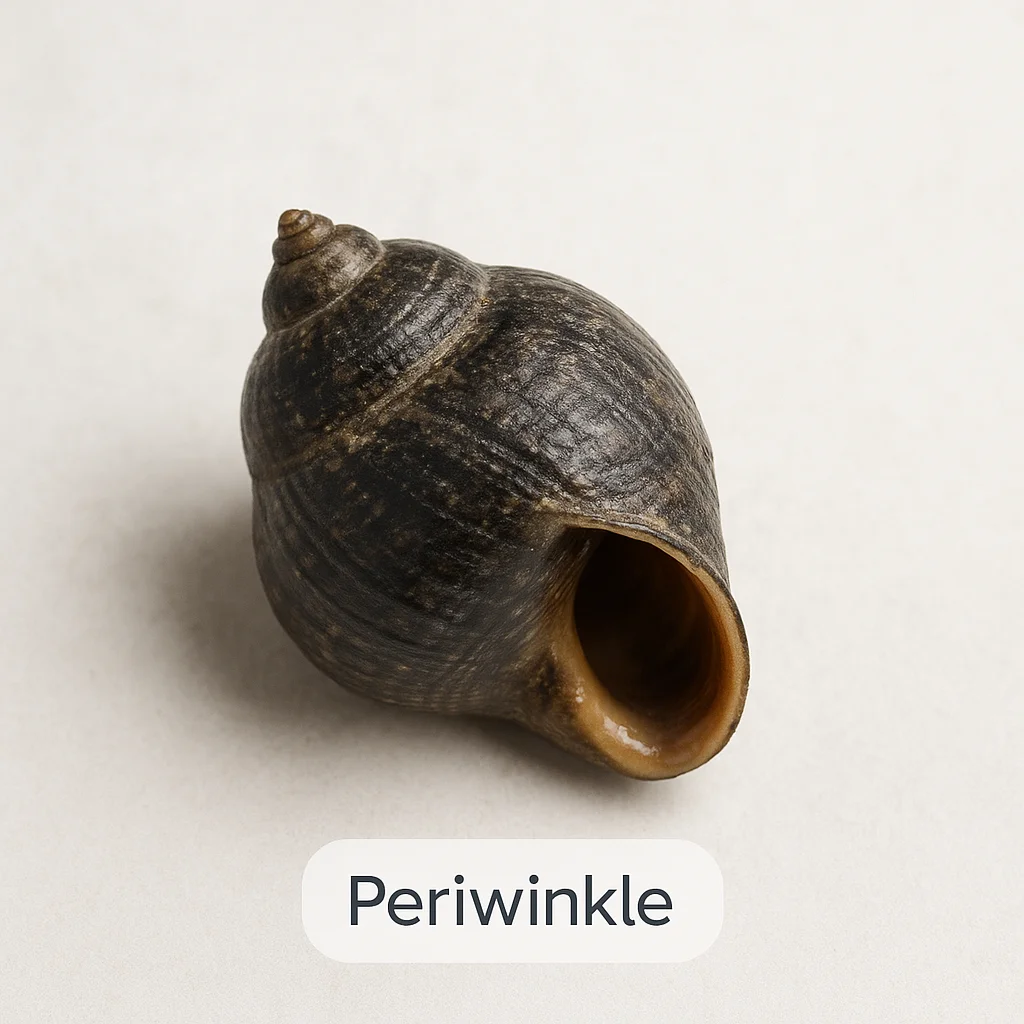
The consumption of periwinkles is fueled by their slightly savory nature, providing a delicious contrast to many other seafood. While periwinkles are less commonly encountered in markets compared to shrimp or scallops, they are cherished in areas where they are abundantly available. With the proper preparation, periwinkles can be a delightful addition to meals, celebrated for their taste as well as their versatile use in various culinary traditions.
🐠 Taste & Texture
Periwinkles are known for their chewy, somewhat firm texture, which may be an acquired taste for some. They possess a gentle brininess with a slightly sweet undertone, embodying the essence of the sea in a tiny package. Their flavor is moderate, making them a great canvas for different seasonings and culinary techniques. When fresh, periwinkles should have a faint smell of the ocean, free of any strong or off-putting odors.
- Flavor Intensity: Mild
- Sweetness/Saltiness: Lightly sweet, oceanic brine
- Fattiness: Lean
- Mouthfeel: Chewy
- Smell: Fresh ocean scent when fresh
🌊 Origin & Habitat
Periwinkles thrive in the intertidal zones of rocky shorelines and coastal areas. These creatures are abundant in parts of the North Atlantic, particularly found along the coastlines of Europe and North America. In these regions, wild-caught periwinkles are common, celebrated for their natural flavor that reflects their marine environment. With their preference for rocky substrata, they bring a taste of these waters straight to your plate. While the concept of farming periwinkles is less common, wild periwinkles provide authenticity and a fresh experience unique to their habitat.
📅 Best Season
Understanding the seasonality of periwinkles is essential to enjoying them at their peak. The best season often varies by region, with some areas seeing a rise in availability during spring and summer when the coastal waters warm up, promoting growth and reproduction. The concept of a "peak season" is important because it can influence the texture, flavor, and fat content, leading to a fresher and more flavorful product. However, seasonality can vary depending on local environmental factors, so it’s always best to consult with local experts or suppliers for specific regional guidance.
🔪 Preparation
Preparing periwinkles requires attention to detail to ensure they are clean and ready for cooking. Start by rinsing them under cold water to remove any sand or debris. It’s crucial to also inspect for any damaged shells, as these should be discarded. Use a small brush to scrub the shells thoroughly. Avoid strong odors post-cleaning by giving them a quick rinse or a light soak in saltwater to mimic their natural environment.
- Rinse under cold water
- Inspect and discard damaged shells
- Scrub shells with a brush
- Light soak in saltwater if desired
❄️ Storage Tips
Proper storage of periwinkles is critical to maintain their freshness and flavor. In the fridge, they should be kept in a breathable container, ideally covered with a damp cloth, and consumed within a few days of purchase. For longer storage, freezing is an option. Before freezing, portion them into airtight bags with as much air removed as possible to prevent freezer burn. When ready to use, thaw them in the refrigerator overnight to maintain freshness and quality.
- Do: Keep in breathable container
- Do: Cover with damp cloth in the fridge
- Do: Portion and freeze with air removed
- Don't: Store at room temperature for extended periods
- Don't: Refreeze once thawed
🍽️ Popular Dishes
Periwinkles are a versatile seafood option and can be incorporated into a variety of dishes across different cuisines. Popular dish ideas include:
- Grilled Periwinkles: Enhances their natural flavor; grill over high heat with garlic and herbs.
- Periwinkle Stew: A hearty mix with potatoes and tomatoes, simmered until tender.
- Sautéed Periwinkles: Cook gently with butter and white wine for a simple, elegant dish.
- Fried Periwinkles: Lightly coat and deep fry to highlight their chewy texture with a crispy finish.
- Steamed Periwinkles: Steam with aromatic herbs to retain moisture and enhance their oceanic essence.
- Periwinkle Paella: Incorporate into a rich, saffron-infused rice dish for a coastal twist.
For any raw preparations, such as a potential ceviche-style dish, it is crucial to ensure the periwinkles are sourced from reputable suppliers to mitigate any health risks.
🥗 Nutritional Benefits
Periwinkles, like many seafood options, provide valuable nutrients when incorporated into a balanced diet. They offer a good source of lean protein, essential for muscle maintenance and repair. Additionally, periwinkles may contribute to an intake of vital minerals and vitamins common in seafood.
- Lean protein
- Essential minerals
⚠️ Who Should Eat & Caution
Individuals considering periwinkles in their diet should be aware of potential allergy risks, particularly for those with shellfish allergies. Cross-contact in kitchens can also be a concern, so it is essential to communicate dietary restrictions to ensure safety. While periwinkles typically have low mercury levels, it is still wise for pregnant individuals and children to consume in moderation. Proper cooking and handling are crucial to eliminate any risks associated with consuming raw or undercooked seafood.
📌 Summary
Periwinkles are an intriguing choice for those looking to explore beyond the typical seafood selections. Their unique taste and texture make them suitable for a variety of dishes, whether grilled, sautéed, or used in a stew. For optimal enjoyment, they should be consumed fresh and stored properly.
- Versatile for different cooking methods
- Unique chewy texture with briny flavor
- Requires careful handling and storage