🐟 Mussel
Mussels are a popular seafood choice known for their sweet and tender taste. These bivalve mollusks are shellfish commonly found in both freshwater and saltwater environments. Mussels are enjoyed worldwide, often appreciated for their versatility in culinary applications and their rich nutritional profile. The shellfish is encased in a dark, oblong shell usually black or dark blue, making it distinct and easily recognizable. People enjoy mussels for their unique flavor and adaptability in numerous dishes—from simple steamed mussels to more elaborate recipes like seafood paella.
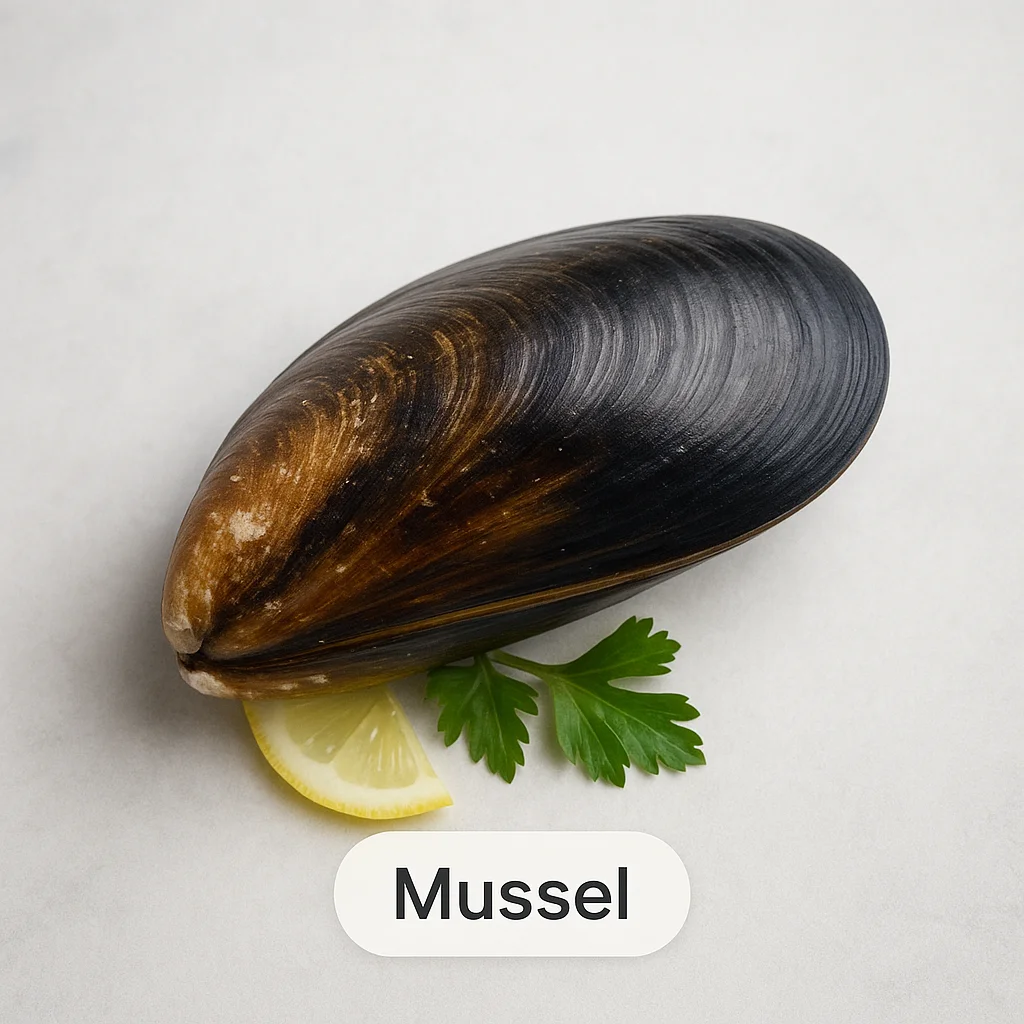
The popularity of mussels is also attributed to their ease of preparation and the diverse options they offer for meals. They are considered a lean shellfish, with meat that is known for its subtle sweetness and briny taste, making them favored by seafood lovers. The term "shellfish" refers to a broad category of edible aquatic animals with shells, which includes mussels along with oysters, clams, and other similar organisms.
🐠 Taste & Texture
Mussels offer a mild but distinct taste, characterized by a sweet and slightly salty flavor profile. Their meat is tender and slightly chewy, with a smooth and - sometimes - creamy mouthfeel. Fresh mussels emit a briny scent reminiscent of the sea, which is a key indicator of their freshness.
- Sweet and mild flavor
- Slightly salty taste
- Tender and chewy texture
- Sea-like aroma when fresh
🌊 Origin & Habitat
Mussels thrive in a variety of aquatic environments but are predominantly found in coastal and shallow waters where they can attach themselves to solid surfaces. They are cultured extensively worldwide, from the fjords of New Zealand to the coastal regions of Europe and North America. Both wild-caught and farmed mussels are commonly available, and farmed mussels may offer a more consistent size and flavor.
In Europe, mussels can be found along the Atlantic coasts, while in North America, they are harvested along both the East and West coasts. The taste and texture can vary slightly depending on their origin due to differences in water salinity and temperature.
📅 Best Season
Traditionally, mussels are best consumed during cooler months, often marked as months with an "R" in them (September to April). The colder water temperatures during these months contribute to a more flavorful and satisfactory texture as the mussels develop more fat, which enhances taste. However, the seasonality of mussels can vary by region, and modern farming practices have made them available year-round, offering consistent quality and flavor.
🔪 Preparation
Before cooking, mussels require thorough cleaning to remove any sand, grit, or debris. It's essential to discard any mussels with broken shells or those that do not close tightly when tapped. To clean mussels, scrub the shells under running water and remove the "beard" by pulling it towards the hinge of the shell.
- Check for any open or broken shells; discard them
- Scrub shells under running water
- Remove the beard by pulling towards the hinge
- Rinse thoroughly under clean water
To control odor, a quick rinse with salted water may help reduce any excessive fishy smell, as will soaking them briefly in milk. Such practices are optional but can enhance the preparation process.
❄️ Storage Tips
For best results, fresh mussels should be cooked within a day after purchase. When storing mussels in the fridge, keep them in a container covered with a damp cloth to maintain humidity. Avoid using airtight containers as mussels need to breathe.
- Do store in a breathable container
- Do keep covered with a damp cloth
- Don't store in airtight containers
If freezing is necessary, place cleaned mussels in a freezer-safe bag, removing as much air as possible. They can be frozen for up to three months. To thaw, transfer them to the fridge overnight and ensure to cook them immediately once thawed.
🍽️ Popular Dishes
Mussels are incredibly versatile and feature in many culinary traditions worldwide. Some popular dishes include:
- Steamed Mussels: Cooked gently with garlic and white wine.
- Moules-frites: A Belgian classic served with fries.
- Seafood Paella: A rich Spanish dish including rice and mixed seafood.
- Mussels in Curry Sauce: Prepared with coconut milk and spices.
- Mussels Marinara: Paired with a tangy tomato sauce and pasta.
- Grilled Mussels: Cooked on high heat, offering a slightly smoky flavor.
🥗 Nutritional Benefits
Mussels are known for their rich nutritional content, making them a healthful seafood option. They are packed with high-quality protein and are a great source of essential minerals and vitamins, such as B12, selenium, and zinc.
- High in protein
- Contains omega-3 fatty acids
- Rich in vitamin B12 and iron
⚠️ Who Should Eat & Caution
While mussels can be an excellent addition to a balanced diet, individuals with shellfish allergies should avoid them, as allergic reactions can be severe. It's crucial to prevent cross-contact in kitchens where shellfish are prepared alongside other foods.
Mussels generally have lower mercury levels compared to other seafood, but it's wise for pregnant women and young children to consume shellfish in moderation. Raw or undercooked mussels present additional risks. Always ensure thorough cooking for safety, and employ proper handling techniques to reduce contamination risks.
📌 Summary
Mussels offer a delightful combination of sweet and briny flavors, catering to a range of culinary uses. Their availability year-round makes them a convenient seafood choice for many, and with proper storage and preparation, they can maintain their fresh quality. Mussels are not just delicious; they are nutritionally beneficial and can be enjoyed as part of a balanced diet.
- Mild, sweet taste with a tender texture
- Available year-round due to modern farming
- Versatile in many dishes, from steamed to grilled
- Store wisely and cook promptly for optimal flavor and safety