🐟 Cuttlefish
The cuttlefish, often mistaken for a squid or octopus, is a marine mollusk renowned for its delicate flavor and versatile culinary applications. Unlike its shelled cousins, the cuttlefish has an internal shell known as a cuttlebone. This fascinating creature is a member of the cephalopod family, which includes squid and octopus. Loved for its tender meat and mild taste, cuttlefish is a staple in Mediterranean and Asian cuisines. Providing a unique culinary experience, it can be prepared in various ways, making it a sought-after ingredient for seafood enthusiasts.
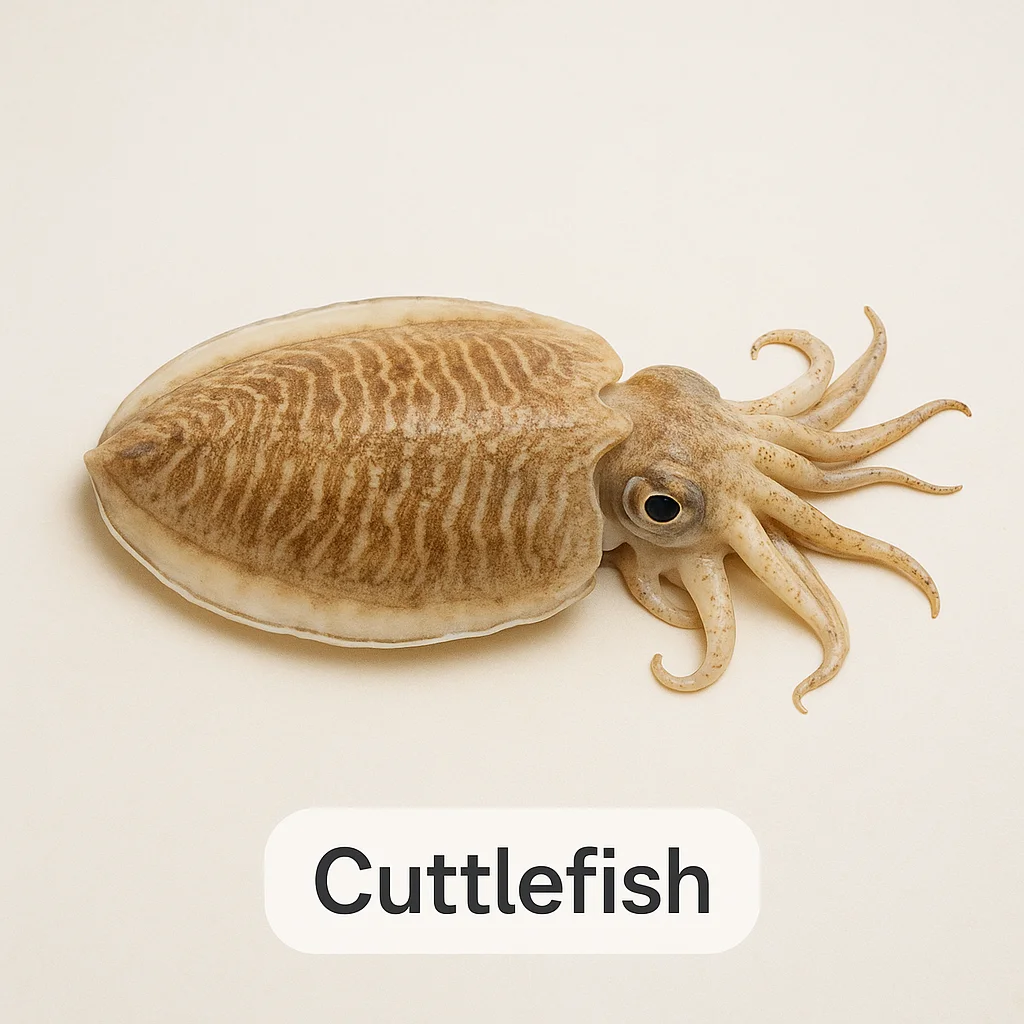
Cuttlefish is cherished for its subtle sweetness and slightly salty undertone. Being a lean source of protein, it fits well in healthy diets. The appeal of cuttlefish is not only in its taste but also in its ability to absorb flavors from herbs and spices during cooking, enhancing the overall dining experience. Whether you are grilling, frying, or stewing, cuttlefish adapts beautifully to different cooking techniques, offering a succulent and satisfying meal.
🐠 Taste & Texture
The taste of cuttlefish is often described as a gentle blend of mild sweetness and natural seafood brininess. Its texture is firm yet tender when cooked properly, delivering a slightly chewy mouthfeel that seafood lovers find appealing. Cuttlefish does not have the oiliness found in some other seafood, categorizing it as a lean option.
- Quick Taste Profile:
- Mild sweetness
- Slight saltiness
- Firm, tender texture
- Subtle oceanic aroma
- Lean, absorbs seasoning well
🌊 Origin & Habitat
Cuttlefish are widespread in the coastal waters of the Mediterranean, East Asia, and parts of the Pacific Ocean. They thrive in warm, shallow waters but can also be found in deeper regions. While most cuttlefish are harvested from the wild, there are farming initiatives aimed at sustainable production. The environment contributes to the nuances in flavor and texture of the cuttlefish, with wild-caught specimens often exhibiting more robust flavors.
Regions where cuttlefish are commonly found include the coastal waters around Italy, Spain, Japan, and Korea. The varied locations of their habitat contribute to differences in size and taste profiles, influenced by local diet and water qualities.
📅 Best Season
The peak season for cuttlefish can vary, largely depending on regional differences. Generally, spring and early summer are considered the best times for catching cuttlefish, as this is when they are most abundant and in optimal condition for harvest. During these months, cuttlefish are known for having a superior texture and increased flavor intensity, making them highly sought after by chefs and home cooks alike.
However, it is important to note that seasonality varies by region, and local advisories should be followed to ensure freshness and quality.
🔪 Preparation
Preparing cuttlefish requires some basic but essential cleaning steps to ensure a delightful culinary experience. The process involves removing the cuttlebone, cleaning the internal cavity, and separating the tentacles and body. Cutting, trimming, and scoring the body prevents the cuttlefish from curling during cooking, allowing for more even heat distribution.
- Remove cuttlebone
- Clean internal cavity
- Separate tentacles from the body
- Trim edges and score the surface
To control the odor, soaking cuttlefish in milk or a light saltwater solution prior to cooking can neutralize any strong scents. A brief rinse under cold water should follow to maintain freshness without altering the natural flavor.
❄️ Storage Tips
Cuttlefish should be stored carefully to maintain its quality. When refrigerating, keep it wrapped in an airtight container to prevent exposure to air, ideally using a cool pack or ice to sustain optimal temperature conditions. For best results, consume refrigerated cuttlefish within two to three days.
Freezing cuttlefish extends its shelf life significantly. Before freezing, portion the cuttlefish into usable sizes, wrap tightly in plastic, and expel as much air as possible from the package to minimize freezer burn. Thaw frozen cuttlefish slowly in the refrigerator to preserve its texture.
- Do refrigerate in airtight containers
- Do use ice or cool packs
- Don’t leave exposed to air
- Don’t freeze for more than 4-6 months
🍽️ Popular Dishes
Cuttlefish is incredibly versatile, suitable for a variety of culinary techniques. Here are some popular approaches:
- Grilled Cuttlefish: High heat enhances its natural flavors and gives a smokey aroma.
- Pan-Seared Cuttlefish: Achieve a crisp outside and tender inside by searing in a hot skillet.
- Cuttlefish Stew: Slow-cooked to meld flavors and tenderize the meat, often paired with tomatoes and spices.
- Fried Cuttlefish: Light batter fry for a crispy texture and savory taste.
- Steamed Cuttlefish: Gentle cooking preserves its moist, delicate texture.
- Raw / Ceviche-Style: When prepared as sashimi, ensure sourcing from reputable suppliers to avoid parasite risks.
🥗 Nutritional Benefits
Cuttlefish is a nutritious option that is high in protein and contains essential vitamins and minerals. It is often praised for its health benefits alongside other types of seafood. Regular consumption of cuttlefish may contribute to a balanced diet due to its low-fat content.
- High in protein
- Rich in vitamin B12
- Contains omega-3 fatty acids
- Rich in iodine and selenium
- Low in calories and fat
⚠️ Who Should Eat & Caution
Cuttlefish is generally safe for most individuals, but those with shellfish allergies should exercise caution. In culinary environments, cross-contact with other shellfish can occur, posing a risk for those with allergies. Pregnant individuals and children should limit their intake of mercury-prone fish, though cuttlefish typically have lower mercury levels than larger species.
Those who consume raw or undercooked cuttlefish should be aware of potential parasite risks. Always handle raw cuttlefish with clean surfaces and tools to prevent cross-contamination.
📌 Summary
Cuttlefish offers a delightful combination of mild sweetness and tender texture, making it a versatile addition to various dishes, from grilled delicacies to hearty stews. Maintaining its freshness through proper storage and following food safety guidelines ensures a safe and enjoyable experience.
- Mild flavor, versatile texture
- Best in spring and early summer
- Wide range of cooking methods
- Efficient storage extends usefulness
- Allergy consideration and food safety practice are essential