🐟 Blue Mussel
Blue Mussel, also known by its scientific name Mytilus edulis, is a type of shellfish highly valued for its mild, sweet flavor and tender texture. This bivalve mollusk, commonly called the Edible Mussel or Common Mussel, is often featured in culinary dishes worldwide, especially in European and North American cuisines. People eat Blue Mussels because they are not only delicious but also packed with nutrients. These mollusks are predominantly harvested or farmed in coastal waters where their habitat thrives best. The consumption of Blue Mussels is popular due to their affordability, sustainable harvesting practices, and their ability to enhance a variety of dishes, from soups to pastas.
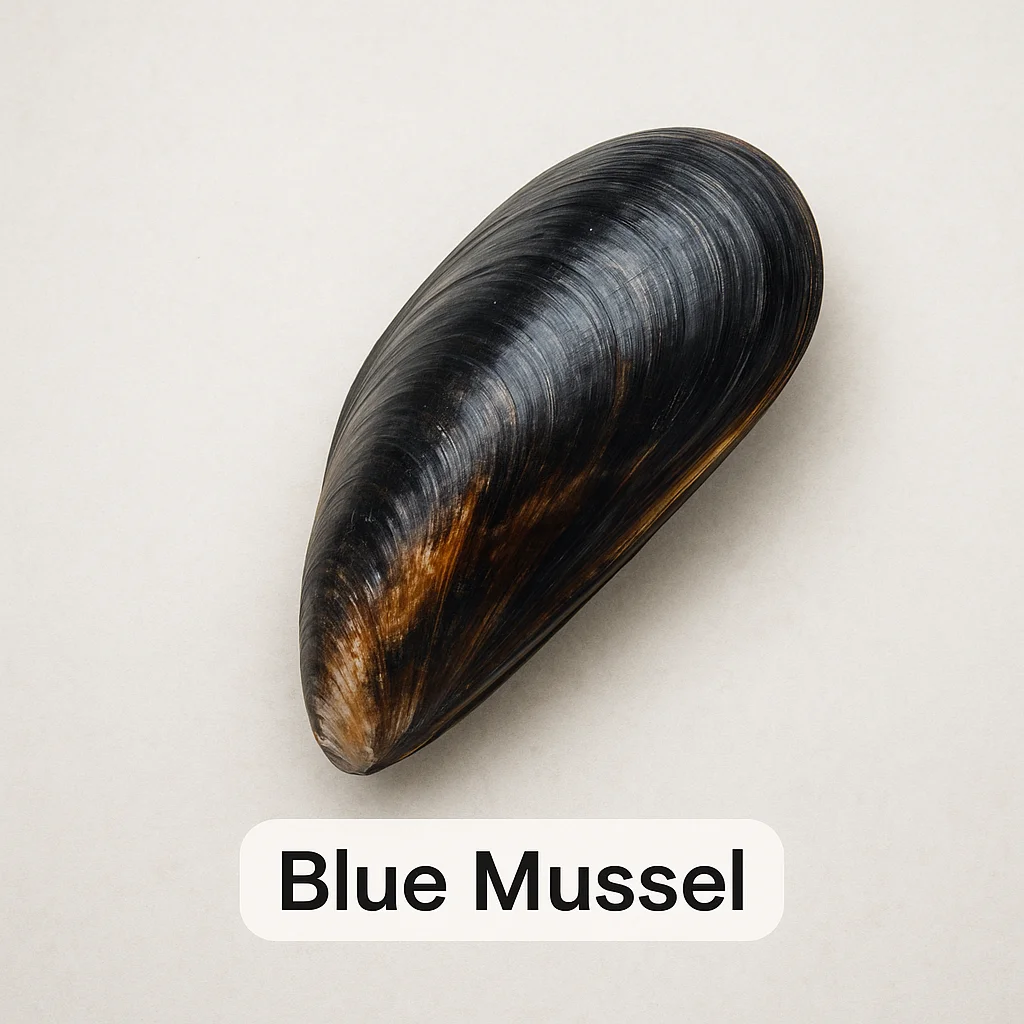
Blue Mussels are a staple in many seafood restaurants and home kitchens due to their versatility. They can be steamed, grilled, or tossed with a variety of ingredients to create both simple and gourmet meals. Their shells, when cooked, open to reveal a plump, juicy, and slightly briny morsel inside, making them a seafood lover's delight.
🐠 Taste & Texture
The flavor of Blue Mussels is commonly described as mild and slightly sweet, with a subtle oceanic brininess that is not overpowering. They are considered a lean seafood option, making them low in fat while maintaining a delicate richness that appeals to many palates. The texture of Blue Mussels is tender yet firm, providing a pleasing mouthfeel that can range from soft to slightly chewy depending on preparation.
- Quick taste profile: Mild, sweet, briny
- Mouthfeel: Tender, firm
- Smell: Fresh and oceanic
🌊 Origin & Habitat
Blue Mussels are typically found in the shallow coastal waters of the North Atlantic Ocean and are especially abundant along the coasts of Canada, Europe, and the Northeastern United States. They thrive best in high-salinity environments such as bays and estuaries. The mussels attach themselves to substrates like rocks and ropes using byssal threads, forming clusters.
Wild Blue Mussels can differ slightly from farmed ones in terms of taste and texture. Wild mussels are often sought after for their complex flavors, while farmed mussels are noted for their consistent size and texture. Both types are widely available, with farming practices generally recognized for their low environmental impact and sustainability.
📅 Best Season
The peak season for Blue Mussels varies by region but generally occurs during the colder months when the water temperature is lower. In many parts of the Northern Hemisphere, the best time to enjoy mussels is from late fall to early spring. During this period, the mussels tend to have higher fat content, making them plumper and more flavorful. However, thanks to aquaculture, Blue Mussels are available year-round in many markets.
🔪 Preparation
Preparing Blue Mussels begins with ensuring they are fresh and alive. Gently tap any open mussels; they should close on their own. Discard any mussels that remain open or have cracked shells. Rinse the mussels under cold running water to remove debris and use a brush to scrub the shells if needed. Remove the beard by pulling it towards the hinge of the shell.
- Gently tap open shells; discard if they do not close
- Scrub mussels under cold water
- Remove beards by pulling towards the shell hinge
To control any odor, some cooks soak mussels briefly in water with a bit of salt or milk, but a quick rinse is usually sufficient to ensure freshness. Avoid soaking mussels for extended periods, as they can lose flavor.
❄️ Storage Tips
Blue Mussels should be consumed shortly after purchase for the best taste and texture. If necessary, store them in the refrigerator for up to two days. Place them in a bowl covered with a damp cloth to maintain freshness. Do not seal them in airtight containers as they need to breathe.
- Do: Store in fridge with damp cloth, consume within two days
- Don't: Store in airtight containers, freeze mussels in-shell
If you need to freeze mussels, it is best to remove them from their shells. Freeze them in airtight containers or vacuum-seal bags to prevent freezer burn. Thaw them in the refrigerator before cooking.
🍽️ Popular Dishes
- Moules Marinières: Classic French dish steamed with white wine, shallots, and herbs.
- Curry Mussels: Mussels cooked in a spicy coconut curry sauce.
- Mussels Fra Diavolo: Italian-style with tomatoes, garlic, and red pepper flakes.
- Grilled Mussels: Quickly grilled with lemon butter for a smoky flavor.
- Seafood Paella: Combines mussels with saffron rice and a medley of other seafood.
- Belgian-style Mussels: Served with fresh herbs and a side of fries.
- Thai-style Mussel Soup: Aromatic with lemongrass, lime, and chili flavors.
Preparation methods vary from high heat grilling to gentle steaming, each highlighting different textural elements of the mussels. While raw dishes are rare, if attempting, ensure seafood is sashimi-grade and follow stringent food safety standards.
🥗 Nutritional Benefits
Blue Mussels are a nutritious seafood choice, rich in protein and low in calories. They contain omega-3 fatty acids, which are beneficial for heart health, and are a good source of vitamins like B12 and minerals such as zinc and iron.
- High in protein
- Rich in omega-3 fatty acids
- Contains vitamins B12 and essential minerals
⚠️ Who Should Eat & Caution
As shellfish, Blue Mussels may cause allergic reactions in individuals with shellfish allergies. Cross-contact in kitchens is possible, so caution is advised. While Blue Mussels are generally low in mercury, it is recommended that pregnant people and children consume them in moderation. Raw or lightly cooked mussels can pose health risks, so cooking until they are opaque and firm is safest. Handle mussels with care to avoid cross-contamination by using clean tools and separate cutting boards for raw seafood.
📌 Summary
Blue Mussels offer a delightful combination of mild sweetness and marine flavor, making them a versatile addition to numerous dishes. From grilled to steamed, they are enjoyed around the world for their tender texture and rich nutritional profile. They should be stored and prepared with care to ensure the best quality and safety.
- Versatile and mild-flavored
- Cook promptly for best quality
- High in protein and omega-3s