🐟 Salted Fish
Salted fish refers to a variety of fish that have been preserved through salting, a traditional method that enhances both flavor and shelf life. This technique involves curing fresh fish with salt, which draws out moisture and acts as a natural preservative. The result is a fish product that is distinctively salty, rich in umami, and can be used in a variety of dishes worldwide. Salted fish is a staple ingredient in many cultures, from Asian to Mediterranean cuisines, providing a unique taste that is both savory and intense.
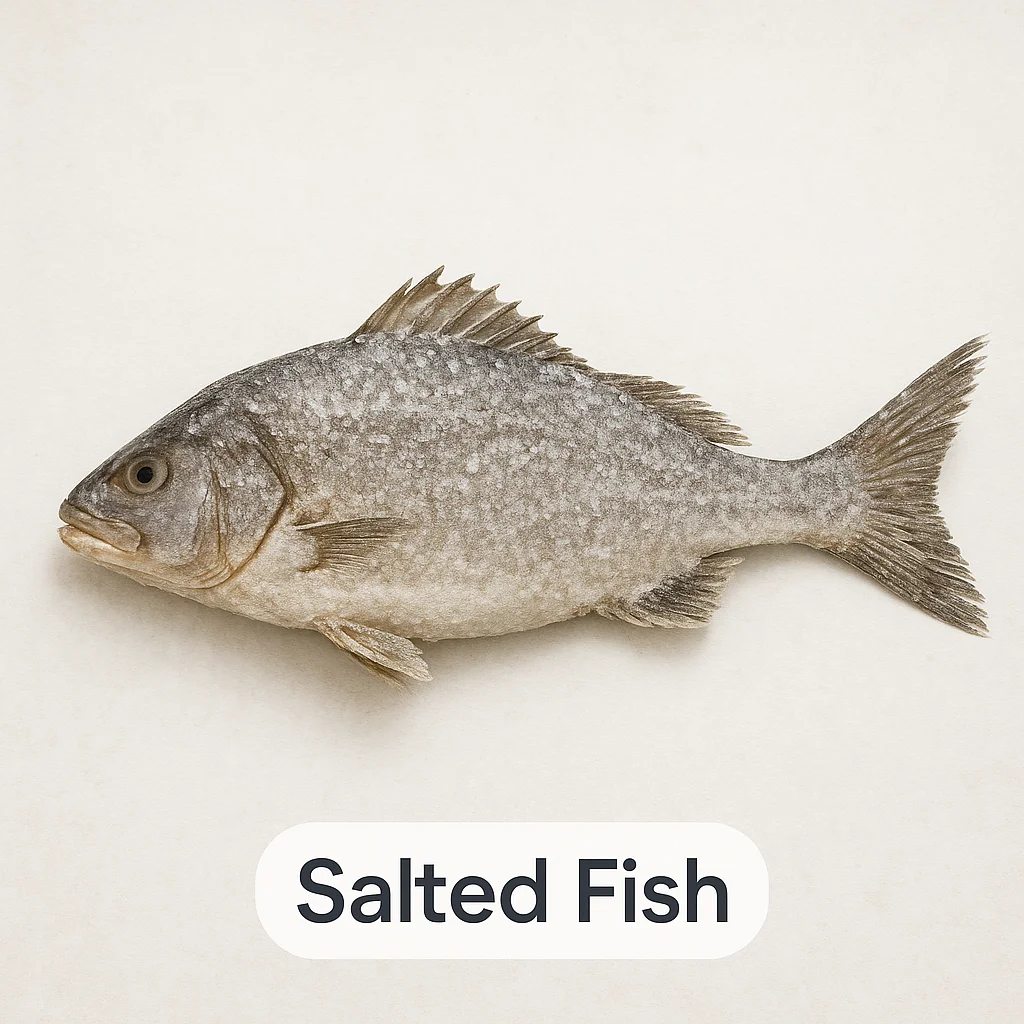
People consume salted fish for various reasons, including its lasting preservation qualities, the robustness of flavor it imparts to dishes, and its rich cultural significance. Various fish species, such as cod, mackerel, and anchovies, are commonly used for salting. This method of preservation is especially beneficial in regions where access to fresh fish is limited or where fish needs to be stored for extended periods.
🐠 Taste & Texture
The taste of salted fish is marked by its high salt content and umami, offering a flavorful burst that can elevate simple dishes. Depending on the type of fish used and the duration of curing, the flavor can range from moderately salty to intensely briny. The texture is generally firm, and the fish retains a chewy consistency compared to its fresh counterparts.
- Intense salty flavor
- Rich umami notes
- Firm, chewy texture
- Pronounced fish aroma
🌊 Origin & Habitat
Salted fish is traditionally sourced from both wild and farmed environments. Species like cod, known for salt cod or bacalhau, typically originate from the cold waters of the North Atlantic, while other fish like tilapia may be farmed in various parts of the world, including Asia and the Americas. Such diversity in origin affects the texture and flavor profile of the salted fish, with wild-caught fish often delivering a firmer texture and deeper taste complexity.
Common regions renowned for harvesting and producing salted fish include European countries like Portugal and Spain, various Asian regions such as Japan and the Philippines, and parts of Africa and South America.
📅 Best Season
The peak season for harvesting fish suitable for salting typically corresponds to when these species are at their most abundant and healthy, thus impacting the fat content and overall flavor. However, since salted fish is preserved and can be stored for long periods, "seasonality varies by region" should guide prospective buyers to consult local sources for availability and quality. Generally, purchasing during traditional fishing seasons ensures better quality and lower prices.
🔪 Preparation
Preparing salted fish can be straightforward, though it requires some attention to detail, especially if starting with whole fish. Begin by thoroughly rinsing the fish to remove excess salt. Scale the fish if necessary, and remove the guts, pin bones, and fins using a sharp knife. Depending on the recipe, you may choose to soak the fish in milk or water to reduce saltiness.
- Rinse thoroughly to remove excess salt
- Descale and gut the fish
- Soak in water/milk to decrease saltiness if desired
- Trim off fins and bones carefully
Odor control is an important aspect of preparing salted fish; soaking it briefly in milk or giving it a quick rinse can help minimize any potent fishy smells without compromising flavor.
❄️ Storage Tips
Salted fish should be stored correctly to prolong its shelf life. In the fridge, it can last for weeks if wrapped in airtight packaging or sealed containers to keep moisture and odors at bay. If you prefer to freeze salted fish, portion it into manageable sizes, remove as much air as possible from storage bags, and ensure proper sealing to prevent freezer burn. Thaw frozen salted fish slowly in the refrigerator to maintain texture and taste.
- Do wrap tightly in airtight packaging
- Don't leave exposed to air in the fridge
- Do freeze in portions, removing excess air
- Don't thaw at room temperature
🍽️ Popular Dishes
Salted fish can be enjoyed through a variety of culinary preparations across global cuisines. In Portuguese cuisine, salted cod (bacalhau) is traditionally baked with olive oil, garlic, and potatoes. In Asian cuisine, salted fish is often pan-fried and used to flavor stir-fries or rice dishes. Caribbean dishes frequently feature salted fish in savory stews, paired with vegetables and spices. In Italian gastronomy, anchovies are commonly used as pizza toppings or as a flavor enhancer in a pasta puttanesca. Caution is recommended for raw dishes, such as certain types of ceviche, where freshly sourced and properly treated salted fish is crucial for safety.
🥗 Nutritional Benefits
Salted fish, while high in sodium, offers several nutritional benefits when consumed in moderation. It is a good source of protein, aiding muscle development and repair. Some fish, like mackerel and sardines, are rich in omega-3 fatty acids, which are beneficial for cardiovascular health. Vitamins and minerals such as vitamin D, calcium, and phosphorus can also be found in well-prepared salted fish.
- High-quality protein source
- Contains omega-3 fatty acids
- Rich in vitamin D and calcium
⚠️ Who Should Eat & Caution
Individuals with fish or shellfish allergies should avoid consuming salted fish, as it can trigger allergic reactions. Kitchens that handle a variety of fish should implement cross-contact prevention practices. Mercury content is another consideration, particularly for pregnant individuals or children, who are advised to limit consumption of high-mercury fish types. As with any seafood, eating raw or undercooked fish can pose risks of food-borne illness or parasites; therefore, proper handling and cooking are essential to ensure safety.
📌 Summary
Salted fish is a timeless and versatile ingredient, offering a unique taste and texture that enhances many dishes. It's valued for its preservation qualities and nutritional benefits, although it should be consumed in moderation due to its high sodium content. Proper storage and preparation techniques ensure that the fish remains safe and flavorful for use in various culinary applications.
- Intense, savory flavor with chewy texture
- Durable preservation makes it versatile
- Store in airtight containers, appropriate freezing methods