🐟 Roasted Seaweed
Roasted seaweed, known widely as "nori" in Japanese cuisine, is a type of edible algae that has been toasted to enhance its flavor and texture. It is a staple ingredient in many Asian dishes, particularly sushi, and is celebrated for its crisp texture and umami-rich taste. People enjoy roasted seaweed for its savory flavor and its versatility as a snack or as an accompaniment in a variety of recipes. It can be easily incorporated into meals worldwide, adding a unique twist to both traditional and modern gastronomy.
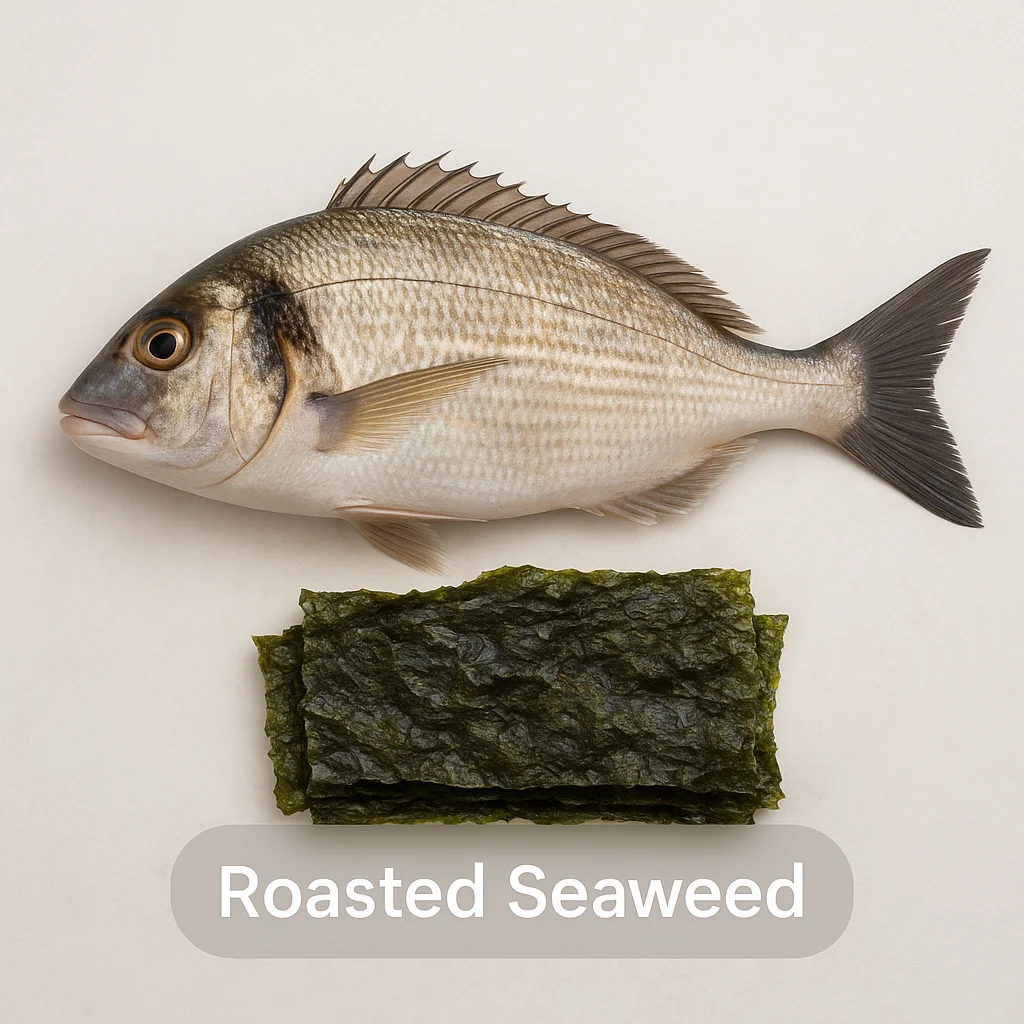
As a versatile ingredient, roasted seaweed appeals to global palates with its distinctive taste and nutritional benefits. Often found in the form of thin sheets, roasted seaweed is utilized in both raw and cooked dishes, demonstrating its adaptability across culinary traditions. Its popularity as a healthy alternative to conventional snacks further underscores its appeal, with options that suit vegans, vegetarians, and those seeking gluten-free choices without compromising on flavor.
🐠 Taste & Texture
Roasted seaweed is famous for its intense umami flavor, often described as deeply savory with a hint of the ocean. The roasting process brings out a subtle sweetness and imparts a smoky essence that can complement other ingredients. Its texture is notably crisp and light, providing a pleasant melt-in-the-mouth experience.
- Flavor intensity: Medium to strong umami
- Sweetness: Slightly sweet notes
- Saltiness: Naturally salty
- Mouthfeel: Light and crisp
- Smell: Subtle oceanic aroma
🌊 Origin & Habitat
Roasted seaweed is typically harvested from coastal regions where algae thrives in shallow waters. It is primarily a product of oceanic environments, with some varieties cultivated in controlled, farmed settings to meet high demand. The differences between wild and farmed examples can manifest in taste and texture, with farmed varieties offering consistent qualities, whereas wild versions provide unique flavors based on habitat species.
Commonly, seaweed is harvested around the coasts of Japan, Korea, and China, where it plays an integral role in local culinary practices. These regions have perfected the art of roasting and seasoning seaweed, making it a sought-after delicacy worldwide.
📅 Best Season
While the seasonality of seaweed can vary, harvesting usually peaks when the algae is most robust and nutrient-rich, often during spring and autumn. During these times, seaweed offers maximum flavor intensity and desirable texture characteristics. However, as it is often dried and shelf-stable, roasted seaweed may be available year-round without major fluctuations in quality or price.
It is important to note that the specific peak seasons can differ based on the local environments where the seaweed is harvested, creating regional variations in availability.
🔪 Preparation
Preparing roasted seaweed is incredibly simple due to its ready-to-eat nature. However, when handling seaweed for culinary purposes, ensuring it retains freshness and flavor is key.
- Keep seaweed sheets dry to maintain crispness.
- Store in a cool, dry place away from direct sunlight.
- If necessary, lightly toast in an oven for a few seconds to restore crispness.
For odor control, ensuring the seaweed is airtight upon storage helps to prevent external odors from penetrating. A light rinse under cold water can be helpful if using seaweed in fresh preparations, though usually unnecessary for roasted varieties.
❄️ Storage Tips
Roasted seaweed, when stored correctly, maintains its quality for extended periods. Keeping it properly ensures its flavor and texture are preserved.
Refrigeration is generally not required for unopened seaweed, and once opened, consider placing it in an airtight container with a desiccant packet to absorb moisture.
- Do: Store in a cool, dry place.
- Do: Use airtight containers for storage.
- Don't: Expose to moisture.
- Don't: Freeze, as this can affect texture.
For long-term storage, vacuum sealing helps in retaining freshness by preventing exposure to air.
🍽️ Popular Dishes
Roasted seaweed can be a key ingredient in numerous global cuisines. Its diverse applications showcase its adaptability to various cooking methods and flavor pairings.
- Sushi rolls: Used as the outer wrap for rolls, imparting flavor and texture.
- Seaweed salads: Often paired with sesame dressing, offering a refreshing appetizer.
- Rice balls (Onigiri): Wrapped around rice for flavor and easy handling.
- Ramen topper: Adds texture and umami depth to noodle dishes.
- Snacks: Simply eaten as a crisp, savory snack.
- Korean gimbap: Korean-style sushi rolls, with vegetables, meat, or fish.
While roasted seaweed is typically enjoyed cooked, it is important to source it carefully if using in raw preparations, ensuring proper hygiene standards are met.
🥗 Nutritional Benefits
Rich in essential nutrients, roasted seaweed is celebrated not only for its taste but also its contributions to a balanced diet. It is a low-calorie option yet packed with beneficial compounds.
- Iodine: Essential for thyroid function.
- Vitamins: A source of vitamins A, B12, and C.
- Minerals: Contains calcium, iron, and magnesium.
- Antioxidants: Known to help protect cells.
As with all foods, enjoying roasted seaweed as part of a varied diet is recommended to take advantage of its health benefits.
⚠️ Who Should Eat & Caution
Roasted seaweed is commonly enjoyed by all, but there are some considerations for specific populations. It is crucial for those with fish or shellfish allergies to be cautious, especially given that contamination can occur during processing. In general, those with iodine sensitivities or thyroid conditions should consult with healthcare professionals before regular consumption due to seaweed’s naturally high iodine content.
As with all seafood, attention to source quality is important to prevent contamination risks associated with raw or undercooked products. Pregnant individuals, children, and those with compromised immunity should ensure that any consumed seaweed products meet strict safety standards.
📌 Summary
Roasted seaweed is a flavorful, nutritious ingredient that can elevate various dishes with its unique taste and texture. Its rich umami flavor profile, health benefits, and ease of storage make it a favored choice for many home cooks and professionals alike.
- Highly versatile and enjoyed globally.
- Nutritionally beneficial, offering essential vitamins and minerals.
- Easy to store and incorporate into a variety of dishes.
- Consider dietary restrictions and source quality to ensure safety.
As a staple in many culinary traditions, roasted seaweed continues to captivate with its convenient form and rich taste, making it an increasingly popular ingredient worldwide.