🐟 Fermented Fish
Fermented fish is a traditional method of preserving fish that has been practiced around the world for centuries. By allowing fish to undergo a controlled fermentation process, people have been able to extend the shelf life of fish while enhancing its flavors. Fermented fish is known for its strong aroma and distinctive taste, making it a staple ingredient in various culinary traditions. This process is popular not only for its practicality in preservation but also for the unique flavors it imparts to dishes.
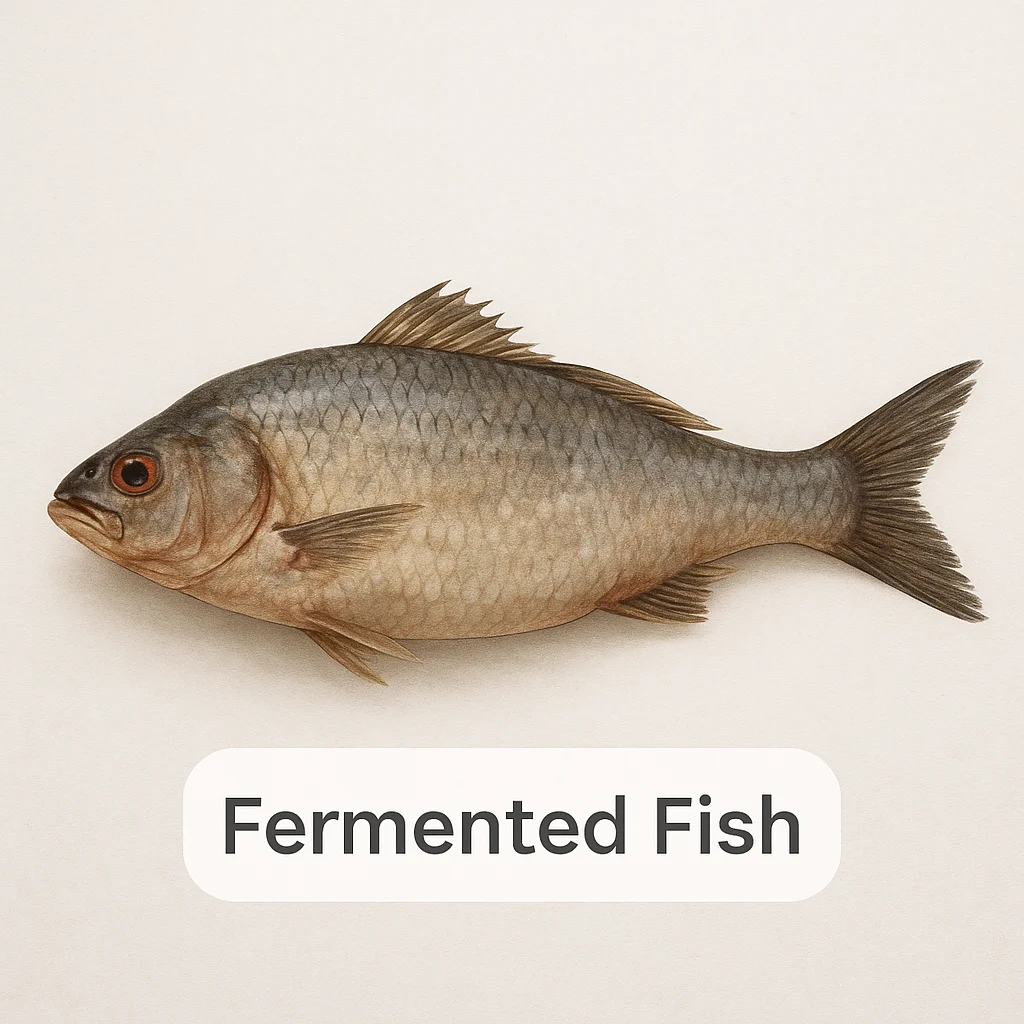
The fermentation process can often transform the fish, adding deep umami notes, mild sourness, and a signature aroma. Although it may seem intimidating at first due to its potent smell, fermented fish is enjoyed by many for its ability to add complexity to a meal. Some famous fermented fish products include Sweden's surströmming, Korean jeotgal, and Thai pla ra. While fermented fish is part of traditional cuisine in many cultures, it may be an acquired taste for new adopters.
🐠 Taste & Texture
The flavor of fermented fish can be intense, displaying a combination of strong salty and savory umami flavors, occasionally accompanied by a tangy or slightly sweet undertone. The texture is often soft and pliable, with the fermentation process breaking down the fish fibers to make it tender. The smell of fermented fish is notably pungent, a result of the bacterial activity during fermentation. Its overall profile is both complex and bold.
- Quick Taste Profile:
- Strong salty and umami flavors
- Tender, pliable texture
- Pungent aroma
- Slightly tangy or sweet undertones, depending on regional variations
🌊 Origin & Habitat
Fermented fish is typically made from species commonly found in coastal or riverine environments. These environments provide a variety of fish ideal for fermentation due to their size and oil content. Fish used can be either wild-caught or farmed; wild fish may offer more depth in flavor owing to their natural diet and environment, while farmed fish provide consistent availability.
Regions with a rich history of fermented fish production include northern Europe, Southeast Asia, and parts of Africa. Common fish species used in fermentation processes include herring, anchovies, and mackerel, known for their oily flesh that supports fermentation well.
📅 Best Season
Fermented fish's seasonality varies by region, largely depending on the availability of the fish species used for fermentation. Peak seasons are usually aligned with when the fish are most abundant and the oil content is at its highest, which helps in the fermentation process.
For northern European versions like surströmming, spring is often noted as the best season for harvesting herring due to optimal fishing conditions. In Southeast Asia, specific types of fermented fish may be produced year-round, adapting to the local fishing seasons.
🔪 Preparation
Preparing fish for fermentation involves a few essential steps to ensure the best results. It begins with cleaning and scaling the fish, followed by gutting it properly to remove any unwanted organs. Pin bones may need to be removed, and the fish should be trimmed to your preferred size, often leaving the skin intact to aid in the fermentation process.
- Preparation Checklist:
- Thoroughly clean and scale the fish
- Remove guts and unwanted internal organs
- Ensure pin bones are removed
- Trim to desired size, maintaining skin
To manage the strong odor that can accompany fermented fish preparation, some techniques include briefly soaking the fish in a milk or salt solution and rinsing it quickly before the fermentation process to reduce surface bacteria and potential odors.
❄️ Storage Tips
Proper storage of fermented fish is crucial to maintain its quality and flavor. In the refrigerator, fermented fish should be wrapped airtight to limit odor spread and can be stored for a few days. For longer storage, place the fish in a container within a cold part of the fridge, ideally surrounded by ice.
Freezing is another option, ensuring you portion the fish appropriately and remove as much air as possible from the packaging to prevent freezer burn. Thaw frozen fermented fish in the refrigerator to maintain its texture and prevent spoilage.
- Do's and Don'ts:
- Do wrap airtight and store in the coldest part of the fridge
- Do use freezer-safe bags or containers to avoid freezer burn
- Don’t refreeze fish that has been previously defrosted
- Don’t keep beyond a reasonable time frame to ensure quality
🍽️ Popular Dishes
Fermented fish forms the backbone of several traditional dishes across the globe. Here are some popular culinary uses that highlight its dynamic flavor and texture:
- Swedish Surströmming: Fermented herring often served with thin flatbreads and potatoes. Best enjoyed with a vigorous airing to temper the aroma.
- Thai Pla Ra: A type of fermented fish sauce used to enhance various curries and salads, often adding a deep umami flavor.
- Korean Jeotgal: A variety of salted seafood side dishes, where fermented seafood like fish or shellfish is paired with steamed rice to balance savory flavors.
- Nigerian Iru (Locust Beans): Used extensively in soups and sauces for its rich, earthy umami notes.
- Filipino Bagoong: A fermented fish paste used for marinades, as a condiment, or as an ingredient in savory stews like pinakbet.
When incorporating fermented fish into dishes, it’s often cooked through methods like grilling or stewing, which can help to mellow its intense flavors while preserving its textural depth.
🥗 Nutritional Benefits
Fermented fish can be a valuable addition to the diet, providing numerous nutritional benefits thanks to its natural composition and fermentation process. It is a good source of high-quality protein and essential fatty acids, especially omega-3s, which are beneficial for heart health.
The fermentation process can increase the bioavailability of certain nutrients, making them easier for the body to absorb. Additionally, fermented fish may contain beneficial bacteria which contribute to gut health.
- Notable Nutrients:
- High-quality protein
- Omega-3 fatty acids
- Vitamins D, B12, and A
- Beneficial digestive enzymes
⚠️ Who Should Eat & Caution
While fermented fish can be nutritious, it’s important to be aware of potential allergens, especially with fish and shellfish-related allergies. Cross-contamination in preparation areas is another concern, so ensure separate utensils and surfaces when handling.
Mercury content is an essential consideration, particularly for pregnant individuals and children; it’s advised to consume it in moderation. Additionally, consuming raw or undercooked fish can pose risks due to potential parasites. Always ensure fermented fish is properly sourced and prepared to minimize health risks.
📌 Summary
Fermented fish offers a compelling combination of taste, tradition, and nutrition. Its strong, umami-rich flavors and tender texture make it a cherished ingredient across various cuisines worldwide. Whether used as a condiment or a center-stage element, it can transform a meal with its distinctive profile.
- Key Takeaways:
- Notably strong flavors with a pungent aroma
- Traditionally used across continents for its preservation and taste-enhancing properties
- Store carefully to maintain quality and safety
- Consider moderation due to potential allergens and mercury content
- Brings a rich, traditional element to numerous global dishes