🐟 Dried Yellow Croaker
Dried Yellow Croaker, known widely in various regions by names such as "Yellow Corvina" or "Small Yellow Croaker," is a popular seafood choice in many parts of the world due to its unique taste and versatility in the kitchen. This fish is typically salted and dried, which intensifies its flavor and makes it a staple in many traditional dishes. People consume Dried Yellow Croaker for its distinct taste that balances savory and slightly sweet notes, making it a favored ingredient in various culinary applications.
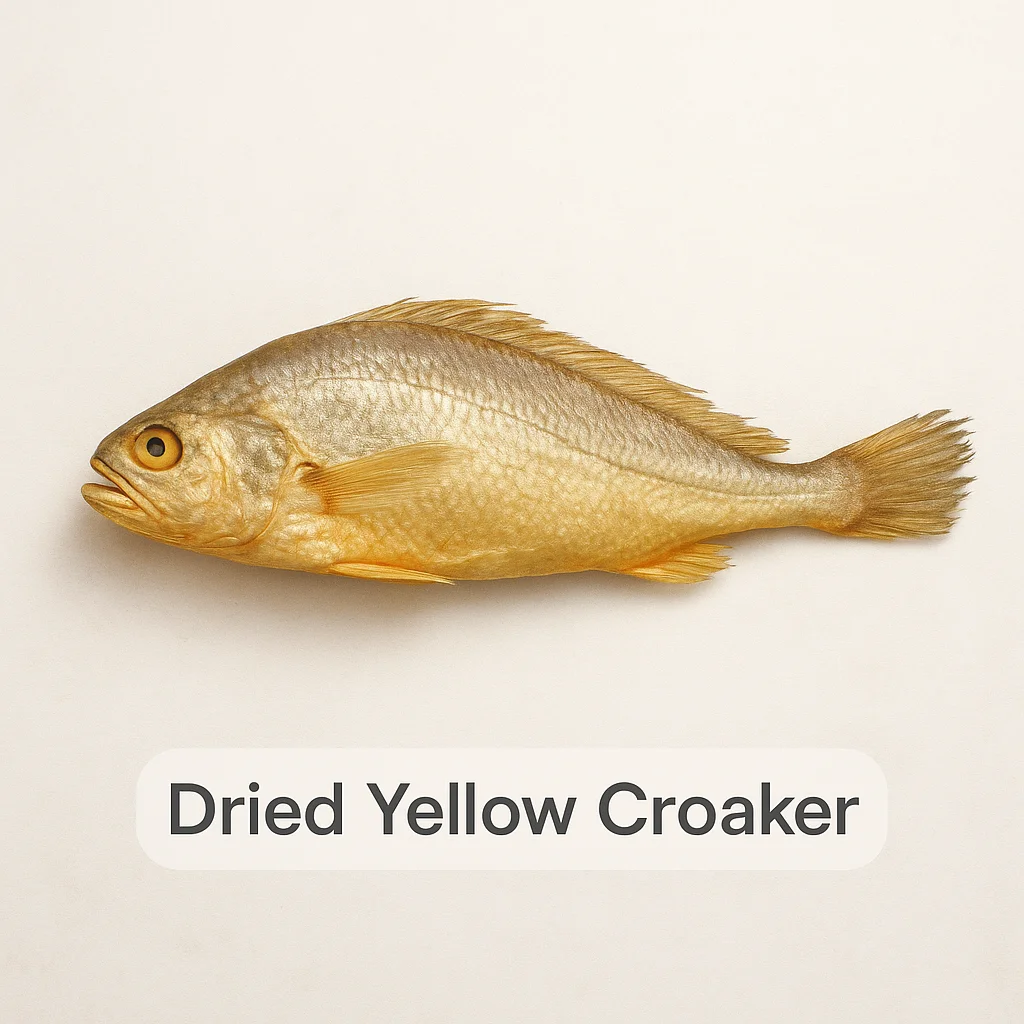
Aside from its appealing flavor, Dried Yellow Croaker is often chosen for its relatively lean profile, which makes it a lighter option compared to more oily fish. In its dried form, the fish presents a concentrated meatiness that holds up well in both simple and complex dishes. Given its ease of preparation and robust flavor profile, Dried Yellow Croaker is an ideal choice for culinary enthusiasts looking to explore traditional recipes or innovate with their own creations.
🐠 Taste & Texture
Dried Yellow Croaker is known for its rich and savory flavor, complemented by subtle sweet undertones from the drying process. The fish is generally lean, offering a tender and flaky texture that makes it a pleasure to eat in a variety of preparations. Upon preparation, you will notice a distinctive briny aroma that evokes the sea, highlighting its maritime origins.
- Flavor: Savory with a mild sweetness
- Texture: Tender and flaky
- Aroma: Distinctly briny when fresh
- Fat Content: Lean
- Mouthfeel: Meaty and satisfying
🌊 Origin & Habitat
The Yellow Croaker typically inhabits the coastal waters of the Western Pacific, particularly in areas ranging from the Yellow Sea down to the East China Sea. Wild-caught varieties are the most common, although there have been increasing efforts in sustainable farming. Wild-caught Dried Yellow Croaker generally offers a more intense flavor and firmer texture compared to farmed alternatives. It's predominantly sourced from waters near China, Korea, and Japan, where it has been a staple in local diets for centuries.
📅 Best Season
The peak season for catching Yellow Croaker is largely dependent on regional variances, but they are commonly harvested during the warmer months when they are most abundant and filled with nutrients. During peak times, the fish tends to have a higher fat content, which can enhance its flavor and texture. However, due to the drying process, Dried Yellow Croaker is available year-round, allowing consumers to enjoy its delightful taste anytime.
🔪 Preparation
Before cooking Dried Yellow Croaker, it is essential to clean and prepare it properly to achieve the best flavor and texture. Start by rinsing the fish under cold water to remove any surface salt or impurities. Scale and gut the fish carefully, ensuring no remnants are left inside. For best results, trim away any fins and excess skin.
- Rinse the fish thoroughly under cold water.
- Scale and gut the fish, removing any internal remnants.
- Trim fins and excess skin for a clean presentation.
- For odor control, consider a quick rinse with diluted vinegar or a brief soak in milk, followed by a rinse.
❄️ Storage Tips
Storing Dried Yellow Croaker correctly is key to preserving its flavor and texture. If consuming within a few days, keep the fish wrapped in an airtight bag in the refrigerator, ensuring it remains cold and dry. For more extended storage, freezing is recommended. Portion the fish appropriately, expel any air from the packaging to prevent freezer burn, and keep it in a deep freezer. Always thaw slowly in the refrigerator before use.
- Do: Store in an airtight bag in the fridge for short-term use.
- Do: Freeze in portions with as much air removed as possible.
- Don't: Leave unwrapped in the fridge; it can dry out further.
- Don't: Refreeze once thawed.
🍽️ Popular Dishes
Dried Yellow Croaker can be enjoyed across a variety of culinary styles. Whether pan-seared, grilled, or used in stews, the fish delivers its full flavor when cooked with methods that leverage its texture and taste. Here are some popular dishes from around the globe:
- Grilled: Enhanced with light seasoning, the fish is crisped on high heat for a smoky flavor.
- Pan-Seared: Cooked with minimal oil, highlighting its natural taste; serves best with steamed rice.
- Stew: Slowly simmered to infuse with vegetables and spices, creating a hearty dish.
- Fried: Lightly battered and crispy; ideal for snacks or side dishes.
- Steamed: Gentle steaming preserves moisture and tenderizes the flesh.
- Baked: Oven-baked with herbs and garlic for a flavorful main course.
- Ceviche-Style: While rare, can be prepared with caution by marinating in citrus; ensure safety of ingredients.
🥗 Nutritional Benefits
Dried Yellow Croaker offers a nutritious addition to the diet, providing a valuable source of protein and a unique variety of nutrients typical of seafood. It contributes to a healthy dietary profile, though moderation, as with all foods, is advised.
- Protein: Supports muscle maintenance and growth
- Omega-3 Fatty Acids: May promote heart health
- Vitamins/Minerals: Includes B vitamins and selenium
⚠️ Who Should Eat & Caution
Individuals with fish allergies should avoid Dried Yellow Croaker to prevent adverse reactions. Furthermore, cross-contact in shared kitchens can be a concern for those with seafood sensitivities. Pregnant individuals and young children should be mindful of fish consumption due to concerns about mercury; while Yellow Croaker is generally low in mercury, informed choices are always best.
Consuming raw or undercooked fish carries risks of foodborne illnesses; hence, proper handling and cooking to appropriate temperatures—such as cooking until the fish turns opaque and flakes easily—are crucial for safety.
📌 Summary
Dried Yellow Croaker is prized for its savory and lightly sweet taste, accompanied by a tender and flaky texture. It serves well in both traditional and contemporary dishes, offering versatility and rich flavor. Proper storage and preparation are essential for maintaining its quality, and a cautious approach to consumption ensures it's enjoyed safely by all who choose to partake.
- Known for its savory taste with sweet undertones
- Versatile in many dishes: grilled, fried, or stewed
- Store in airtight containers; freeze portions for long-term use
- Proper handling and cooking ensure safety and quality