🐟 Dried Sardine
Dried sardine, often recognized by its salty and umami-rich flavor, is a staple in many global cuisines. Known in various regions as niboshi or ikan bilis, this preserved fish is valued for its long shelf life and the unique depth of flavor it adds to dishes. Its popularity stems from the ease of storage and its culinary versatility, making it a favorite ingredient in broths, snacks, and more. Whether used whole or ground into powder, dried sardines are a testament to the resourcefulness seen in culinary traditions worldwide.
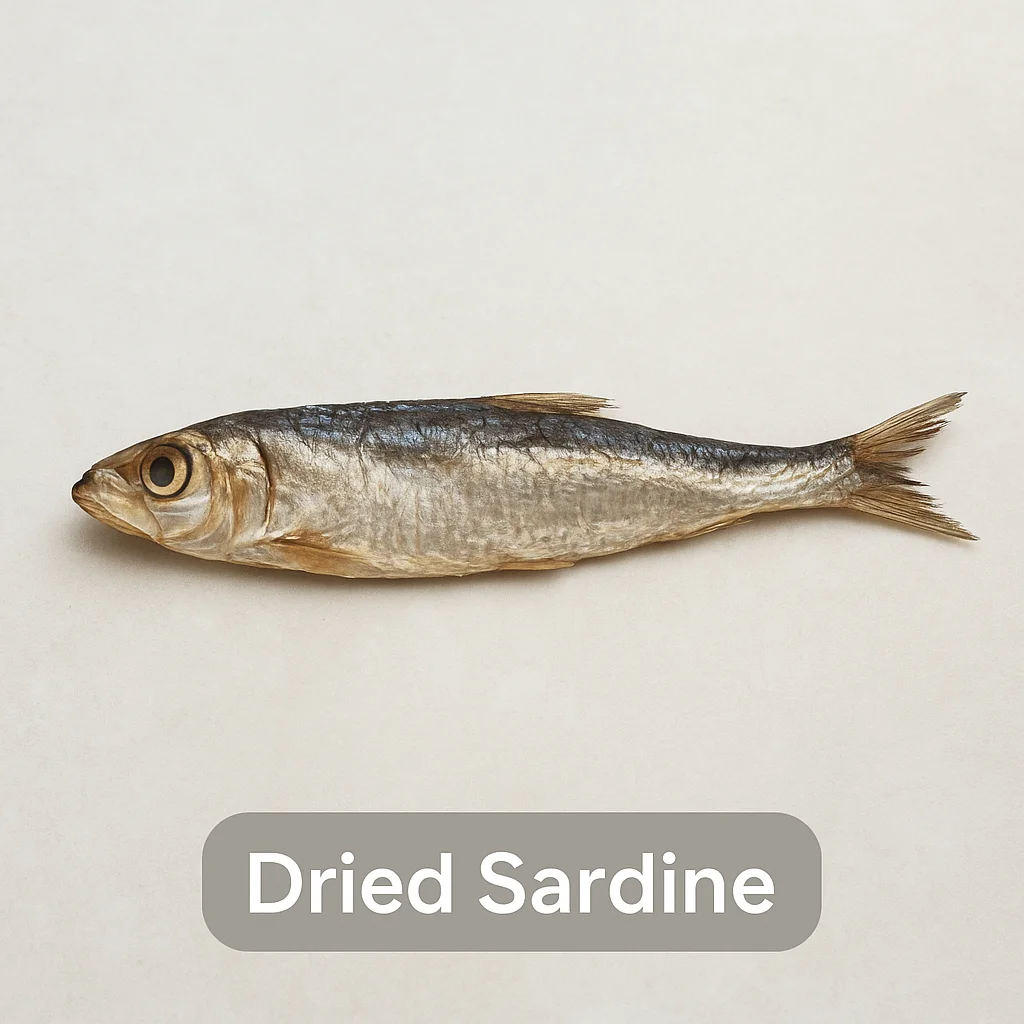
People consume dried sardines due to their robust flavor profile and nutritional benefits. As an oily fish, sardines are packed with omega-3 fatty acids, essential for heart health. The drying process intensifies their flavor, offering a punchy addition to soups, stews, and sauces. This preservation method ensures accessibility to seafood even in regions far from the coast, allowing people to enjoy the taste and benefits of sardines year-round.
🐠 Taste & Texture
Dried sardines deliver a bold and concentrated flavor that is predominantly salty with undertones of natural sweetness. As they are oily fish, they offer a rich and somewhat fatty profile, adding depth to meals. The drying process removes moisture, giving them a chewy texture while maintaining a degree of flakiness when cooked. Fresh dried sardines should not have an overly fishy smell; instead, they carry a pleasant, oceanic aroma.
- Flavor intensity: Bold and umami-rich
- Sweetness/saltiness: Predominantly salty with subtle sweetness
- Fattiness: Oily and rich
- Mouthfeel: Firm and chewy
- Smell: Oceanic and pleasant when fresh
🌊 Origin & Habitat
Sardines are small, pelagic fish commonly found in the coastal waters of the Atlantic, Pacific, and Indian Oceans. They thrive in large schools across temperate and warm seas, making them a sustainable choice due to their abundant population. While some regional farming occurs, most dried sardines are wild-caught, offering a slightly superior flavor and firmer texture as compared to farmed varieties. Major harvesting regions include Japan, Southeast Asia, and parts of Europe such as Spain and Portugal, where they hold a significant place in local cuisines.
📅 Best Season
The peak season for sardines often influences their availability and quality, with fat content and firmness peaking around late spring through early summer. However, seasonality varies by region due to differing ocean temperatures and migratory patterns. For dried sardines, freshness at the time of drying plays a crucial role, so sourcing them during these peak months can result in more flavorful and higher-quality products. Prices may fluctuate based on seasonal abundance, offering more affordable options during these peak periods.
🔪 Preparation
Preparing dried sardines involves a few simple steps to ensure they are clean and ready for cooking. Often, dried sardines are already cleaned and gutted before drying, but additional steps can improve texture and flavor.
- Soak the sardines in water or milk to soften and reduce saltiness.
- Rinse gently under cold water to remove any excess salt or debris.
- Pat dry with a paper towel to ensure they crisp nicely when cooked.
- Optionally, remove the head and tail if desired for certain recipes.
Odor control is essential when working with dried sardines due to their concentrated aroma. A quick rinse or a brief soak in milk can help neutralize the stronger smells, making them more palatable when cooking.
❄️ Storage Tips
Maintaining the quality of dried sardines depends on proper storage techniques. Follow these guidelines to ensure maximum freshness:
- Do: Store in an airtight container in a cool, dark place to prevent moisture absorption.
- Do: Keep in the fridge if opened, consuming within a month for best quality.
- Don't: Expose to direct sunlight or high temperatures, which can degrade flavor.
- Do: Freeze in vacuum-sealed bags for long-term storage, removing as much air as possible to prevent freezer burn.
- Don't: Thaw and refreeze dried sardines, as this can lead to texture loss and spoilage.
🍽️ Popular Dishes
Dried sardines bring their bold flavor and chewy texture to a myriad of global dishes. Here are some popular ways to enjoy them:
- Noodle Soup Base: Use as a base for enhancing umami in ramen or udon.
- Rice Garnish: Finely ground and sprinkled over steamed rice for added flavor.
- Pasta Sauce: Incorporate into aglio olio or tomato-based sauces for depth.
- Snack: Lightly fry for a crunchy and salty snack.
- Stew: Add to hearty stews for a robust flavor profile.
- Stir Fry: Combine with vegetables for a quick and nutritious dish.
When preparing raw dishes or lightly cooking sardines, ensure they are sourced from reputable suppliers to minimize health risks associated with parasites or other contaminants.
🥗 Nutritional Benefits
Dried sardines are not just a flavorful addition to meals, but also a nutritional powerhouse. They offer a host of nutrients essential for a balanced diet, supporting overall health and well-being.
- Protein: Essential for muscle repair and growth.
- Omega-3 fatty acids: Promotes heart health.
- Calcium: Supports bone health, especially when consumed whole with bones.
- Vitamin D: Important for immune function and bone health.
- Iodine: Supports thyroid health.
⚠️ Who Should Eat & Caution
While dried sardines can be a nutritious part of a balanced diet, certain individuals should consume them with caution. As with all fish, those with seafood allergies must avoid them entirely. Cross-contact with allergens in shared kitchens is a critical point to consider.
Dried sardines, like other fish, may contain trace amounts of mercury. It is advised for pregnant individuals and young children to limit intake as a precaution. Furthermore, due to the risks of parasites and contamination, ensure thorough preparation and proper sourcing, especially when preparing in raw or lightly cooked forms. Safe handling practices, such as keeping raw seafood separate and washing hands and surfaces thoroughly, are essential to prevent foodborne illnesses.
📌 Summary
Dried sardines offer a unique, umami-rich punch to a variety of dishes while being a convenient and nutritious seafood option. Their bold flavor and chewy texture make them ideal for adding depth to soups, stews, and snacks. When stored properly, they remain a staple ingredient that is versatile and valuable in many culinary traditions.
- Rich, concentrated flavor adds depth to meals.
- Store in airtight containers to maintain freshness.
- Enjoy through diverse global recipes, from soups to stir-fry.