🐟 Dried Octopus
Dried octopus, often referred to as "octopus jerky," is a popular seafood delicacy enjoyed in various parts of the world. As the name suggests, this product is made by dehydrating octopus, typically using natural sun-drying processes or controlled drying environments. Dried octopus is cherished for its chewy texture and intense umami flavor, which make it a distinctive snack or ingredient.
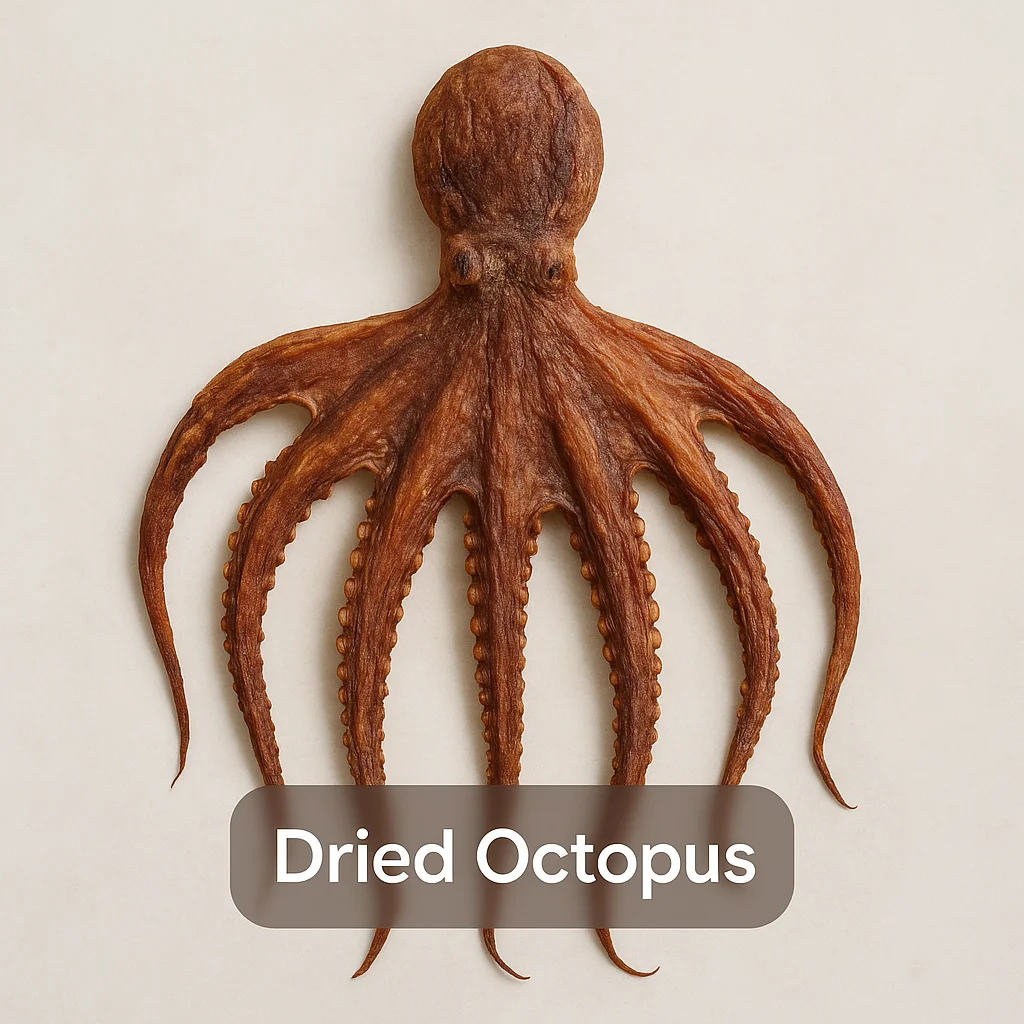
People enjoy dried octopus for many reasons. It offers a unique blend of sweet and salty flavors with a robust seafood taste that draws in seafood lovers everywhere. It's a versatile product, suitable for snacking on its own or as an ingredient in various culinary creations ranging from salads to stews.
Globally, dried octopus is also known by various names depending on the region, with some calling it "tako" in Japan, or simply "octopus" in many other English-speaking countries when sold in its dried form.
🐠 Taste & Texture
Dried octopus is renowned for its distinct taste and texture. The drying process concentrates the natural flavors, resulting in an umami-rich and slightly sweet profile. The texture is chewy due to the dehydration, which can be quite satisfying for those who enjoy robust, toothsome foods.
- Flavor: Rich, umami, with a hint of sweetness
- Texture: Chewy, dense
- Smell: Oceanic, slightly fishy when fresh
🌊 Origin & Habitat
Octopuses for drying are typically harvested from coastal waters where they thrive in rocky habitats and coral reefs. These creatures are mostly wild-caught, as farming octopuses is less common due to the complexities of their nature and requirements.
Regions known for harvesting octopus include parts of the Atlantic Ocean, the Mediterranean Sea, and the Pacific coasts. Countries like Japan, Korea, and Mediterranean nations are well-known for producing dried octopus.
📅 Best Season
The seasonality of octopus can vary significantly by region, as different species may be available at different times of the year. Generally, octopuses are caught throughout the year, but the best quality often comes during cooler months when the water temperature affects their fat content and texture.
It is advisable to consult local seafood markets to determine the peak season in your area, as this can influence both the price and quality of the dried product.
🔪 Preparation
While the octopus is dried, preparation for cooking involves rehydrating and tenderizing the seafood. Beginners should strictly adhere to safe food handling practices to ensure that the octopus is ready for cooking and is safe to consume.
- Rinse the dried octopus under cool water.
- Soak in lukewarm water to rehydrate, change water as needed.
- Use a clean surface and utensils to avoid cross-contamination.
- Tenderize by gently pounding if necessary.
For odor control, a quick rinse with a mild solution of water and vinegar can help without strongly altering the taste.
❄️ Storage Tips
Dried octopus should be stored properly to preserve its quality. For short-term storage, keep it in a cool, dry place in airtight containers. If you plan to store it for longer periods, freezing is recommended.
- Don’t store in direct sunlight.
- Do keep it airtight to prevent moisture.
- Don’t leave it at room temperature indefinitely.
- Do freeze in portions for easy thawing.
For thawing, place frozen portions in the refrigerator overnight to ensure even and safe thawing before use.
🍽️ Popular Dishes
Dried octopus can be incorporated into a variety of dishes. It's a flexible ingredient that can complement many flavors and cooking methods.
- Grilled: Brushed with olive oil, perfect for a smoky, robust flavor.
- Stir-fried: Mixed with vegetables for a quick, umami-hit meal.
- Octopus Salad: Thinly sliced in refreshing salads with citrus dressing.
- Stews: Adds depth to brothy stews, absorbing flavors well.
- Fried Snacks: Lightly battered and fried for a crispy snack.
- In Noodle Dishes: Adds a chewy contrast to soft noodles.
If consuming raw (as in ceviche), ensure the octopus is purchased from reputable sources and handled with care, as raw seafood can pose food safety risks.
🥗 Nutritional Benefits
Dried octopus contains several nutrients beneficial to health, making it a nutritious addition to one's diet.
- Protein: Provides a good source for muscle maintenance
- Essential Minerals: Rich in iron and zinc
- Vitamins: Contains a range of B-vitamins
Due to its nutrient content, including protein and vitamins, dried octopus can form part of a balanced diet when consumed in moderation.
⚠️ Who Should Eat & Caution
While dried octopus is nutritious, there are some considerations to keep in mind. Seafood allergies can pose a significant risk to some individuals, particularly those allergic to shellfish.
Octopus may also contain mercury, so it’s wise for pregnant individuals and young children to consume in moderation. Ensure raw consumption is from trusted sources to avoid food-borne illnesses.
When handling dried octopus, as with any seafood, maintaining good kitchen hygiene is critical to prevent cross-contamination and to ensure safe handling.
📌 Summary
Dried octopus is a versatile and flavorful seafood option with a distinct umami taste and chewy texture. Ideal for various dishes, from grilled to stews, it offers both culinary delight and nutritional benefits when included as part of a balanced diet.
- Rich umami flavor, chewy texture
- Store in a cool, dry place or freeze for longevity
- Essential nutrients and minerals are present
- Remember allergy risks and safe handling practices