🐟 Dried Fish Fillet
Dried fish fillet is a preserved form of seafood where fish fillets are typically salted and air-dried. This technique increases the fish's shelf life and ensures that essential nutrients are retained. Known by various names across the globe, such as "Bacalhau" in Portugal or "Dhayef" in Malaysia, dried fish fillet is a staple in many cultures. People enjoy it for its rich, concentrated flavor and versatility in various dishes.
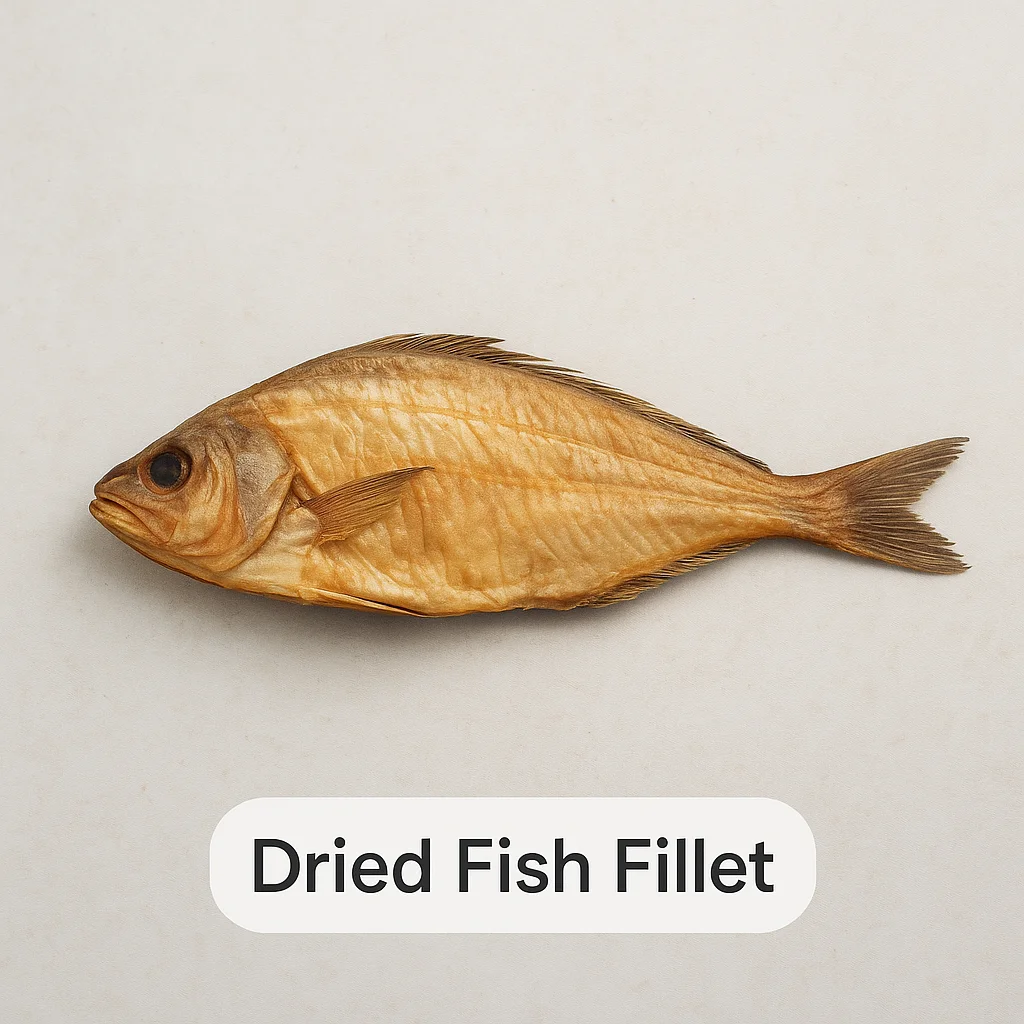
Drying fish is one of the oldest methods of preserving food, helping to maintain flavor and nutrition without refrigeration. It is consumed for its unique taste and the easy storage and transportation benefits it offers, making it a crucial part of many traditional cuisines worldwide.
🐠 Taste & Texture
Dried fish fillets offer a robust, concentrated flavor compared to their fresh counterparts. The drying process intensifies the taste, providing a salty richness with a hint of sweetness. The texture is firmer, as moisture is drawn out during the drying process, resulting in a denser and chewier consistency. The smell is potent yet reminiscent of savory umami notes.
- Flavor Intensity: Strong, salty, slightly sweet
- Texture: Firm, dense, chewy
- Smell: Pungent, umami-rich
🌊 Origin & Habitat
Dried fish fillets originate from various global waters, both coastal and freshwater environments. The fish used for drying may be wild-caught or farmed, and the choice often influences taste and texture. Wild fish are typically leaner and may have a more defined taste, while farmed options can be oiler and softer.
Regions like Scandinavia, Southeast Asia, and parts of South America are renowned for their dried fish products, taking advantage of both ocean and river fish varieties. The availability of certain dried fish fillets often depends on local fishing and farming practices.
📅 Best Season
The concept of a peak season for dried fish fillets varies widely due to regional differences in fishing practices and fish species. As such, the seasonality of fresh fish from which dried fillets are made can influence the final product's quality and cost. However, drying is a method employed to preserve fish beyond their fresh seasons, making them available year-round.
🔪 Preparation
Preparing dried fish fillets starts with rehydrating them, often via soaking in water or milk to reduce saltiness. Cleaning involves checking for bones and trimming any hard edges or skin. Fish smells can be managed with a quick rinse or a soak in milk to neutralize odors.
- Soak in water or milk to rehydrate
- Check and remove any small bones
- Trim edges and remove skin if needed
To reduce strong odors during preparation, soak the fillets in milk for about 20 minutes before cooking. Rinsing them briefly in water can also help.
❄️ Storage Tips
Proper storage is crucial for dried fish fillets to maintain their quality. For short-term storage, keeping them in the fridge wrapped in parchment or butcher paper helps. For long-term storage, airtight containers in the freezer are recommended. This prevents freezer burn and helps retain flavor.
- Do store in a cool, dry area if unopened
- Don't expose to air or moisture after opening
- Do freeze in airtight bags for extended storage
- Don't refreeze once thawed
🍽️ Popular Dishes
Dried fish fillet can be prepared in numerous ways, each highlighting its distinctive texture and flavor. Some popular dishes include:
- Grilled Dried Fish: Grilled over high heat to bring out a crispy texture.
- Pan-Seared: Quick pan searing retains juice while providing a crispy exterior.
- Stew: Cooked gently in a broth to soften texture and infuse flavors.
- Fried: Makes for a crispy and savory meal when deep-fried.
- Steamed: A gentler preparation method that accentuates the fish's natural flavors.
- Salad: Shredded and tossed in salads to add flavor depth.
- Soup: Used to enrich the base of soups with savory notes.
For dishes utilizing raw dried fish fillet, like a ceviche-style preparation, ensure high-quality, safe-sourcing practices to avoid food safety risks.
🥗 Nutritional Benefits
Dried fish fillets are a nutritious addition to meals, offering significant protein and mineral content. They may be high in omega-3 fatty acids, beneficial for heart health, along with vital vitamins and minerals.
- High in protein
- Rich source of omega-3 fatty acids
- Contains essential vitamins and minerals
⚠️ Who Should Eat & Caution
While dried fish fillets benefit many, those with fish allergies should avoid them. Cross-contact in kitchens can also pose a risk for allergy sufferers. Caution is advised for those sensitive to mercury, including pregnant women and young children, as certain fish may contain elevated levels. Always handle raw or undercooked fish carefully to avoid contamination.
📌 Summary
Dried fish fillets are a flavorful, versatile ingredient with a rich tradition in global cuisines. Known for their intense taste and firm texture, they can transform various dishes. Proper storage ensures their quality, and with careful handling, they offer a nutritious seafood option.
- Offers concentrated flavor and firm texture
- Available year-round due to preservation methods
- Storage and safety considerations are essential