🐟 Crab Stick
Crab stick, also known as "imitation crab" or "surimi," is a seafood product made from white fish paste, often from Alaskan pollock. This processed product is shaped and cured to resemble the leg meat of snow crab or Japanese spider crab. Prized for its convenience, affordability, and versatility in a variety of dishes, crab stick has become a popular ingredient in many cuisines worldwide. Its appeal stems from its tender texture, mild seafood flavor, and ability to blend seamlessly into salads, sushi rolls, and other culinary creations.
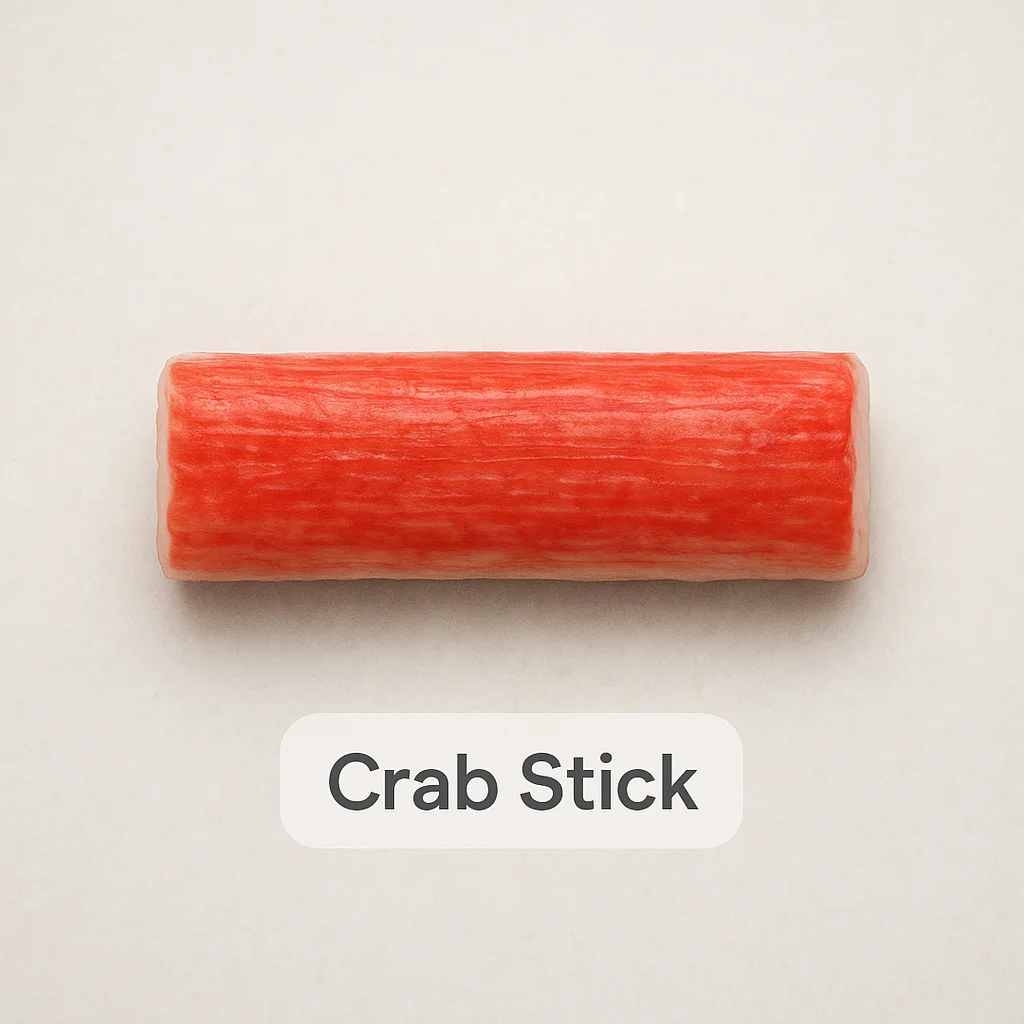
Despite its name, crab stick contains no crab meat. The fish paste is usually colored and flavored to mimic the appearance and taste of real crab. This makes it an appealing and accessible option for people who enjoy the taste of crab but seek a more budget-friendly alternative. Used in sushi bars as well as in home kitchens, crab stick can bring seafood flavors to those who might not have access to fresh crab regularly.
🐠 Taste & Texture
Crab stick offers a mild seafood flavor that is less intense than real crab. It has a slightly sweet and salty taste, with a subtle seafood essence that is appealing to a broad range of palates. The texture is typically soft and flaky, similar to that of cooked crab leg meat, which makes it ideal for dishes that require a tender bite.
- Flavor: Mild, slightly sweet and salty
- Texture: Soft, flaky
- Smell: Fresh seafood aroma
- Appearance: Brightly colored, often white with an orange or red exterior
🌊 Origin & Habitat
Crab stick is predominantly made from white fish, mainly the Alaskan pollock, a fish found in the North Pacific Ocean. The fish is processed into a paste known as surimi. The paste is then flavored and colored to mimic crab meat. This process was originally developed in Japan, where surimi has been a staple for centuries. Today, crab stick is produced in many countries with access to abundant white fish resources, such as Japan, the United States, and various coastal regions of Asia.
As a product of the food processing industry, crab stick does not have a natural habitat like other seafood. Instead, the white fish used in its production is typically harvested from cold ocean waters and then factory-processed to create the finished product. With sustainable fishing practices, the production of crab stick can be aligned with conservation efforts, but it's always wise to seek products that have credible sustainability certifications.
📅 Best Season
The concept of a peak season for crab stick can be misleading, as it is a processed product available year-round. The seasonality of crab stick depends on the availability of the white fish used for surimi production. Alaskan pollock, the most common fish used, is often caught primarily in colder months when the fish swim closer to the shores for spawning. However, crab stick can be found in grocery stores and seafood markets anytime, owing to its long shelf life and widespread production.
🔪 Preparation
When preparing to use crab stick, ensure it is properly thawed if it was stored frozen. It doesn't require cleaning or gutting like raw fish, making it an easy ingredient to incorporate into recipes. Simply unwrap and separate the sticks as needed for your dish. While there's no need to scale or debone, some handlers choose to give the sticks a quick rinse under cold water to refresh them.
- Thaw frozen crab stick thoroughly
- Unwrap and separate sticks as needed
- Optionally rinse under cold water before use
Odor control isn't usually necessary with crab stick since it typically doesn’t carry strong smells if stored correctly. However, a quick rinse can help if desired.
❄️ Storage Tips
To maintain the quality of crab stick, it's best to store it in the refrigerator immediately after purchase. In the fridge, it should be kept in its original packaging or an airtight container and consumed within a few days. For longer storage, crab stick can be frozen.
- Do store in the refrigerator and consume within 3-5 days
- Don’t leave out at room temperature for extended periods
- Do freeze in airtight bags or containers for up to 3 months
- Don’t refreeze once thawed to prevent texture loss
When freezing, ensure the crab stick is wrapped tightly and all air is removed from the packaging to avoid freezer burn. Thaw frozen crab stick in the refrigerator rather than at room temperature to ensure even and safe thawing.
🍽️ Popular Dishes
Crab stick is celebrated for its adaptability in many culinary applications. Here are some popular dishes featuring crab stick:
- Sushi Rolls: Press into rice to create traditional or reverse sushi rolls, paired with cucumber, avocado, and seaweed.
- Seafood Salads: Combine with mayo, celery, and lemon juice for a light and refreshing salad.
- Crab Cakes: Blend with breadcrumbs and spices for a delightful seafood patty.
- Seafood Pasta: Add to pasta dishes for a touch of seafood flavor.
- Tempura: Lightly coat and fry for a crispy appetizer or snack.
- Ceviche-Style: Marinate in citrus to showcase its soft texture—exercise caution with raw seafood and ensure safe sourcing.
Most of these dishes benefit from gentle cooking methods that preserve the soft texture of crab stick, such as steaming or light frying. Its mild taste makes it a superb base for a variety of sauces and seasonings, adapting well to both Western and Asian cuisines.
🥗 Nutritional Benefits
Crab stick is low in fat and calories, making it a sensible choice for those looking to enjoy seafood without the heft of richer options. It provides a good source of protein, essential for repairing body tissues and maintaining muscle mass. It is also enriched with carbohydrates during processing, which can be a consideration for those monitoring intake.
- Protein: Supports muscle maintenance and repair
- Low Fat: Generally has lower fat content compared to real crab
- B vitamins: Important for energy production and red blood cell formation
⚠️ Who Should Eat & Caution
One should be aware of potential allergy risks when consuming crab stick. Even though it contains no actual crab meat, cross-contamination with shellfish might occur during processing. If you have shellfish allergies, consult with a healthcare professional. Additionally, some brands may contain small amounts of shellfish flavoring or extracts.
Crab stick contains low levels of mercury, making it suitable for most individuals, including expecting mothers and children, as part of a balanced diet. However, take care with raw preparations, like ceviche, due to the potential risks of consuming raw fish. Ensure that raw crab stick is sourced from places adhering to food safety standards.
📌 Summary
Crab stick is an affordable, widely available seafood substitute that delights with its mild, slightly sweet flavor and soft texture. Versatile in use, it can integrate smoothly into numerous cuisines, enhancing dishes like sushi rolls and salads with its unique taste. Storing crab stick is straightforward, requiring little more than refrigeration or proper freezing techniques.
- Mild seafood flavor with a sweet and salty profile
- Convenient and versatile, fitting various culinary styles
- Low in fat and calories but a good protein source
- Avoid if allergic to shellfish due to possible cross-contamination