🐟 Canned Tuna
Canned tuna is a versatile seafood product made from tuna species that have been cooked, preserved, and packaged in a can or jar. It is a popular choice worldwide due to its affordability, convenience, and long shelf life. People enjoy canned tuna for its high protein content and subtle, savory taste, which can complement a wide variety of dishes.
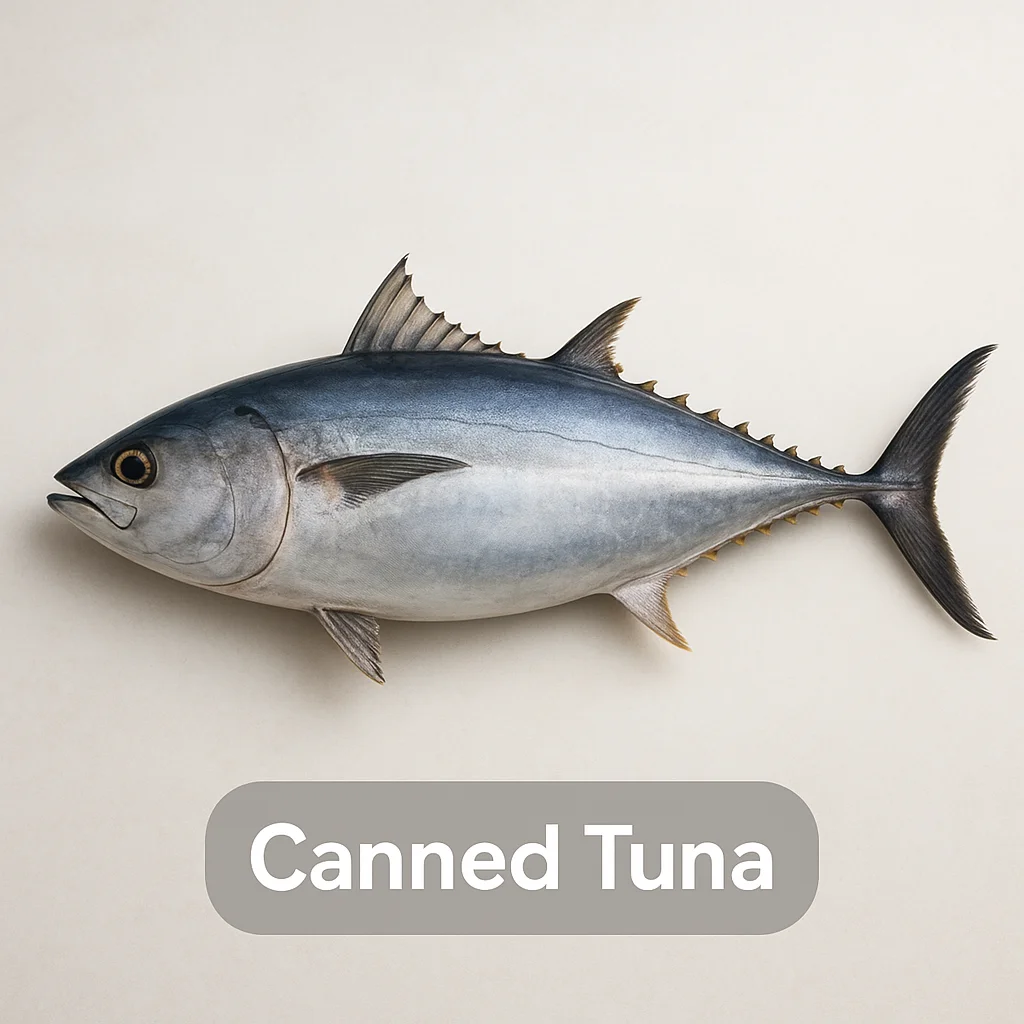
Notably, canned tuna is often produced from species like Albacore (also known as "white tuna") and Skipjack. Albacore tends to be milder in flavor and has a firmer texture, while Skipjack possesses a stronger taste and softer flesh. This seafood staple can be used in salads, sandwiches, or even as a hearty addition to casseroles and pasta dishes.
🐠 Taste & Texture
Canned tuna offers a balanced taste profile with mild flavors, slight saltiness, and a tender, flaky texture. The flavor can vary slightly depending on the type of tuna and the preservation method used, such as oil or water packing. Generally, canned tuna exhibits a light and pleasant aroma when fresh.
- Mild flavor
- Lightly salty
- Flaky texture
- Pleasant aroma
🌊 Origin & Habitat
Tuna are typically found in both coastal and deep sea environments across the world's oceans. They are mostly wild-caught, although some initiatives for tuna farming exist. Tuna species are commonly harvested in regions like the Pacific Ocean, Atlantic Ocean, and Indian Ocean. Wild-caught tuna tend to have a more varied diet, potentially influencing their tastier profile.
📅 Best Season
For canned tuna, seasonality varies by region. Wild tuna are usually available year-round due to vast ocean distributions and commercial fishing operations. However, peak seasons often provide the best quality tuna due to optimal fat content and texture at these times. Recognizing peak seasons can also result in better prices.
🔪 Preparation
When preparing fresh tuna for canning, several cleaning steps are involved, including scaling, gutting, and removing pin bones. However, commercially canned tuna is fully prepared and ready to eat. At home, basic knife safety and sanitation are crucial to avoid cross-contamination.
- Ensure clean work surfaces and tools
- Practice safe knife handling
- Keep raw and cooked seafood separate
To manage any fishy odor, it's helpful to give fresh tuna a quick rinse or a brief soak in a saltwater solution before preparation. Nonetheless, properly canned tuna should exhibit minimal odor if stored correctly.
❄️ Storage Tips
Unopened canned tuna can be stored in a cool, dry place for several years. Once opened, store any unused tuna in an airtight container in the refrigerator and consume it within 3 to 4 days. Freezing canned tuna is generally unnecessary, but if choosing to freeze, portion and wrap in a moisture-resistant packaging.
- Do refrigerate opened tuna promptly
- Don't leave opened tuna at room temperature
- Do store in an airtight container to maintain freshness
🍽️ Popular Dishes
Canned tuna is celebrated for its adaptability in the kitchen. Here are some popular dishes featuring canned tuna:
- Tuna Salad: Mixed with mayonnaise, celery, and onions for a creamy texture.
- Tuna Sandwich: A quick and hearty option, often combined with lettuce and tomatoes.
- Niçoise Salad: A classic French dish incorporating tuna, boiled eggs, and green beans.
- Grilled Tuna Patties: Combined with bread crumbs and spices, perfect for grilling.
- Pasta with Tuna: A comforting dish where tuna is mixed with pasta and a light sauce.
- Tuna Casserole: Baked with a variety of ingredients, highlighting a crispy top layer.
When preparing raw tuna for dishes like sashimi or poke, ensure it is of high quality and sourced responsibly to minimize food safety risks.
🥗 Nutritional Benefits
Canned tuna is valued for its nutritional density, providing a good source of protein, omega-3 fatty acids, and several vitamins and minerals. These nutrients contribute to general health and well-being.
- High in protein
- Rich in omega-3 fatty acids
- Source of vitamins like B12 and vitamin D
⚠️ Who Should Eat & Caution
While canned tuna is nutritious, certain risks must be considered. Fish allergies are common, so those with known sensitivities should avoid consumption. Additionally, due to methylmercury content in tuna, pregnant people and young children are advised to limit intake.
Avoid raw or undercooked tuna to reduce the risk of parasite infections. Always practice proper handling and cleaning to prevent cross-contact with allergens.
📌 Summary
Canned tuna is a staple in many households worldwide due to its convenience, versatility, and nutritional benefits. Whether used in a simple salad or a complex casserole, its mild taste and flaky texture enhance any meal. Proper storage and handling practices ensure its freshness and safety.
- High-protein, versatile seafood option
- Best stored in cool, dry conditions
- Economical and accessible choice for many dishes