🐟 Canned Mackerel
Canned mackerel is a popular and convenient way to enjoy a nutritious type of fish. Known for its rich flavor and oily texture, mackerel is often canned to preserve its taste and nutritional qualities. People around the world consume canned mackerel as a versatile ingredient that can be incorporated into various dishes, offering an affordable and shelf-stable source of protein.
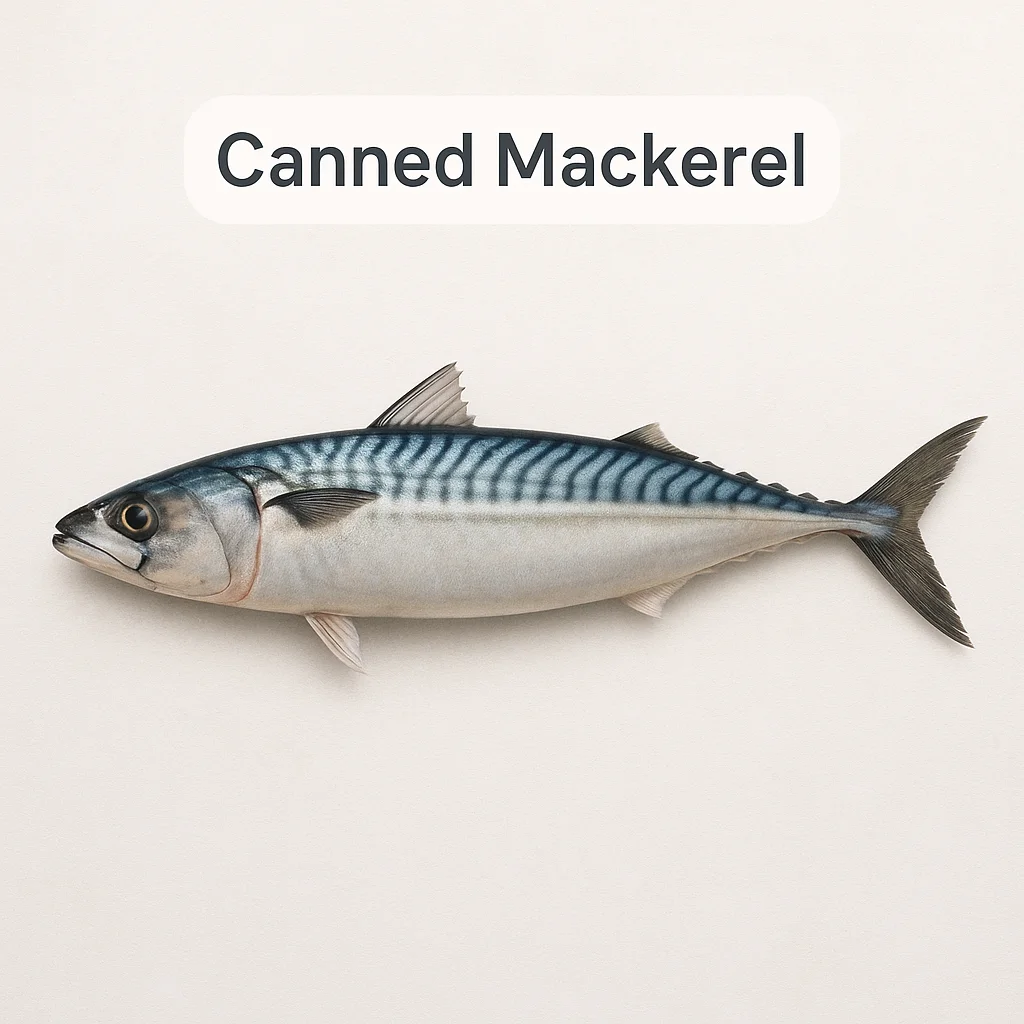
Mackerel is an oily fish, which means it contains a high level of healthy fats, specifically omega-3 fatty acids. Canned mackerel often includes the whole fish, allowing consumers to experience its full flavor profile. This type of fish is appreciated for its bold taste, making it a staple in many culinary traditions.
Due to its strong flavor and nutritional benefits, canned mackerel is a popular seafood choice. It is important to handle and store it properly to maintain its quality and ensure safety when consumed.
🐠 Taste & Texture
Canned mackerel is known for its distinctive taste, which is both robust and slightly salty. The oil in the fish contributes to its richness, providing a creamy mouthfeel. The meat is tender and flaky, offering a satiating and flavorful experience. While fresh mackerel can have a more pronounced aroma, canned varieties often mellow slightly due to the preservation process.
- Flavor Intensity: Bold and rich
- Sweetness: Mildly sweet
- Saltiness: Moderate, due to canning process
- Fattiness: Oily and rich
- Mouthfeel: Creamy and smooth
- Flake Size: Medium to large
- Smell: Mildly fishy, more subdued when canned
🌊 Origin & Habitat
Mackerel is typically found in both coastal and deeper oceanic waters. These fish thrive in temperate and tropical regions worldwide. Wild mackerel tend to have a stronger flavor compared to farmed varieties, but both are prevalent in the canned format due to their accessibility and preservation benefits.
Common regions for mackerel harvesting include the Atlantic, Pacific, and Indian oceans. Countries like Japan, the United States, and Norway are known for their abundant mackerel stocks. Sustainability is a key consideration when sourcing mackerel, so it's advisable to choose products from reputable sources that adhere to responsible fishing practices.
📅 Best Season
The availability and peak season for mackerel can vary significantly by region. Generally, mackerel is at its best in spring and early summer when the fish has a higher fat content, which contributes to its rich flavor and texture. However, because canned mackerel is preserved, it is available year-round, offering consistent quality regardless of the fishing season.
When choosing mackerel, whether fresh or canned, it's essential to consider factors like fat content and texture, which can influence the pricing and quality of the fish.
🔪 Preparation
While canned mackerel is ready to eat, fresh mackerel requires proper cleaning and preparation. If you're working with fresh mackerel, start by ensuring your tools are clean to prevent cross-contamination. Carefully scale and gut the fish, remove the pin bones, and trim any fins as necessary.
- Use a sharp knife for clean cuts.
- Scale the fish under running water to minimize mess.
- Make an incision along the belly and remove guts with care.
- Feel for pin bones and remove them with tweezers.
- Ensure the surfaces and your hands are washed thoroughly post-preparation.
For managing odors, a quick rinse or soaking in a solution of milk or salty water can help reduce any lingering fishy smell, though personal preference will dictate the necessary steps.
❄️ Storage Tips
When storing canned mackerel, keep unused portions in the refrigerator, ensuring they are in an airtight container and using them within three to four days for best quality. If freezing, portion the fish and remove as much air as possible from the storage bag to prevent freezer burn.
- Do: Store in airtight containers.
- Do: Freeze portions you won't use immediately.
- Don't: Leave opened cans out of the fridge.
- Don't: Overcrowd containers; allow some space.
To safely thaw frozen mackerel, transfer it to the refrigerator overnight or use the defrost setting on a microwave. Avoid leaving it at room temperature during defrosting.
🍽️ Popular Dishes
Mackerel is versatile and can be enjoyed in various culinary preparations around the globe. Here are a few popular dishes that highlight its flavors:
- Grilled Mackerel: High-heat method that crisps the skin and keeps the interior moist.
- Mackerel Salad: A simple combination with leafy greens and citrus dressing.
- Mackerel Stew: Slowly simmered to integrate flavors, often with root vegetables.
- Mackerel Sushi: Carefully prepared and served raw. Note: Ensure it's sashimi-grade to reduce safety risks.
- Mackerel Curry: Spiced stew that harmonizes mackerel's bold flavor with spices.
- Pan-Seared Mackerel: Quickly cooked on a stovetop, highlighting the rich flavor and caramelized edges.
Always ensure fish is cooked until opaque and flakes easily, unless consuming raw preparations with informed commodity sourcing.
🥗 Nutritional Benefits
Mackerel is renowned for its nutritional profile, providing a beneficial source of essential nutrients. It is high in protein, making it an excellent choice for those looking to increase their intake. The presence of omega-3 fatty acids is a standout feature, contributing to its reputation as heart-healthy food. Additionally, mackerel contains a good range of vitamins and minerals, including selenium and B-vitamins, which support various bodily functions.
- Protein: High level, supporting muscle maintenance and growth.
- Omega-3 Fatty Acids: Offers heart health benefits.
- Vitamins & Minerals: Includes vitamin D, B-12, and selenium.
⚠️ Who Should Eat & Caution
Mackerel is generally safe and healthy for most people but should be approached with caution in specific cases. As with all fish, there is an allergy risk for individuals with fish or seafood allergies. It's important to be aware of mercury content, especially for pregnant individuals and young children. Limit consumption as advised by health professionals to avoid potential mercury exposure.
When eating raw mackerel, ensure it is sourced appropriately to avoid parasite risks, maintaining kitchen hygiene and safe preparation practices to guard against cross-contamination.
📌 Summary
Canned mackerel offers a rich and robust flavor profile that is desirable for various culinary applications. Its convenience and nutritional benefits make it a favored choice among seafood lovers worldwide. Proper storage and handling ensure quality and safety, while understanding its seasonal attributes can enhance your appreciation of its origins.
- Rich in flavor and nutrients.
- Available year-round; seasonality can affect quality and price.
- Versatile in dishes from grilling to stews.
- Ensure proper handling and safety practices.