🐟 How to Poach Fish Gently (Moist Results Without Overcooking)
🧭 Quick Overview
In this guide, you'll learn how to poach fish to achieve moist, tender results without overcooking. Ideal for those who want to master a gentle cooking method that enhances flavor and consistency.
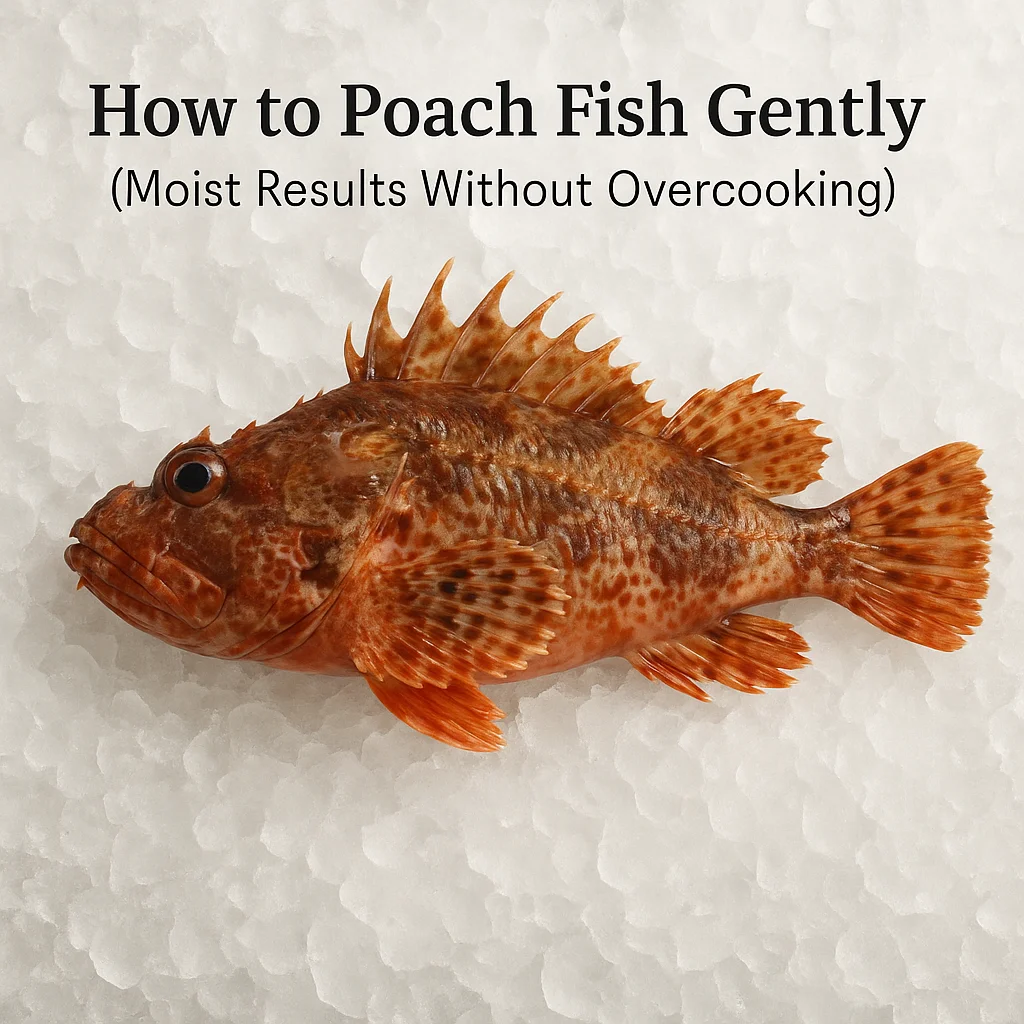
- Best for: Home cooks, culinary enthusiasts, seafood lovers
- Common problems solved: Dry, overcooked fish; Lack of flavor; Uneven cooking
- What you need: Fresh fish, poaching liquid, thermometer, pan with lid
🧠 Why This Matters
Poaching fish is a delicate process that preserves the moisture and natural flavors of the fish. It is often a preferred method due to its simplicity and the ability to infuse flavors directly into the fish without adding excess fat. This makes poaching a popular technique for maintaining both taste and texture, offering a healthy way to prepare seafood.
✅ Step-by-Step Method
Follow these steps for perfectly poached fish.
- Step 1: Select and prepare your fish. Ensure that it is fresh and properly cleaned.
- Step 2: Choose your poaching liquid. It can be water, stock, milk, or wine, enriched with herbs and aromatics.
- Step 3: Heat the poaching liquid in a shallow pan until it reaches a gentle simmer.
- Step 4: Add the fish to the liquid. Ensure it is fully submerged for even cooking.
- Step 5: Cover the pan with a lid and cook until the fish is opaque and flakes easily, generally around 10-15 minutes. Use a thermometer to check that it reaches a safe internal temperature of 145°F (63°C).
🧾 Checklist
Ensure these points are covered for a perfect poaching session.
- Fresh fish is ready and clean.
- Aromatic herbs and spices are prepared.
- Poaching liquid is selected.
- Thermometer is on hand for checking doneness.
⚠️ Common Mistakes & Fixes
- Mistake: Boiling the poaching liquid. Fix: Maintain a gentle simmer to avoid overcooking.
- Mistake: Overcrowding the pan. Fix: Ensure fish pieces have space to cook evenly.
- Mistake: Using thin fillets. Fix: Adjust poaching time to prevent drying out.
🌍 Variations by Fish Type
Different fish types require slight modifications to poaching techniques.
- Oily fish: Use less fatty poaching liquids such as broth or water to balance richness.
- Lean white fish: Enhance flavor with a richer base like milk or a light cream sauce.
- Thick steaks: Increase poaching time slightly or flip once during cooking.
- Thin fillets: Reduce poaching time to prevent overcooking.
🧊 Storage & Leftovers
Allow poached fish to cool to room temperature, then refrigerate in an airtight container for up to 2 days. Reheat gently in a warm oven or microwave, adding a bit of moisture to avoid drying out.
🛒 Buying Tips (if relevant)
When purchasing fish, look for bright, clear eyes and a fresh, briny scent. Avoid cloudy eyes and strong fishy odors. For fillets, ensure they appear moist and firm without any signs of browning.
🧼 Safety Notes
Always ensure the fish reaches an internal temperature of 145°F (63°C) to prevent foodborne illness. Be cautious with raw seafood to avoid cross-contamination, and thoroughly wash surfaces and hands after handling.
❓ FAQs
- Question: Can I poach frozen fish? Answer: It's best to thaw fish for even cooking, but you can poach from frozen if necessary; simply adjust the cooking time.
- Question: What liquids are best for poaching? Answer: Stock, water, milk, or wine with herbs all work well, enhancing the fish's flavor.
- Question: How can I tell if the fish is done? Answer: The fish should be opaque and flake easily with a fork, and a thermometer should read 145°F (63°C).
📌 Summary
- Poaching is an excellent cooking method to keep fish moist and flavorful.
- Proper temperature control is key to preventing overcooking.
- Choose the right type of poaching liquid based on the fish variety.