🐟 Yellowtail
Yellowtail is a popular fish often associated with Japanese cuisine and is frequently consumed worldwide for its distinct flavor and versatile cooking applications. Known for its smooth and firm texture, Yellowtail is highly valued in both sashimi and grilled preparations. Often referred to by its Japanese name "Hamachi," this species can bring a delightful culinary experience to those who enjoy fish that balances taste and texture. People eat Yellowtail for its rich flavor, high nutritional value, and the way it enhances a variety of dishes.
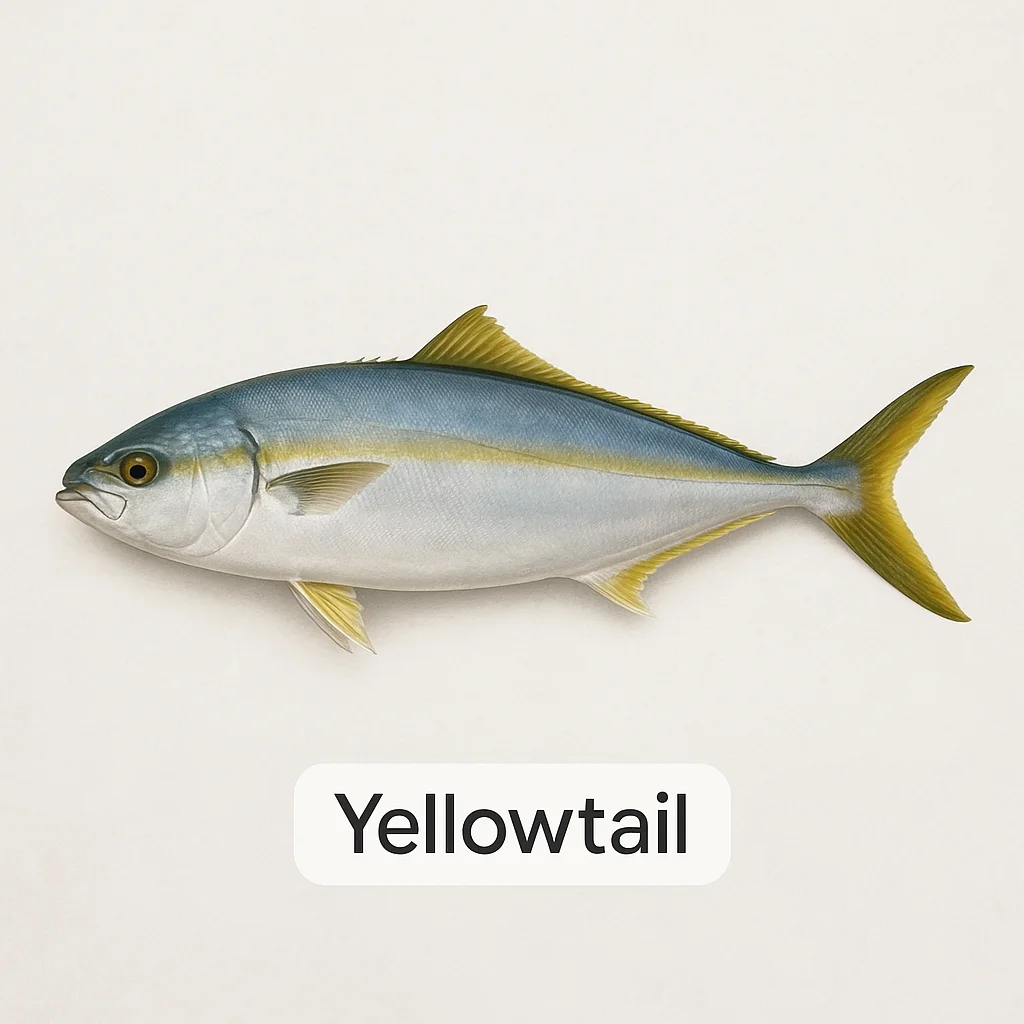
The Yellowtail can be found under different names, including Amberjack and Seriola, depending on the region. It is typically considered a lean fish, but certain varieties may have a higher fat content, especially when farmed. Yellowtail’s adaptability in cuisine and reliable flavor profile make it a favorite among seafood lovers.
🐠 Taste & Texture
Yellowtail offers a unique combination of flavors and textures that appeal to many palates. Its taste is often described as mildly sweet with a hint of oiliness, providing a rich mouthfeel that is both satisfying and gentle. The texture is firm yet smooth, with small flakes that make it ideal for various preparations, from raw sashimi to grilled dishes. When fresh, Yellowtail should have a clean, oceanic smell that is not overpowering.
- Mildly sweet flavor
- Rich and slightly oily
- Firm yet smooth texture
- Small, delicate flakes
- Fresh oceanic aroma
🌊 Origin & Habitat
Yellowtail is native to warm coastal waters and is commonly found in the Pacific Ocean, particularly around Japan, Korea, and the waters of the Eastern Pacific. It can be both wild-caught and farmed, with farmed varieties often being more consistently available year-round. Wild Yellowtails are known for their leaner meat, while farmed specimens may exhibit a slightly higher fat content due to controlled feeding practices.
Regions where Yellowtail is regularly harvested include the coastal areas of Japan, southeastern parts of the United States, Australia, and New Zealand. Its adaptability across various habitats contributes to its global popularity and frequent availability in seafood markets.
📅 Best Season
The best season for Yellowtail can vary depending on the region and whether the fish is wild-caught or farmed. Generally, the peak season for wild-caught Yellowtail is in the late winter and early spring when fat content reaches its optimal level, enhancing flavor and texture. This seasonality is significant as it often impacts the price, quality, and availability of the fish.
For farmed Yellowtail, the seasonality varies less, making it a more consistent option throughout the year. When purchasing Yellowtail, it is beneficial to consider local availability and consult with suppliers to determine the ideal time to acquire the freshest catches.
🔪 Preparation
Preparing Yellowtail involves several essential steps to ensure a quality outcome. Careful cleaning, scaling, and gutting are the first steps, followed by removing any pin bones and trimming the fillet. These steps help maintain an even texture and prevent unpleasant surprises during cooking.
- Clean and rinse the fish thoroughly
- Scale the fish to remove all scales
- Gut and remove the internal organs
- Check for and remove any pin bones
- Trim the edges of the fillet for uniformity
To maintain a pleasant aroma, soaking the fish briefly in milk or lightly salting it before rinsing can reduce any strong odors without affecting flavor. Always handle the fish with clean tools and surfaces to prevent cross-contamination.
❄️ Storage Tips
Proper storage ensures the freshness and safety of Yellowtail. In the refrigerator, Yellowtail should be consumed within 1-2 days. For ice storage, wrapping the fish in a clean cloth and placing it over a bed of ice can help maintain its quality. Airtight wrapping prevents exposure to air, which can lead to spoilage.
Freezing is another option; the fish should be portioned, and air should be removed to prevent freezer burn. Thawing should be done gradually in the refrigerator to maintain texture and taste.
- Do use airtight packaging for refrigerator/freeze storage
- Do place on ice if storing short-term
- Don’t leave fish exposed to air for extended periods
- Don’t refreeze once thawed
🍽️ Popular Dishes
Yellowtail is celebrated in various culinary traditions, offering flexibility in cooking methods. Some popular dishes include:
- Yellowtail Sashimi: Thinly sliced raw and prized for its delicate flavor. Always ensure the fish is sashimi-grade to reduce the risk of parasites.
- Grilled Yellowtail: High heat highlights its natural sweetness and offers a crispy skin.
- Yellowtail Teriyaki: Basted with a sweet-savory sauce, this dish combines flavor depth with a tender bite.
- Yellowtail Ceviche: Lightly cured in citrus. Exercise caution with raw fish; ensure freshness and clean preparation to avoid contamination.
- Pan-Seared Yellowtail: A quick sear results in a golden crust, preserving moisture inside.
- Yellowtail Sushi Roll: Pairs with rice and seaweed, often featuring avocado or cucumber for added texture.
- Yellowtail Stew: Gentle simmering in broth, enhancing its softness and blending with hearty vegetables.
🥗 Nutritional Benefits
Yellowtail is prized not just for its flavor but also its nutritional profile. It is a significant source of protein, making it an excellent choice for those seeking lean protein options. Yellowtail contains omega-3 fatty acids, known for supporting heart health and cognitive functions.
- High in protein
- Contains omega-3 fatty acids
- Rich in vitamins such as A and D
- Contains essential minerals like selenium
⚠️ Who Should Eat & Caution
While Yellowtail can be a healthy dietary choice, those with fish allergies should exercise caution. Cross-contact in shared kitchen spaces can pose a risk for those with severe allergies. Additionally, mercury levels in Yellowtail may be a concern for pregnant people and young children, and consumption should be moderated according to health guidelines.
Raw and undercooked Yellowtail should be approached cautiously. Always ensure that it’s sourced from a reputable supplier and meant for sashimi use to reduce potential health risks. Proper handling, such as clean utensils and separate boards for raw seafood, can help minimize any risks.
📌 Summary
Yellowtail stands out for its delightful taste and texture, making it versatile for a variety of culinary preparations. Whether served raw in delicate sashimi or cooked to a perfect sear, it brings a satisfying flavor to each dish. Best when fresh, careful handling and storage ensure that Yellowtail retains its appealing qualities.
- Key Takeaways:
- Sweet, slightly oily flavor profile
- Commonly enjoyed in raw and cooked dishes
- Storage requires careful attention to prevent spoilage
- Consider regional seasonality for the best purchase timing
- Exercise caution with allergens and mercury intake