🐟 Yellowfin Tuna
Yellowfin tuna, also known as Thunnus albacares, is a highly sought-after species of tuna, known for its vibrant color, firm texture, and delightful flavor. It is distinct from other tunas due to its bright yellow dorsal fins and finlets. This popular fish is often consumed worldwide, fresh or canned, and is a staple in many culinary traditions, thanks to its versatility. People enjoy yellowfin tuna for its rich taste and nutritional benefits, making it a favorite choice for sushi, sashimi, grilling, and more.
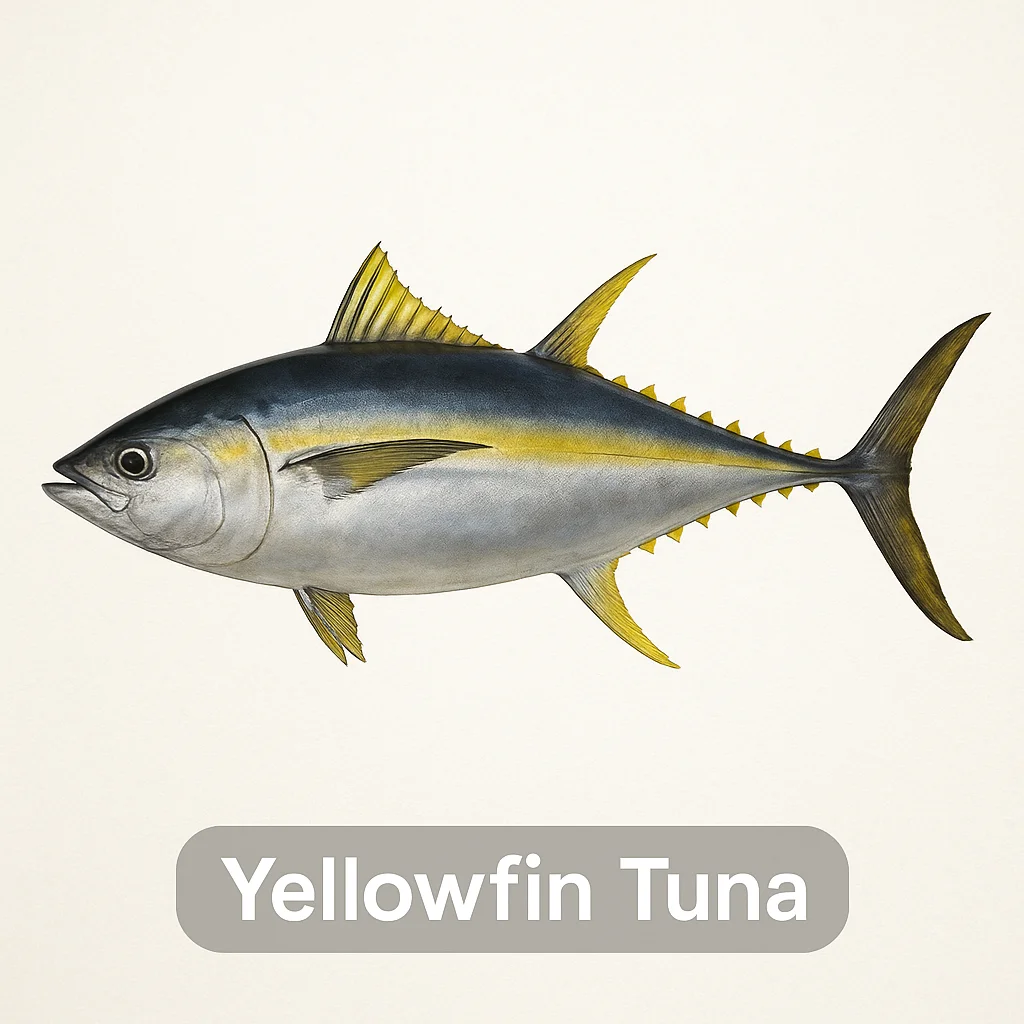
Yellowfin tuna is appreciated for its delicate balance of flavors. It offers a mild, meaty taste that doesn't overpower the palate, making it ideal for a wide range of dishes. Its capacity to pair well with various seasonings and cooking styles further adds to its popularity. Due to these qualities, yellowfin tuna is commonly used in raw preparations as well as cooked dishes.
The demand for yellowfin tuna is bolstered by its availability. Being widely distributed in tropical and subtropical oceans, this species plays a significant role in global seafood markets. However, sustainable practices and responsible sourcing are crucial in maintaining healthy populations, ensuring that delicious yellowfin tuna remains a viable option for seafood lovers worldwide.
🐠 Taste & Texture
Yellowfin tuna is celebrated for its succulent flavor and smooth texture. Leaner than some of its tuna cousins, it still offers enough fattiness to deliver a satisfying mouthfeel. The flesh is firm yet tender and has a large flake size that is easy to separate when cooked. When fresh, yellowfin tuna has a clean, slightly marine scent, free from any off-putting fishiness.
- Flavor: Mild, slightly sweet
- Texture: Firm, large flakes
- Smell when fresh: Clean, oceanic
- Fattiness: Lean with slight oiliness
🌊 Origin & Habitat
Yellowfin tuna inhabits tropical and subtropical waters across the globe. They are often found in both coastal and deep ocean environments, preferring warm waters. While yellowfin tuna can be found in many oceans, they are particularly abundant in the Pacific Ocean. Their wide distribution makes them accessible, although specific availability may vary by region.
Wild-caught yellowfin tuna is more common than farmed varieties. The wild specimens are generally applauded for their superior flavor and texture, although some well-managed fisheries offer farmed options to support sustainable practices.
📅 Best Season
The best season to enjoy yellowfin tuna can vary significantly depending on the region. However, peak seasons often occur when water temperatures are optimal for tuna activity, which usually means warmer months. During these times, the fat content of the fish is higher, which enhances its flavor and texture. Like other seafood, purchasing during peak season can also lead to fresher and more affordable catches.
Given its wide distribution, the availability of yellowfin tuna is relatively consistent year-round, although prices and quality may fluctuate with seasons and global markets.
🔪 Preparation
Preparing yellowfin tuna requires some basic skills to ensure the best quality for cooking or raw consumption. Start by cleaning the fish thoroughly, ensuring scales are removed if the skin is to be cooked. Gutting involves removing the internal organs, followed by carefully deboning the fish if necessary. Pin bones can be found and removed with pliers for a fillet ready for any dish. Always use clean knives and tools to prevent cross-contamination.
- Clean the fish, removing scales if needed
- Gut the fish and rinse under cold water
- Remove pin bones with pliers
- Cut into fillets as desired for your recipe
To control odor, some chefs recommend briefly soaking the tuna in milk, or a quick rinse in salted water, to maintain its fresh scent without altering its natural taste.
❄️ Storage Tips
Proper storage of yellowfin tuna helps maintain its freshness and quality. In the refrigerator, it should be stored in an airtight container for up to two days. When storing on ice, ensure the fish is properly wrapped to prevent direct contact, which can degrade quality. For freezing, portion the tuna, wrap each piece tightly to avoid air exposure, and store in the freezer for up to three months for optimal quality.
- Do store in airtight containers
- Do keep refrigerated at a constant, cool temperature
- Don't expose to air for extended periods
- Do freeze portions individually to maintain quality
- Don't refreeze once thawed, to preserve texture
🍽️ Popular Dishes
Yellowfin tuna is a versatile ingredient that shines in a variety of cuisines. Some popular dishes include:
- Sashimi: Thin raw slices highlight its natural flavor; ensure it's sushi-grade.
- Seared tuna: High-heat searing keeps the center rare, showcasing its succulence.
- Tuna steak: Grilled for a robust, smoky flavor with a tender bite.
- Tuna salad: Lightly boiled and mixed with fresh vegetables for a refreshing dish.
- Pasta with tuna: Flaked tuna adds protein and depth to rich pasta sauces.
- Zesty ceviche: Adds a refreshing, tangy twist using citrus to "cook" the tuna – handle with care due to raw preparation.
- Tuna poke: A Hawaiian staple mixing diced raw tuna with seasonings over rice; ensure careful sourcing.
As with all raw preparations, it is crucial to source high-quality tuna and adhere to food safety practices to minimize health risks related to parasites.
🥗 Nutritional Benefits
Yellowfin tuna is not only a culinary delight but also a nutritious choice. It's a great source of protein, aiding muscle maintenance and repair. It also provides essential omega-3 fatty acids, contributing to heart health and offering anti-inflammatory benefits. Additionally, it's a good provider of certain vitamins and minerals.
- High in protein
- Contains valuable omega-3 fatty acids
- Provides B vitamins and selenium
⚠️ Who Should Eat & Caution
While yellowfin tuna is a healthy option for many, certain individuals should exercise caution. Individuals with fish allergies must avoid tuna, and those with shellfish allergies should prevent cross-contact in the kitchen. Due to moderate mercury levels common in many tuna species, it's advised to limit consumption, particularly for pregnant people and young children.
When preparing dishes that require undercooking or raw presentation, sourcing from reputable vendors and adhering to strict hygiene standards is essential to mitigate risks related to parasites or contamination.
📌 Summary
Yellowfin tuna is a delectable seafood choice with a mild, versatile flavor perfect for a wide range of dishes. Its firm, lean texture is enjoyed both raw and cooked, making it a favorite across global cuisines. Proper storage and preparation are key to enjoying its best qualities, along with responsible consumption practices to support sustainability.
- Yellowfin tuna is mild and versatile
- Found in tropical and subtropical waters worldwide
- Sustainable sourcing supports marine health
- Rich in protein and omega-3s
- Handle raw preparations with caution