🐟 Oilfish
Oilfish is a type of fish appreciated for its rich, oily flesh and robust flavor. Known in some regions as escolar, this fish is part of the Gempylidae family and is often sought after by culinary enthusiasts for its unique characteristics. Despite its name, oilfish is not universally loved, primarily due to its potential digestive impact. Nonetheless, it is celebrated in various cuisines for dishes that capitalize on its buttery texture and distinctive taste.
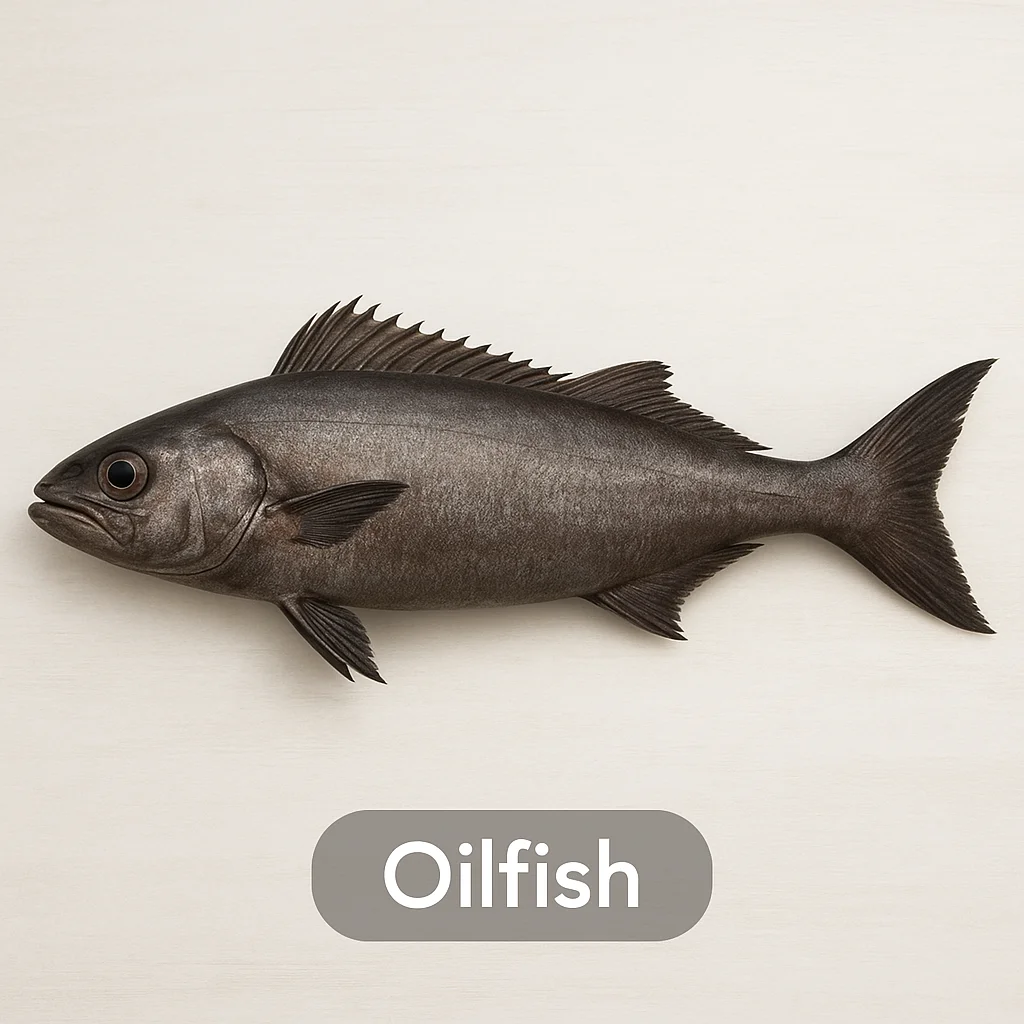
People enjoy oilfish because it offers a luscious flavor and versatile culinary uses. Its high oil content provides a decadent taste similar to that of high-grade sashimi, although it is generally consumed cooked due to health considerations. Oilfish is often compared to mackerel and tuna in terms of its oily characteristics but should be handled with care to prevent any unwanted digestive issues.
🐠 Taste & Texture
Oilfish has a pronounced flavor profile that boasts a buttery richness, often described as decadent and savory. Its flesh is flaky yet solid, providing a satisfying mouthfeel. While it is not particularly sweet or salty, the oiliness of the fish stands out prominently. When fresh, oilfish typically emits a clean, oceanic smell.
- Rich and buttery flavor
- Firm, flaky texture
- Robust, oily mouthfeel
- Clean, sea-like aroma
🌊 Origin & Habitat
Oilfish is typically found in deep ocean waters, residing in tropical and temperate seas around the world. It is not commonly farmed, so it is primarily available through wild capture. Notable regions where oilfish can be harvested include the Atlantic Ocean and the Pacific Ocean near Japan and Hawaii.
Due to its habitat, oilfish is caught at significant depths, which contributes to its rich, oily composition. This also impacts its availability in seafood markets, with fluctuating supplies depending on harvest conditions and seasonality.
📅 Best Season
Generally, the seasonality of oilfish varies by region and is influenced by oceanic conditions and fishing practices. While some areas may have a peak season when oilfish is more readily available and priced favorably, it's essential for consumers to check local seafood guides or markets to determine the best time to purchase.
Even outside peak times, oilfish can often be found frozen, retaining much of its quality for year-round enjoyment. Understanding peak seasons can help consumers secure the freshest and most flavorful oilfish while potentially saving on cost.
🔪 Preparation
Preparing oilfish involves similar steps to other fish. Begin by cleaning, scaling, and gutting the fish. Care must be taken when removing pin bones and trimming the fillets to ensure a pleasant eating experience. Using a sharp knife is crucial for clean cuts, reducing damage to the fish's delicate flesh.
- Scale thoroughly under running water
- Remove guts carefully to avoid tainting the flesh
- Trim fillets with precision
- Check for and remove any pin bones
- Use separate cutting boards for raw seafood to prevent cross-contamination
To manage any strong odors, a brief soak in milk or a light rinse with salt can often help. Gentle handling and prompt cooking yield the best results.
❄️ Storage Tips
For the freshest taste, refrigerate oilfish as soon as possible. It should be consumed within two days when stored at a temperature just above freezing, ideally on a bed of ice. If longer storage is required, freezing is effective. Portion the fish first, ensuring all air is removed from its wrapping to prevent freezer burn and preserve flavor.
- Do: Keep fish chilled on ice
- Do: Use airtight wrapping for storage
- Do Not: Leave fish exposed in the fridge
- Do: Thaw gently in the refrigerator
- Do Not: Refreeze previously frozen fish
🍽️ Popular Dishes
Oilfish is versatile and can be prepared in numerous delicious ways. Here are some popular dishes featuring oilfish:
- Grilled Oilfish: High heat searing brings out its oiliness, creating a crispy, flavorful outer crust.
- Pan-Seared Oilfish: Cook gently to maintain its delicate flake structure while accentuating its buttery taste.
- Oilfish Stew: A hearty option that pairs with vegetables, allowing the fish's rich flavor to infuse the broth.
- Fried Oilfish: A crispy alternative that retains moisture and delivers a delightful crunch.
- Steamed Oilfish: Gentle steaming highlights its natural oils and sweetness, especially with aromatic herbs.
- Baked Oilfish: Baking with a savory crust or sauce enhances its firm texture and avoids excess oiliness.
- Ceviche-Style Oilfish: If considering raw preparations, verify the fish is sashimi-grade and ensure safety measures to avoid parasites.
Always purchase from reputable sources and verify food safety standards if consuming raw or undercooked seafood.
🥗 Nutritional Benefits
Oilfish is packed with several nutritional benefits that seafood is known for. It is an excellent source of high-quality protein and contains various essential nutrients.
- Rich in protein
- Contains omega-3 fatty acids
- Source of vitamins A, D
- Packed with minerals such as calcium and potassium
Incorporating oilfish into a balanced diet can contribute to overall nutrition, although moderation is key due to its oily nature.
⚠️ Who Should Eat & Caution
While oilfish is generally safe for consumption, there are a few considerations to be mindful of. Due to its high oil content, it can cause digestive issues for some people, so moderation is advised. Those with fish or general seafood allergies should avoid oilfish and be cautious of cross-contact in kitchens.
There are also mercury considerations with oilfish, especially for vulnerable groups such as pregnant individuals and children, who may need to limit consumption. Be aware of the risks of consuming raw or undercooked oilfish, emphasizing thorough safe-handling practices in meal preparation.
📌 Summary
Oilfish is a decadent seafood option known for its rich, oily texture and buttery taste. Its firm, flaky flesh makes it ideal for various culinary applications, although moderation is suggested due to its possible digestive effects. Proper storage and careful preparation will ensure the best taste and minimize risks associated with oilfish.
- Key Takeaways:
- Rich, oily flavor suitable for grilling, pan-searing, and more
- Handle and store carefully to maintain freshness
- Consider digestive tolerance; enjoy in moderation
- Check local seasons for best purchase times