🐟 Needlefish
Needlefish, known for their elongated bodies and sharp jaws, are a fascinating group of fish often found in coastal waters. They are sometimes referred to by other names like Belonidae or Garfish, depending on the region. People enjoy eating needlefish due to their unique taste and texture which makes them a versatile ingredient in various cuisines. With their lean and slightly firm flesh, needlefish can be a delightful addition to numerous dishes.
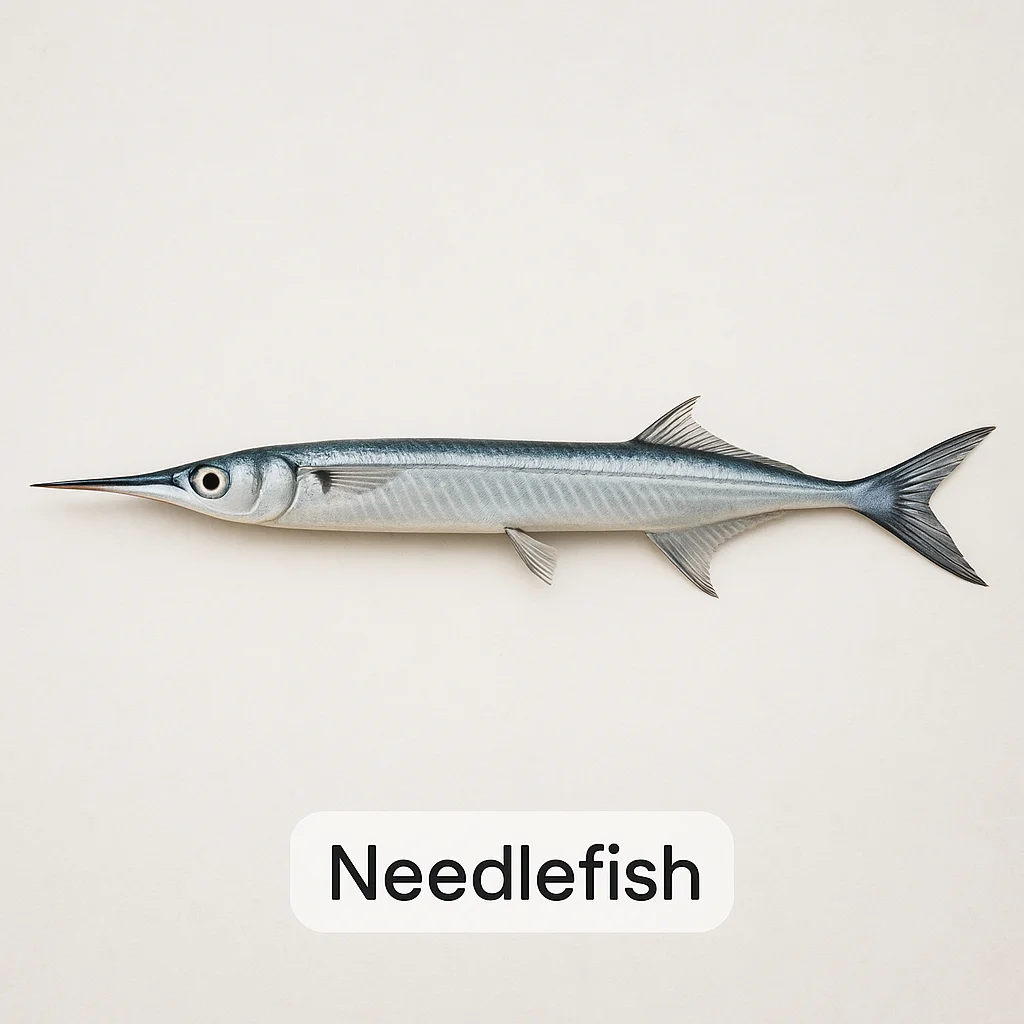
Consuming needlefish can offer a sensory experience that is both subtle and satisfying. Despite their appearance, they can deliver a mild yet distinctive flavor profile, making them a favorite choice for those seeking something a little different at the dinner table.
🐠 Taste & Texture
Needlefish have a gentle, sweet flavor with a delicate touch of saltiness. Their flesh is lean rather than oily, providing a clean mouthfeel that's light on the palate. The texture is often described as firm yet flaky, with a moderate flake size that holds together well during cooking. When fresh, needlefish exude a clean, marine scent, without any strong fishy odors.
- Flavor: Mild, slightly sweet
- Texture: Firm and flaky
- Mouthfeel: Clean and smooth
- Smell when fresh: Clean, oceanic
🌊 Origin & Habitat
Needlefish are mostly found in shallow coastal waters and are also known to inhabit estuaries and brackish environments. These fish are typically wild-caught as there's limited commercial farming available, contributing to their unique sea-influenced taste and texture. Major regions where needlefish are harvested include parts of the Atlantic, Indian, and Pacific Oceans.
📅 Best Season
The seasonality of needlefish can vary widely depending on the region; however, they are generally more abundant during warmer months. Purchasing during peak seasons can enhance the flavor profile due to higher fat content and fresher catch while also benefitting from better pricing and availability.
🔪 Preparation
Preparing needlefish for cooking involves some careful steps, given their slim and elongated body shape. Begin by cleaning the fish, then proceed with scaling and gutting. Pay attention to removing any pin bones, which can be more prominent in species with finer bones.
- Clean the fish under running water
- Scale gently with a fish scaler or the back of a knife
- Gutting should be done with precision
- Remove pin bones
- Trim off any fins
Controlling odor can be achieved by soaking needlefish in a light milk or saltwater solution before cooking. This can help in reducing any lingering sea odors without overly altering the fish's natural taste.
❄️ Storage Tips
When properly stored, needlefish can maintain their quality for immediate use or longer-term consumption. In the refrigerator, it's best used within 1-2 days after purchase. For freezing, portion the fish into appropriate sizes and wrap them tightly to avoid air exposure.
- Don't leave unrefrigerated for long periods
- Do wrap tightly to avoid air exposure
- Don't keep in the fridge for more than two days
- Do use airtight containers when freezing
🍽️ Popular Dishes
Needlefish can be enjoyed in various culinary preparations across the globe:
- Grilled Needlefish: High heat brings out a smoky flavor and firm texture.
- Pan-Seared: Quick searing keeps the outside crisp while maintaining moisture.
- Fish Stew: Gentle simmering develops flavors in a rich broth.
- Tempura Needlefish: Crispy batter highlights the flaky texture.
- Baked Filets: Slow baking with herbs for tender and aromatic results.
- Ceviche: If handled properly, fresh citrus can 'cook' the fish while offering a tangy burst of flavor.
For raw preparations like ceviche, source sashimi-grade needlefish from reputable suppliers to minimize risks associated with raw consumption.
🥗 Nutritional Benefits
Needlefish provide a good source of protein and are low in fat, making them a healthy choice for many diets. They also contain essential vitamins and minerals that support overall wellbeing without high calorie or fat content.
- Protein: Supports muscle and tissue health
- Vitamins: Includes B complex vitamins
- Minerals: Phosphorus and magnesium
⚠️ Who Should Eat & Caution
Like many fish, needlefish can pose allergy risks, particularly for those sensitive to fish proteins. There is also a cautionary note around mercury content, common in marine species. People who are pregnant or sensitive may want to limit their intake.
Always ensure proper handling to minimize risks of cross-contamination, and adhere to safe cooking practices to avoid eating raw or undercooked fish unless it is certified for such use.
📌 Summary
Needlefish, with their unique appearance and mild taste, can offer an enjoyable culinary experience. Whether grilled, seared, or incorporated into a stew, they provide versatility and satisfaction. Proper storage and handling ensure the best taste and safety.
- Moderate, mildly sweet taste with firm texture
- Primarily found in shallow, warm coastal waters
- Versatile in culinary applications from grilling to delicate ceviche
- Safe handling and cooking techniques ensure quality and safety