🐟 Kingfish
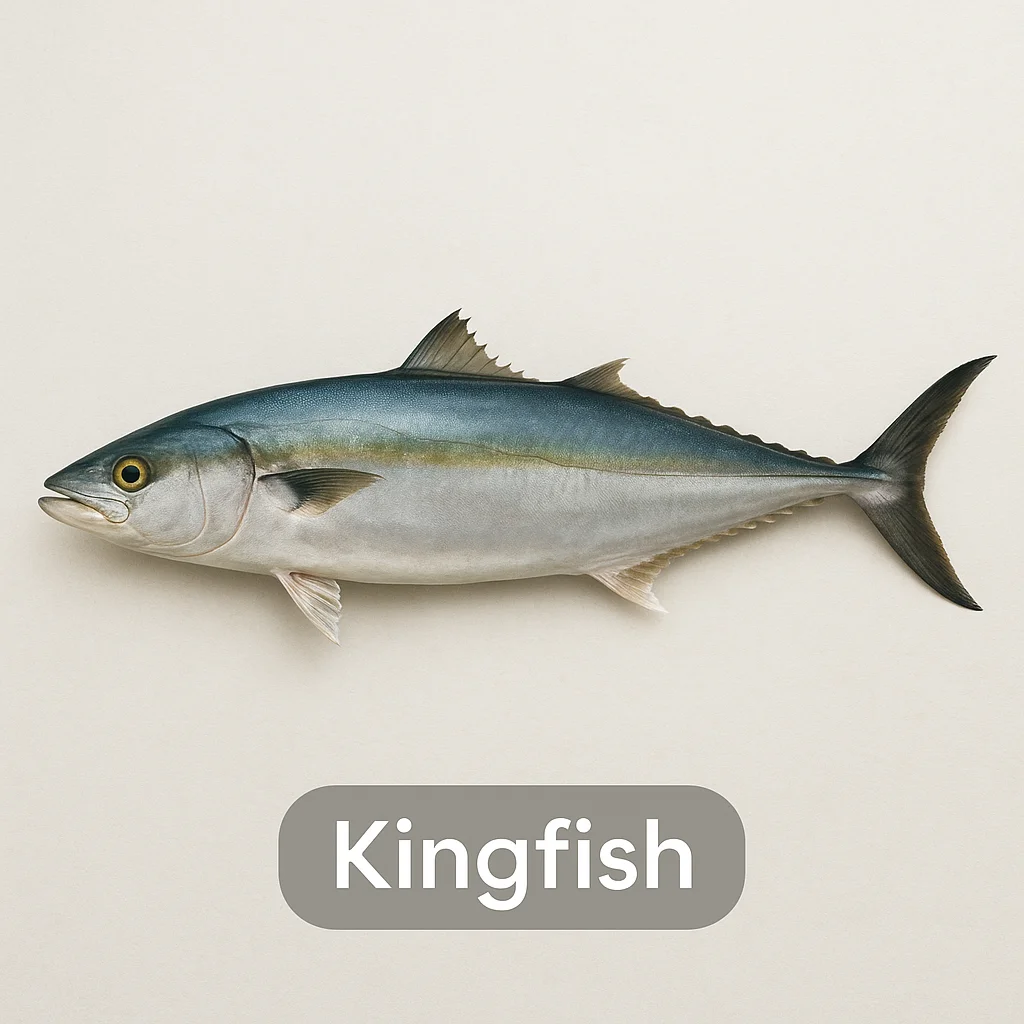
Kingfish is a popular seafood choice known for its firm texture and rich, flavorful taste. It is also known by various names around the world, such as King Mackerel or Yellowtail, depending on the region. People enjoy eating Kingfish for its versatility in cooking methods and its ability to adapt well to a range of cuisines, from Asian to Mediterranean. This article will explore everything you need to know about Kingfish, from its taste and texture to its habitat, preparation, and nutritional benefits.
🐠 Taste & Texture
The flavor of Kingfish is often described as robust and savory with a moderate richness, making it a favorite for grilling and frying. Its meat is moderately oily, providing a satisfying mouthfeel and a slight sweetness. The texture is firm, with large, moist flakes that hold together well when cooked. When fresh, Kingfish has a clean, briny smell that hints at the ocean without being overpowering.
- Quick taste profile:
- Flavor: Rich, savory, slightly sweet
- Texture: Firm, moist flakes
- Smell: Clean, oceanic aroma
- Oily content: Moderate
🌊 Origin & Habitat
Kingfish are typically found in coastal and deep-sea waters, with various species inhabiting different regions. They can be wild-caught or farmed, with wild-caught varieties often prized for more intense flavors. Common regions where Kingfish are harvested include the waters off the Eastern coast of the United States, Australia, Japan, and the Indian Ocean. Kingfish thrive in warm, tropical waters and are known for their migratory patterns, often traveling significant distances.
📅 Best Season
The best season for Kingfish can vary by region due to their migratory nature. Generally, the peak season aligns with warmer months when they are most abundant and in prime condition. Freshness and optimal fat content can make a difference in taste and texture, leading to better culinary results. Seasonal availability can also affect price, making peak seasons the best time for both quality and cost.
🔪 Preparation
Preparing Kingfish requires basic skills in cleaning and filleting. Begin by scaling and gutting the fish, then remove the pin bones with tweezers. Use a sharp knife to trim any excess skin and fat. Ensure all tools and surfaces are thoroughly cleaned to prevent cross-contamination.
- Beginner checklist:
- Clean hands and tools
- Scale and gut fish
- Remove pin bones
- Trim excess parts
- Keep work area sanitized
To control any strong fishy odor, you can soak the fish in milk for a short period, use salt, or rinse it quickly with water. This can help neutralize unwanted smells while preserving the flavor of the fish.
❄️ Storage Tips
To maintain freshness, store Kingfish in the refrigerator for no more than two days. Keep it on ice or wrap it tightly in airtight packaging to prevent exposure to air and odors. For longer storage, Kingfish can be frozen. Portion the fish and ensure all air is removed from packaging to avoid freezer burn. Thaw it safely in the refrigerator before cooking to ensure quality.
- Do:
- Store in the fridge for up to two days
- Use airtight packaging
- Freeze in portions
- Thaw in the fridge
- Don't:
- Leave out of the fridge for long
- Allow air in packaging
- Thaw at room temperature
🍽️ Popular Dishes
Kingfish is versatile in cooking, lending itself to various global dishes. Here are some popular preparations:
- Grilled Kingfish: Enhanced by high heat, it brings out the natural oils, providing a crispy exterior while keeping the interior moist.
- Pan-seared Kingfish: A quick method that retains the fish's flavor and texture, perfect when finished with a splash of lemon.
- Kingfish Curry: Gentle cooking in a spiced broth highlights the fish's flavor, commonly enjoyed in South Asian cuisines.
- Fried Kingfish: Deep fry for a crunchy texture enjoyed worldwide, often served with a tangy sauce.
- Steamed Kingfish: Keeps the fish tender and allows the subtle flavors to shine, often paired with ginger and soy sauce.
- Ceviche-style Kingfish: Popular in Latin cuisines, the fish is “cooked” in citrus. Ensure the fish is sashimi-grade and handle it with caution due to food safety concerns.
🥗 Nutritional Benefits
Kingfish is a nutritious option for those seeking a well-rounded diet. It is high in protein and offers a good source of omega-3 fatty acids, essential for heart health and brain function. Additionally, Kingfish provides beneficial vitamins and minerals, contributing to overall wellness.
- Notable nutrients:
- Protein
- Omega-3 fatty acids
- Vitamin D
- Potassium
⚠️ Who Should Eat & Caution
Like all fish, Kingfish can cause allergic reactions in some individuals. It's essential to be aware of cross-contact in kitchens for those with allergies. Additionally, Kingfish contains varying levels of mercury; thus, pregnant women and young children should consume it in moderation, following expert dietary recommendations. When consuming Kingfish raw or undercooked, be aware of potential parasite risks and always source from reliable suppliers to ensure safety.
📌 Summary
Kingfish, known for its robust flavor and firm texture, is a versatile seafood choice that fits in many culinary traditions. It’s essential to choose fresh fish, use proper storage methods, and follow safe cooking practices to enjoy this fish optimally.
- Key takeaways:
- Rich, flavorful with firm texture
- Best used in grilled or fried dishes
- Store properly to maintain freshness
- Enjoy in moderation due to mercury
- Handle raw fish with care