🐟 Flying Fish
Flying fish are fascinating creatures known for their unique ability to glide above the ocean's surface. They are a group of fish found in warmer, tropical ocean regions and are popular in various cuisines worldwide. People often enjoy flying fish for their mild flavor and delicate texture, which can be used in an array of dishes. Their taste is complemented by their high protein content, making them a nutritious choice for seafood lovers.
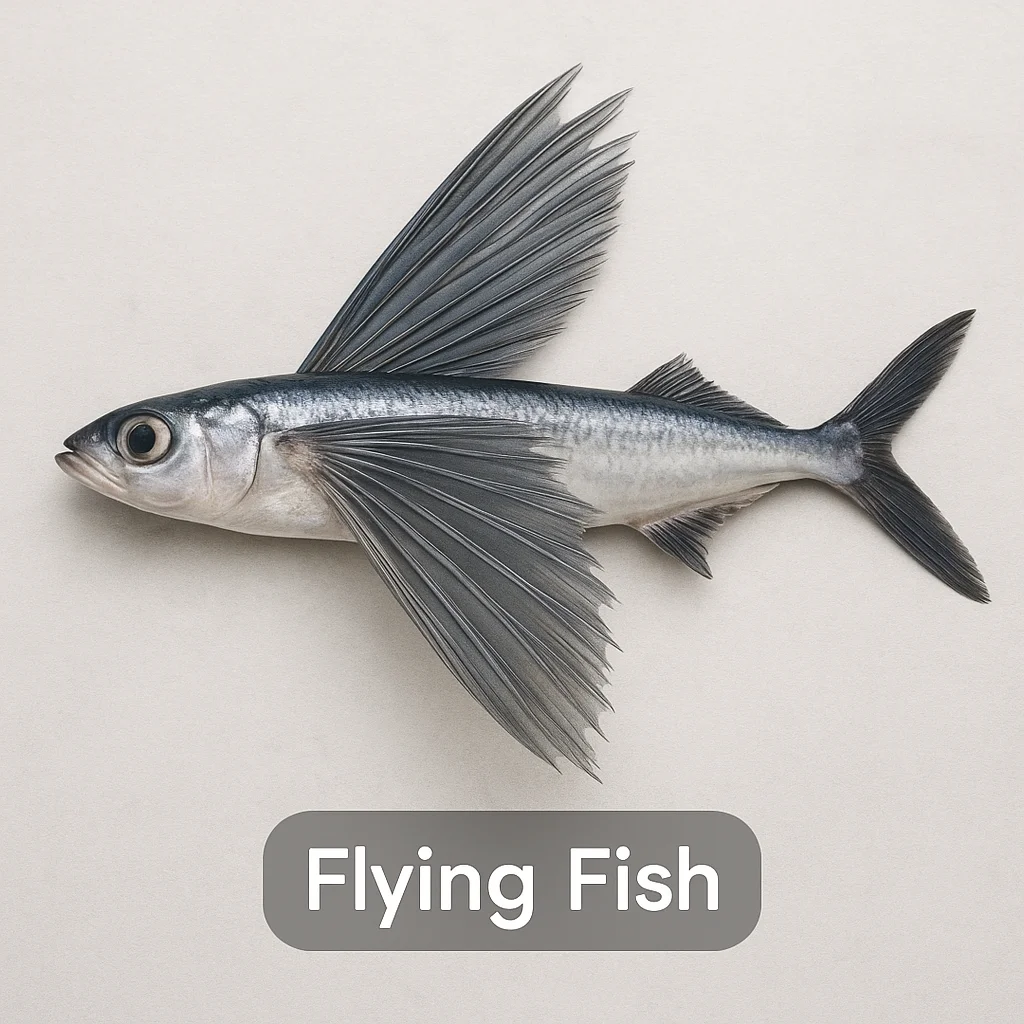
Also referred to as "Exocoetidae," flying fish get their name from their long, wing-like fins, which allow them to leap out of the water and glide through the air to evade predators. This unique feature captures the imagination of many and contributes to their popularity as a culinary delight. Flying fish are commonly harvested in areas like the Caribbean, India, and Southeast Asia, where they're served roasted, grilled, or even raw in some cultural dishes.
🐠 Taste & Texture
Flying fish offers a delicate, mild flavor that is neither too fishy nor overpowering. They have a subtle sweetness with a slightly briny undertone, which is perfect for those who prefer a less intense seafood taste. The texture is tender and flaky, similar to that of lean fish, which makes it versatile for various cooking methods. When fresh, flying fish should not have a strong odor, but rather a mild, ocean-like scent.
- Mild flavor with a hint of sweetness
- Lightly briny taste
- Tender, flaky texture
- Subtle, fresh ocean aroma
🌊 Origin & Habitat
Flying fish are typically found in warm, tropical, and subtropical ocean waters. They thrive in coastal as well as open ocean environments where the water temperature supports their unique lifestyle. Traditionally, they are not farmed, so they are mostly caught wild. The regions known for flying fish include the Caribbean Sea, Indian Ocean, and parts of the western Pacific Ocean. These fish are an important part of the local ecosystem and contribute to the fisheries of several island and coastal nations.
📅 Best Season
The peak season for flying fish can vary depending on the region, but they are generally more abundant during the warmer months when breeding occurs. The availability of flying fish is highest during these times, which often results in better prices and fresher catches. Seasonality affects their fat content and texture, making them more flavorful. However, since seasonality can differ, it is always best to check local sources for the most accurate information on availability.
🔪 Preparation
Preparing flying fish involves several key steps to ensure you are able to enjoy their subtle flavor and texture. Start by cleaning the fish, which means removing any scales, gutting, and rinsing it thoroughly. You may need to remove pin bones depending on the size of the fish. A few tips for getting started include:
- Scale the fish using a fish scaler or the back of a knife
- Make a small incision along the belly to remove the entrails
- Rinse the fish under cold water to remove any blood or scales
- Carefully check for and remove any pin bones
To control odor, you may soak flying fish in milk for about 30 minutes or rinse with cold water and a little vinegar. Consider these methods to keep your kitchen smelling fresh.
❄️ Storage Tips
Proper storage is crucial to maintaining the quality and safety of flying fish. When stored in the fridge, consume the fish within 1-2 days for maximum freshness. For longer storage, freezing is a great option:
- Do use airtight wrapping to prevent exposure to air
- Do remove as much air as possible from storage bags to prevent freezer burn
- Do thaw slowly in the fridge to maintain texture
- Don’t store directly on ice or in the freezer without protection
🍽️ Popular Dishes
Flying fish can be featured in a wide range of dishes across various cuisines. Here are some ideas to inspire your culinary creations:
- Grilled flying fish: cooked over high heat to enhance its natural flavors
- Pan-seared flying fish: achieves a crispy exterior with tender meat inside
- Flying fish stew: cooked gently to preserve its flaky texture
- Deep-fried flying fish: creates a crunchy coating that complements its mild taste
- Steamed flying fish: retains moisture and highlights its delicate flavor
- Ceviche with flying fish: marinated in citrus juices, but ensure it is sourced safely to minimize risks associated with raw fish
🥗 Nutritional Benefits
Flying fish provide a range of nutritional benefits, making them a versatile choice for health-conscious individuals. They are a good source of lean protein, essential for body repair and maintenance. While generally lean, they can offer omega-3 fatty acids, which are known to support heart health. Additionally, flying fish may contain various vitamins and minerals essential for a balanced diet.
- High in protein
- Omega-3 fatty acids
- Rich in vitamins and minerals
⚠️ Who Should Eat & Caution
When considering adding flying fish to your diet, be mindful of allergy risks, particularly if you have a known fish or shellfish allergy. While flying fish are generally low in mercury, it is advisable for pregnant individuals and young children to consume in moderation. Raw or undercooked fish pose a risk of parasites and should be prepared with care. Always use separate cutting boards and utensils for raw seafood to prevent cross-contamination.
📌 Summary
Flying fish offer a unique culinary experience with their mild flavor and flaky texture. They can be adapted to various cooking methods, from grilling to frying, providing versatility in your kitchen. Remember to purchase fresh, properly handle, and store them appropriately to enjoy the best-tasting flying fish.
- Delicate flavor and flaky texture
- Versatile in cooking methods
- Store with care for maximum freshness