🐟 Bluefish
Bluefish, known scientifically as Pomatomus saltatrix, is a popular seafood choice for its distinctive flavor and strong taste profile. Commonly referred to in some regions as 'tailor' or 'elf,' it is a predatory fish found worldwide, especially along the coasts and in temperate and subtropical waters. Bluefish is appreciated for its rich, oily flesh, making it a staple in various culinary traditions globally. It is a favored option for eating due to its relatively large size and the firm texture of its flesh, which can be prepared in a multitude of ways.
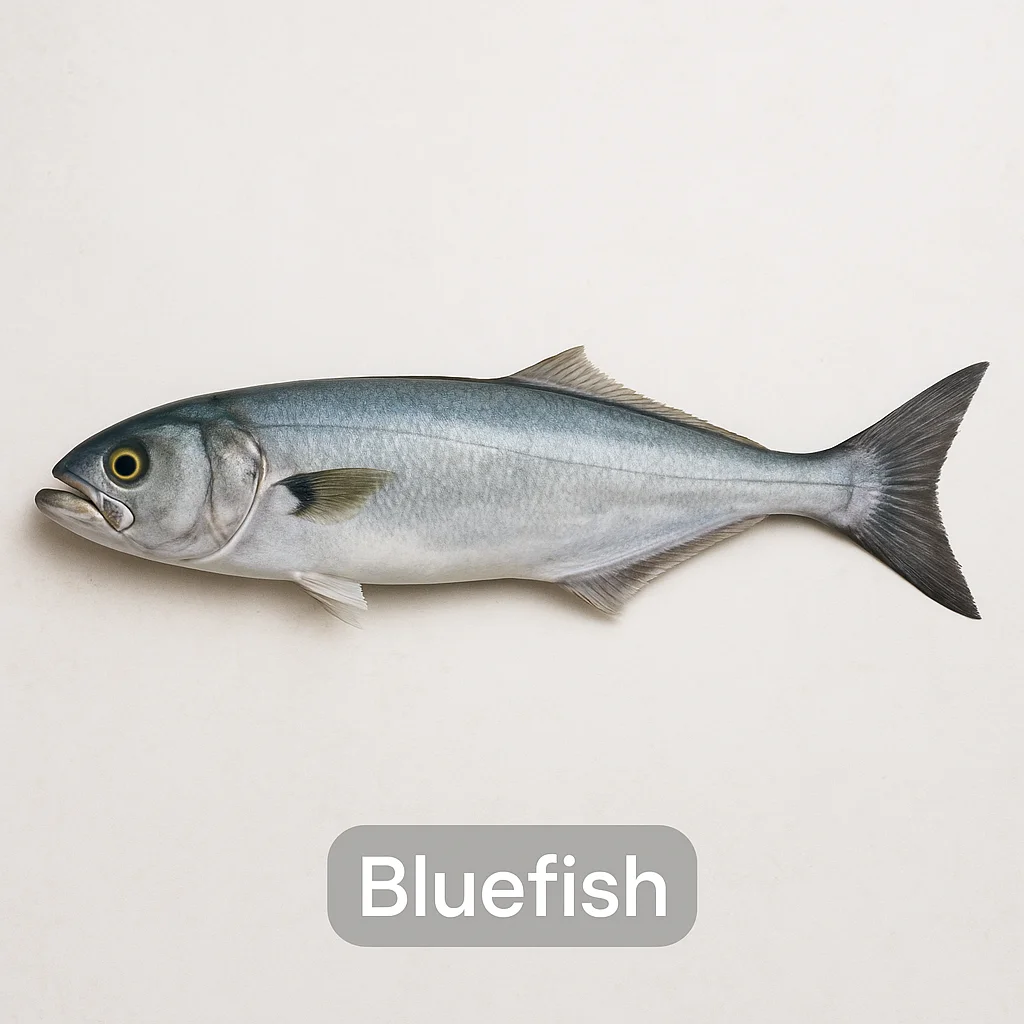
People enjoy bluefish for its robust flavor, which can hold up well to strong seasonings and bold sauces, making it a versatile ingredient in kitchens around the world. The fish is also prized for its substantial meat content, providing ample servings for a family meal or gathering. Bluefish can be processed into fillets, steaks, or left whole, depending on the dish being prepared.
🐠 Taste & Texture
Bluefish has a distinctive taste known for its powerful, rich flavor. Its flesh is oily, contributing to its moistness and depth of taste. The flavor can be described as fatty with a moderate sweetness and a mild saltiness, often compared to mackerel. The texture is firm and flaky when cooked, making it a satisfying fish to eat.
- Flavor: Rich, oily, slightly sweet
- Texture: Firm, flaky
- Smell: Fresh, mild when properly stored
- Flake size: Medium to large
🌊 Origin & Habitat
Bluefish are typically found in coastal waters, often preferring the surf zone, estuaries, bays, and even up to the river mouths. They are a pelagic species, which means they inhabit the upper layers of the open sea away from the shore and ocean floor. Wild-caught bluefish are more common than farmed ones due to their migratory nature and the challenges in domestication.
These fish are prevalent in the Atlantic Ocean, with significant populations along the eastern United States coastline, South Africa, Australia, and the Mediterranean Sea. Being widely distributed, bluefish are accessible to many, although their availability may vary based on local fisheries' policies and oceanic health conditions.
📅 Best Season
The peak season for bluefish depends largely on regional water temperatures and local migration patterns, which affects their fat content, texture, and price. In the northern hemisphere, bluefish is often in season during the late spring through early fall months. During these times, the fish are usually more abundant, and their flavor is at its peak.
However, seasonality can vary by region, so it's essential to check with local markets or fisheries to determine the best time to buy fresh bluefish. Eating fish in season generally ensures better quality and supports sustainable fishing practices.
🔪 Preparation
Cleaning and preparing bluefish involves several steps to ensure the best dining experience. Begin by scaling the fish with a fish scaler or the back of a knife, moving from the tail to the head. Once scaled, cut the belly open from just behind the gills to the vent to remove the entrails. Rinse thoroughly under cold water.
- Scale the fish from tail to head
- Open the belly and remove entrails
- Rinse under cold water
- Remove pin bones with tweezers
- Fillet or steak as desired
To manage the strong odor sometimes associated with bluefish, soaking the fish briefly in milk can help neutralize it. Alternatively, a quick rinse with salted water can also aid in controlling any fishy smell, ensuring the fish remains appealingly aromatic.
❄️ Storage Tips
For optimal freshness, store bluefish in the coldest part of your refrigerator, ideally on ice, and use within 1-2 days of purchase. Wrap it tightly in an airtight container or plastic wrap to prevent odors from permeating other foods and to maintain moisture.
When freezing, portion the fish as needed, remove as much air as possible from the packaging to avoid freezer burn, and aim to use frozen fish within two to three months for the best quality. Thaw in the refrigerator overnight for gradual and safe defrosting.
- Do: Store on ice in the fridge
- Do: Use airtight containers
- Do: Thaw in the fridge
- Don't: Leave unrefrigerated for long
- Don't: Let fish contact other foods directly
🍽️ Popular Dishes
Bluefish's bold flavor allows it to stand up well to various cooking methods. Here are some popular dishes:
- Grilled Bluefish: High heat emphasizes its robust flavor, often paired with citrus or herb marinades.
- Pan-seared Bluefish: Quick cooking keeps it moist; serve with a rich sauce like a tomato or caper butter.
- Bluefish Stew: Slow cooking in a stew with tomatoes and spices allows flavors to merge beautifully.
- Fried Bluefish: A crispy exterior from frying contrasts with the moistness inside, often breaded for extra texture.
- Baked Bluefish: Gentle heat in the oven, served with lemon and herbs, can highlight the natural oils of the fish.
- Bluefish Ceviche: Use caution and ensure sushi-grade fish is sourced; a citrus marinade 'cooks' the fish.
When preparing raw or undercooked dishes like ceviche, ensure proper sourcing from reputable suppliers to mitigate risks of parasites and foodborne illnesses, adhering to best handling practices in your kitchen.
🥗 Nutritional Benefits
Bluefish is a nutrient-rich option, high in protein and a good source of essential omega-3 fatty acids, which are beneficial for heart health. It also provides vitamins and minerals like vitamin D and selenium, contributing to various aspects of health.
- Rich in Protein
- Omega-3 Fatty Acids
- Vitamin D
- Selenium
⚠️ Who Should Eat & Caution
People with fish allergies should avoid bluefish and any potential cross-contact situations in kitchens and establishments serving seafood. Mercury levels can be higher in certain larger fish, so it's advisable for pregnant individuals and young children to consume in moderation, choosing responsibly.
Always consider raw or undercooked seafood preparation risks. Proper handling, storage, and cooking to the appropriate temperatures are necessary to minimize such risks. Maintaining clean utensils and surfaces, washing hands, and avoiding cross-contamination in the kitchen are vital practices in seafood safety.
📌 Summary
Bluefish is a robust, oily fish known for its distinctive flavor and firm texture that appeals to seafood enthusiasts worldwide. Versatile in preparation, it can be grilled, baked, fried, or used in stews. Proper storage and sustainable choices ensure a quality dining experience with this flavorful fish.
- Rich, oily flavor
- Best enjoyed fresh
- Versatile in cooking methods
- High in protein and omega-3s
- Pay attention to sustainability and sourcing