🐟 Bluefin Tuna
Bluefin Tuna, a highly prized species among seafood enthusiasts, is known for its rich flavor and large size. This migratory fish belongs to the genus Thunnus and is often synonymous with high-end sashimi and sushi dishes worldwide. Its flesh is deeply colored and comes with a higher fat content compared to other tunas, making it ideal for raw preparations. Bluefin Tuna is a staple in gourmet kitchens due to its luxurious taste and versatility in various recipes.
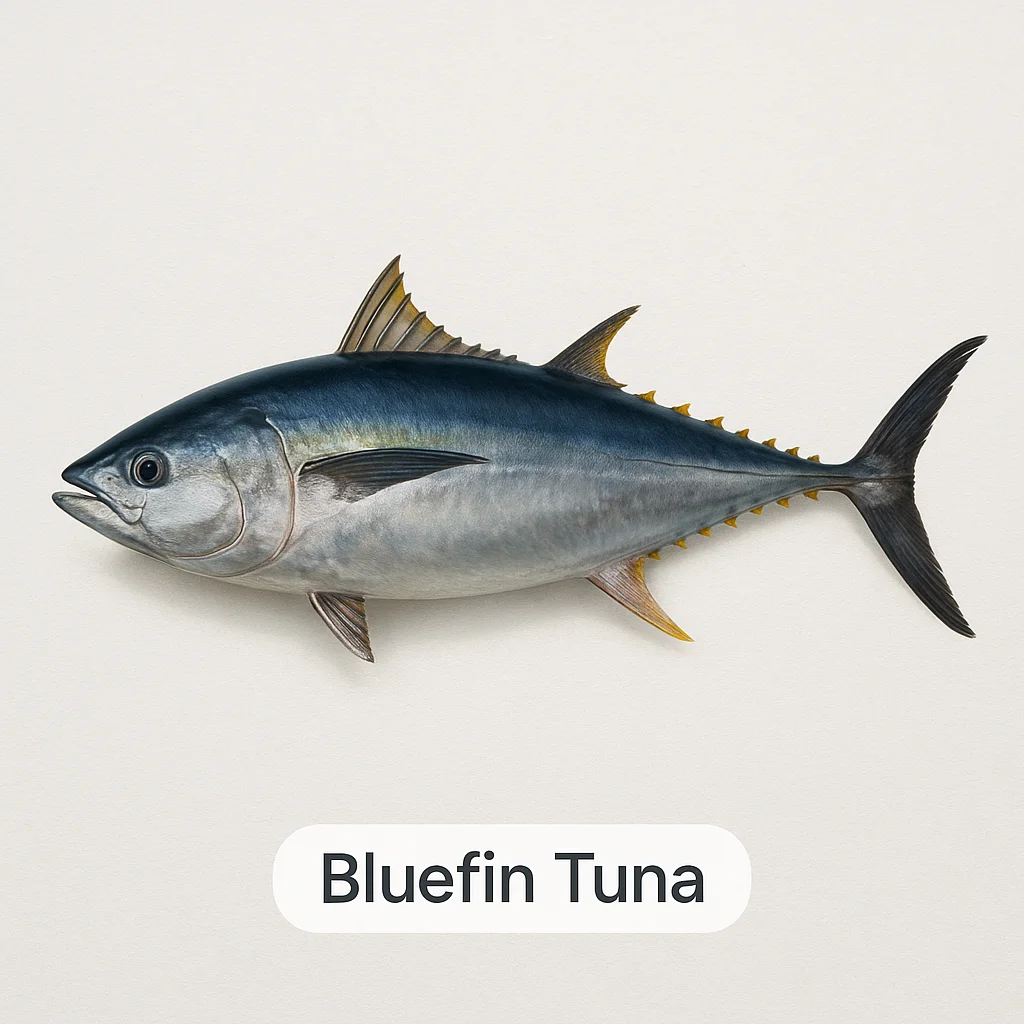
People enjoy Bluefin Tuna for its robust, savory flavor profile and silky texture. Often referred to by its Japanese name, "Maguro," this tuna is sought after in seafood markets and upscale restaurants. However, due to the high demand and environmental concerns, Bluefin Tuna is sometimes replaced with other types like Bigeye or Yellowfin Tuna. Here, we'll delve into what makes Bluefin Tuna so special and how to make the most of this culinary gem.
🐠 Taste & Texture
Bluefin Tuna offers a deliciously rich and buttery flavor, thanks to its high-fat content, especially in the belly area, known as "Otoro." The meat is tender, with a smooth mouthfeel that leaves a lasting impression. When fresh, it emits a mild sea aroma, which is a sign of its quality.
- Flavor: Bold, savory, and slightly sweet
- Texture: Silky, smooth, and melts in your mouth
- Smell: Fresh sea breeze with minimal fishiness when fresh
🌊 Origin & Habitat
Bluefin Tuna typically inhabit the temperate and tropical waters of the Atlantic Ocean, Pacific Ocean, and Mediterranean Sea. This species is often found in the deep ocean, where they migrate over long distances. Both wild-caught and farm-raised Bluefin Tuna are available, although slight differences may occur in taste and texture due to diet and stress levels in farmed fish.
Common harvesting areas for Bluefin Tuna include coastal regions near Japan, Spain, Italy, and the eastern United States.
📅 Best Season
The seasonality of Bluefin Tuna often varies by region due to its migratory patterns. In general, the peak season tends to be when the fish are fattest, which usually aligns with spawning periods. This increased fat content enhances both the flavor and texture, making it a prime time for catching or purchasing.
🔪 Preparation
Preparing Bluefin Tuna involves a careful cleaning process to preserve its delicate texture and flavor. First, rinse the fish and scale it gently. Remove the guts and clean the cavity thoroughly. Special attention should be paid to removing any pin bones to ensure a smooth fillet.
- Rinse to remove any scales
- Carefully gut and clean the internal cavity
- Remove all pin bones
- Fillet using a sharp, clean knife
To control any lingering odors, consider using a mild saltwater rinse or a brief soak in milk, then rinse immediately.
❄️ Storage Tips
Proper storage is essential for maintaining the freshness of Bluefin Tuna. Keep the fish in the coldest part of your refrigerator and consume it within 1-2 days for the best quality.
- Do: Store in airtight packaging, use ice packs for transportation
- Don't: Expose to air for prolonged periods, refreeze thawed fish
For longer storage, freeze portions in airtight bags, removing as much air as possible. Prevent freezer burn by ensuring a solid seal, and thaw safely in the fridge when ready to use.
🍽️ Popular Dishes
Bluefin Tuna's rich flavor makes it a favorite for a variety of dishes:
- Sashimi: Raw, thinly sliced, highlights its rich taste
- Sushi: Hand-pressed rice with fresh tuna, requiring caution for freshness
- Grilled Steaks: Seasoned lightly, grilled quickly to emphasize richness
- Pan-Seared: Brief high-heat cooking for a crispy exterior and tender inside
- Tuna Tartare: Minced raw tuna mixed with herbs and spices
- Ceviche-style: Marinated in citrus juices, served with zesty complement
When consuming raw dishes, ensure the fish is purchased from a reputable source to minimize food safety risks.
🥗 Nutritional Benefits
Bluefin Tuna is packed with essential nutrients beneficial for a balanced diet, though moderation is advised due to its higher mercury content.
- High in protein
- Contains omega-3 fatty acids
- Source of vitamins B12, A, and D
- Rich in selenium and iodine
⚠️ Who Should Eat & Caution
While Bluefin Tuna can be a nutritious addition to many diets, those with fish allergies should avoid it entirely. Cross-contact in kitchens is possible. Due to potential mercury content, it should be consumed with caution, especially by pregnant individuals and young children.
To enjoy safely, ensure proper handling and preparation hygiene to avoid contamination and foodborne illnesses related to raw seafood.
📌 Summary
Bluefin Tuna is a luxurious delight known for its rich taste and smooth texture, making it a prized catch among seafood lovers. When stored correctly, this fish can be used in various dishes, from raw delicacies to cooked masterpieces.
- Rich, buttery flavor with a smooth mouthfeel
- Best when fresh and in peak season
- Handle and store with care for optimal quality