🐟 Atlantic Mackerel
The Atlantic Mackerel, known scientifically as Scomber scombrus, is a popular fish found in the temperate waters of the Atlantic Ocean. Recognized for its distinct oily and rich flavor, it is a staple in many cuisines around the world. People choose Atlantic Mackerel for its versatility in cooking and its numerous health benefits. This fish is sometimes referred to by other names such as Boston Mackerel or Scottish Mackerel, depending on the region.
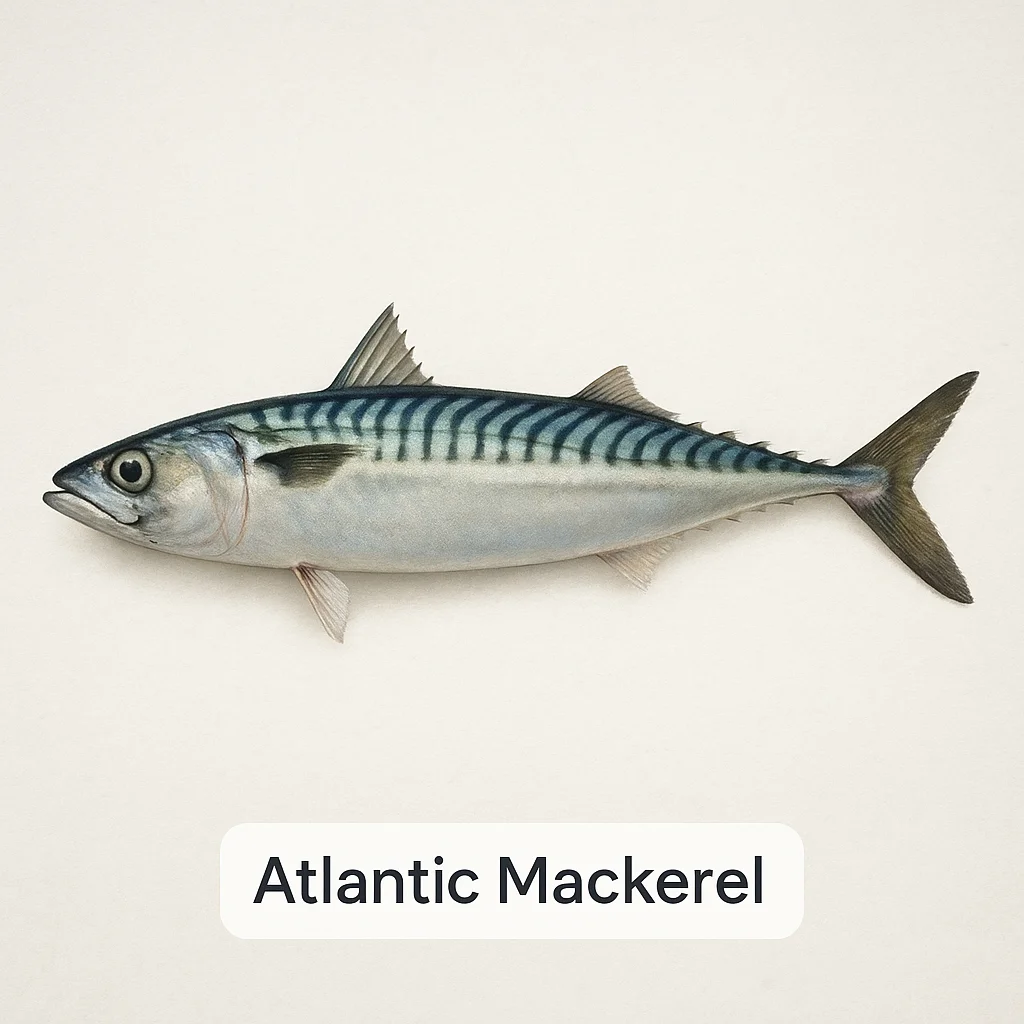
This species is classified as a small to medium-sized oily fish, meaning it has a higher fat content compared to lean fish. The oiliness contributes to its distinctive flavor and provides a moist texture when cooked. Its flesh ranges in color from light pink to creamy ivory and is known for being firmly textured, making it a sought-after choice for both cooked and raw preparations.
🐠 Taste & Texture
Atlantic Mackerel is celebrated for its rich and buttery flavor, which is both savory and slightly sweet. Its oiliness gives it a firm yet juicy texture, ideal for various culinary applications. When fresh, the fish has a mild oceanic aroma that should not be overpowering. Different cooking methods can highlight either its robust flavor or its delicate nuances.
- Flavor Intensity: Rich and bold
- Sweetness: Mild and oceanic
- Fattiness: Oily and moist
- Mouthfeel: Juicy with a firm flake
- Smell: Mild ocean scent when fresh
🌊 Origin & Habitat
Atlantic Mackerel typically inhabits the coastal Atlantic waters, often found in the North Atlantic from North America to Europe. These fish prefer open waters and are known to form large schools in the upper ocean layers. While there is some availability of farmed mackerel, the majority are wild-caught, which contributes to their distinctive taste and firmer texture.
Common regions for harvesting Atlantic Mackerel include the eastern coast of the United States, Canada, and parts of Northern Europe such as Norway and the British Isles. Due to its popularity, it is widely available in seafood markets around the world.
📅 Best Season
The peak season for Atlantic Mackerel generally spans from late spring through early fall, though seasonality may vary by region. During this time, the fish are at their most flavorful due to higher fat content, making them particularly desirable for both market and table. Buying during the peak season can also result in better prices and fresher selections in seafood markets.
🔪 Preparation
Preparing Atlantic Mackerel requires attention to detail to preserve its quality and flavor. Start by scaling the fish, then proceed to gut and clean it thoroughly. Remove the pin bones carefully to ensure a pleasant eating experience. Basic trimming involves removing any fins or rough edges around the belly.
- Scale the fish under running water
- Remove the gills and innards
- Cut off fins and clean the cavity
- Identify and remove pin bones
- Rinse and pat dry to reduce excess moisture
To manage any fishy odor, consider soaking the mackerel briefly in milk or sprinkling it with salt before a quick rinse. However, these methods may alter flavor profiles slightly, so use sparingly.
❄️ Storage Tips
Proper storage is crucial to maintain the freshness and quality of Atlantic Mackerel. For short-term storage, wrap the fish in airtight packaging and keep it in the refrigerator for up to 2 days. When storing on ice, ensure it's adequately drained to prevent unwanted water exposure.
For freezing, portion the fish and wrap tightly to remove any air, minimizing the risk of freezer burn. Thaw slowly in the refrigerator overnight before use to preserve texture and flavor.
- Do: Store in airtight containers or wrapping
- Do: Keep well-drained when storing on ice
- Don't: Expose to open air or fluctuating temperatures
- Don't: Refreeze after thawing to prevent quality loss
🍽️ Popular Dishes
Atlantic Mackerel's versatility in cooking makes it a favorite across various cuisines. Here are some popular dishes you might consider:
- Grilled Mackerel: High heat grilling enhances the fish's natural oiliness and smoky flavor.
- Pan-seared Mackerel: Creates a crispy skin while retaining juicy flesh beneath.
- Mackerel Stew: A slow-cooked dish that allows the flavors to meld beautifully.
- Fried Mackerel: Lightly battered and fried for a crispy, flavorful exterior.
- Steamed Mackerel: Maintains moisture and highlights subtle taste profiles.
- Mackerel Ceviche: Carefully marinated raw fish with citrus, offering a fresh and vibrant taste. When preparing raw dishes, ensure sashimi-grade fish and follow safe handling practices.
🥗 Nutritional Benefits
The presence of rich nutrients makes Atlantic Mackerel a healthful choice for many diets. It provides a high amount of protein, essential omega-3 fatty acids, and numerous vitamins and minerals that support overall health. Mackerels are often recommended as part of a balanced diet due to these components.
- Omega-3 fatty acids: Support heart and brain health
- Protein: Supports muscle growth and repair
- Vitamin D: Essential for bone health and immune function
- Selenium: Acts as an antioxidant in the body
⚠️ Who Should Eat & Caution
As with all fish, some people may have allergies to Atlantic Mackerel or other fish species, which can lead to allergic reactions. Cross-contact in kitchens is a possibility, so it's important to be cautious. Additionally, while generally regarded as low in mercury, individuals who are pregnant or serving young children may want to consume in moderation and be aware of safe seafood consumption guidelines.
There are also risks associated with raw or undercooked fish, which can harbor parasites. Ensure to source high-quality, sashimi-grade mackerel if consuming raw, and practice safe handling steps to avoid cross-contamination.
📌 Summary
Atlantic Mackerel stands out with its robust, buttery flavor profile and firm texture, making it ideal for a variety of culinary preparations from grilling to frying. Whether you're seeking health benefits from its omega-3 content or simply savoring its savory taste, this fish is a versatile ingredient cherished globally. Proper storage and handling are key to enjoying fresh mackerel at its best.
- Rich and savory taste perfect for multiple dishes
- Ensure freshness with proper storage techniques
- Healthy option with essential nutrients and low mercury content
- Adhere to safety practices when preparing raw
- Seasonality may affect availability and pricing